
Japanese firm targets fiscal 2028 launch of robot dog for elderly care
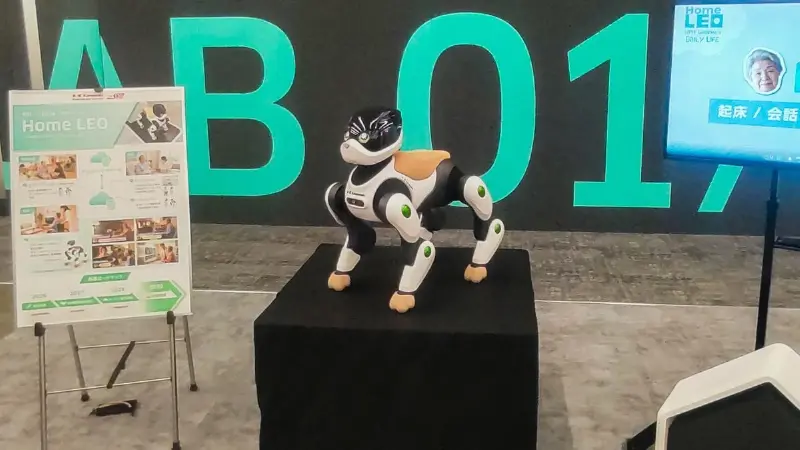


Kawasaki’s Home LEO robot is designed to assist older people at home, with tailored conversation and planned alerts for falls, health changes and unattended fire hazards.
- Japanese company Kawasaki Heavy Industries is developing a robot dog named "Home LEO" for elderly care, with a targeted launch in fiscal 2028.
- The robot is designed to help older people live independently by providing companionship and support, including retrieving items on command.
- Planned features include a notification function to alert family or professionals about falls, health changes, or other hazards.
- Using AI, Home LEO will act autonomously, personalize conversations, and coordinate with medical institutions to ensure users receive appropriate care.
Kawasaki Heavy Industries, Ltd. wants Home LEO to help older people remain in familiar surroundings for longer by providing companionship and support at home.
The Japanese company unveiled the dog-shaped social robot prototype at a business briefing in Tokyo on Tuesday (October 6).
A request from Kawasaki president Yasuhiko Hashimoto gave attendees a demonstration of Home LEO’s practical capabilities. “Where did I leave my smartphone?” Hashimoto asked.
Home LEO responded, “It's on the table, so I'll go and get it,” and picked up the phone.
For situations in which a user may need help, Kawasaki plans to add a notification function to Home LEO.
Family members or nursing care professionals would be informed if the robot noticed something unusual, including a fall, a change in health condition or a fire hazard left unattended.
Kawasaki said data sharing and coordination through Home LEO, involving medical institutions, nursing care facilities and other relevant organisations as needed, would be used to help users receive appropriate support.
The company hopes this will extend the period in which older people can live safely and securely in familiar surroundings.

Home LEO’s conversations would be tailored to the person it lives with, using continuously collected information about their preferences and daily life, including food, clothing and housing, Kawasaki said.
Alongside that personalised interaction, the robot would stay close to older users, watch over them and assist with everyday activities.
Home LEO draws on physical artificial intelligence (AI) to act autonomously, Kawasaki said.
The robot can recognise what is around it, decide on a course of action appropriate to the situation and hold conversations, according to the company.
Kawasaki plans further improvements to Home LEO in cooperation with Japan’s health and industry ministries, local governments, medical and nursing care facilities and AI technology companies.
The company is targeting fiscal 2028 for the launch.

[Copyright The Jiji Press, Ltd.]
