
DNA test leads police to alleged Thai ID fraud network
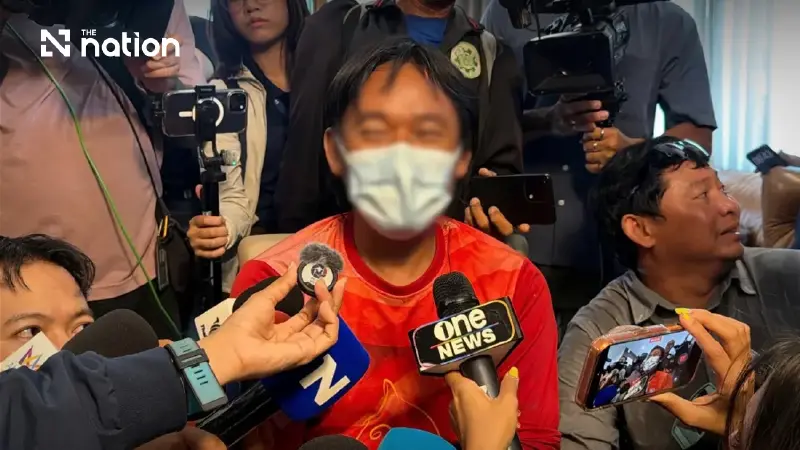


A DNA test identifying a Chinese man as a child’s biological father has led Thai authorities to expand a probe into alleged civil-registration and ID fraud.
- A DNA test revealed a Chinese man was the biological father of a child whose official documents listed a Thai man as the father, prompting a police investigation.
- The discovery led authorities to launch a wider probe into an alleged identity fraud network, focusing on how the Chinese man, Yilong, obtained a Thai ID card and civil registration.
- Investigators found evidence, including chat messages, suggesting Yilong offered to arrange Thai ID cards for others for a fee of 120,000 baht.
- The investigation has uncovered hundreds of millions of baht in financial transactions linked to the suspect's accounts and resulted in legal action against at least three individuals.
A DNA test showing that a Chinese man was the biological father of a child whose official documents named a Thai man as the father has led authorities to widen an investigation into alleged civil-registration and identity fraud.
Pol Lt Gen Nopasin Poolsawat, Commissioner of the Immigration Bureau, joined Metropolitan Police investigators, the Department of Provincial Administration’s National Identity Crime Enforcement task force (DOPA N.I.C.E.), the Anti-Money Laundering Office and the Public Sector Anti-Corruption Commission in launching Operation Northern Shadow on October 9.

Authorities searched three locations as part of an investigation that began in northern Thailand before expanding to Bangkok.
One target was a luxury residence in Bangkok’s Wang Thonglang district belonging to a Chinese man identified as Yilong, also known as “Ah Long”, and his Chinese wife.
Investigators said Yilong’s name had been added to a household registration in Chiang Rai in 1989. He later obtained a Thai identification card beginning with the digit 5 in 2014, with his most recent card issued in 2021.

DNA test triggers wider investigation
Nopasin said the investigation expanded after Yilong, his wife and their child prepared to travel to China.
Immigration officers checking their documents found that the father named in the child’s records was a Thai man named Wutthichai rather than Yilong.
DNA tests conducted on August 2 subsequently showed that Yilong and his wife were the child’s biological parents, according to police.
Investigators then began examining the paternity registration, Yilong’s addition to the civil registry and the origins of his Thai identification documents.
Police allege that Wutthichai had been registered as the child’s father despite not being biologically related to the child.
The investigation also found that Yilong first received a Thai ID card at the age of 28 after his name had earlier been added to the household registration system.

After obtaining Thai identification, investigators said he established two companies and conducted business in Thailand, including selling goods at Wat Leng Noei Yi.
Police said financial records showed more than 100 million baht had moved through Yilong’s accounts over the past 10 years, while transactions through his wife’s account totalled about 481 million baht.
Nopasin described the findings as a significant security concern and said authorities were examining how the civil-registration status and related rights had been obtained.
Police examine alleged offers to arrange ID cards
Nopasin also presented Line chat messages that investigators allege showed Yilong offering to arrange “0-prefix” identification cards for people without recognised civil-registration status.
According to police, the messages quoted a price of 120,000 baht, with a 25% deposit of 30,000 baht.
The messages allegedly stated that the process could be arranged in Fang district, Chiang Mai, would take about one month initially and around three months before the physical card was issued. The balance would be paid when the card was received.
Witoon Sirinukul, Deputy Director-General of the Department of Provincial Administration, said Yilong had been added to the civil registry in 1989.
He said the investigation also found that Yilong had previously obtained another identification card, although the record for that card had since been removed from the system.
Authorities are preparing legal action against Yilong, his wife and Wutthichai over alleged offences connected with civil-registration fraud, identity rights and land ownership, while investigations into other possible members of the network continue.

Thai man says he believed child was his
Wutthichai, 40, from Ban Bueng district in Chonburi, denied knowingly acting as a false father.
He said he had never known Yilong’s family and had only known the Chinese woman after the pair dated for about four to five months in 2012 after meeting during a visit to Bangkok.
According to Wutthichai, the woman later became pregnant and told him after giving birth that the child was his.
He said she asked for a signed copy of his identification card so the child’s birth could be registered.
Wutthichai said he received no payment because he genuinely believed he was the father.
He said he did not realise his documents might have been used to register him as the father of another man’s child and only learnt that he was not biologically related to the child after the DNA test.
“It has been 13 years and I never suspected anything,” he said, adding that both had since formed new families.
He said they had occasionally remained in contact over documents but that he had not financially supported the child.
Wutthichai said he felt distressed after learning that the case had developed into a broader security issue and warned other Thais not to hand copies of personal documents to others easily.

Yilong denies involvement in network
Yilong, meanwhile, denied being part of an organised scheme.
He said his name had been entered into a household registration in 1989 and claimed his stepmother had acted as his guarantor when he obtained an identification card in 2014.
He maintained that he was genuinely the person named in the records.
Yilong said he had lived with his stepmother in Chiang Rai from the age of two before travelling to Bangkok with friends at 13 to work in a restaurant.
He also denied having relatives or associates involved in a registration-fraud network, saying he had lived in Thailand since childhood.
Asked about allegations concerning how he obtained his status, Yilong said he still did not understand what he had done wrong and maintained that his stepmother had arranged the registration process.
He said the large sums moving through his accounts were related to his business activities. He acknowledged previously operating a tour business before moving into retail, including selling products to customers visiting Wat Leng Noei Yi 2.
Yilong also said he had not known that he was the child’s biological father until the DNA results emerged when the family was preparing to travel to China on August 2.
He said he and the woman had been in an on-and-off relationship around the time the child was born and had since resumed living together.
Yilong said he had previously questioned the child’s paternity but claimed the woman had consistently maintained that Wutthichai was the father.
His wife declined to answer reporters’ questions, telling them through an interpreter that she was not ready to provide information.
Authorities are continuing to investigate the origins of the registration records, the issuance of identification documents and any wider network potentially involved. No final determination of guilt has been made against those under investigation.
