
Thai army rejects Cambodia’s claims over border barriers and displaced residents
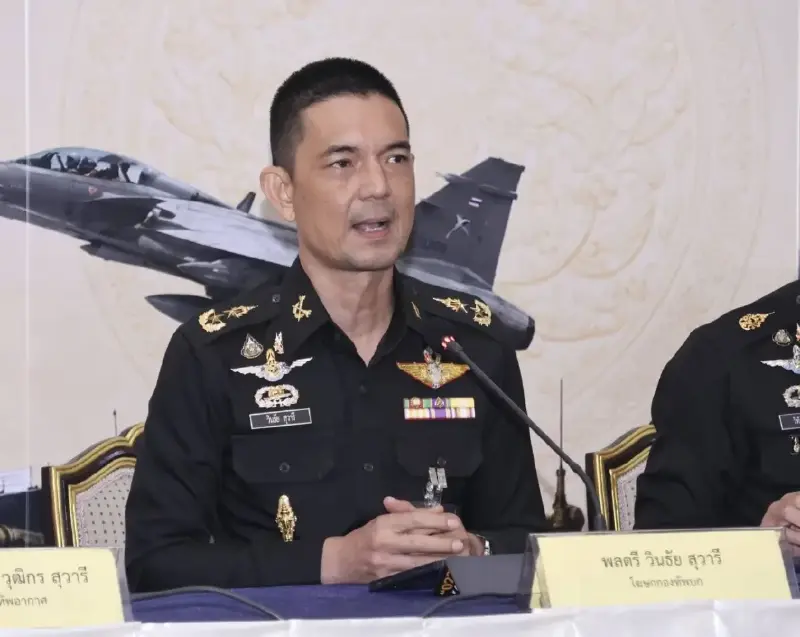


The Thai army rejects Cambodia’s allegation that troops are using barriers to alter the border, saying measures are for security within territory claimed by Thailand.
The Royal Thai Army has rejected Cambodia’s allegation that Thailand is using military force and barbed-wire barriers to redraw the international boundary, insisting that its operations are security measures within territory claimed by Thailand.
Maj Gen Winthai Suvaree, spokesperson for the Royal Thai Army, issued the response on Tuesday (October 27) after Cambodian government spokesperson Pen Bona said Phnom Penh would not accept borders determined by military force and accused Thailand of taking unilateral action along the frontier.
Pen Bona said Cambodia would continue to use diplomatic channels and international law to challenge actions it regards as encroachment, including the installation of barbed wire and other obstacles. Cambodia maintains that disputed sections of the boundary must be resolved through joint surveying and demarcation under the Joint Boundary Commission.
Army says barriers are security measures
Winthai said Thailand had not deployed troops to establish a new border line.
“The operations of Thai military personnel are intended to maintain security and safety within Thailand’s sovereign territory, not to use force to alter the boundary as the Cambodian side has alleged,” he said.
He said barbed wire and other barriers had been installed as preventive security measures intended to deter what Thailand regards as encroachment and reduce the risk of confrontation or incidents affecting civilians and military personnel.
The barriers should therefore not be interpreted as an attempt to establish a new international boundary, he said.
Cambodia disputes Thailand’s territorial position and has repeatedly argued that troop deployments, barbed wire, containers and other physical measures cannot determine sovereignty or replace joint border demarcation.
Thailand disputes Cambodia’s displacement figure
Winthai also challenged Cambodia’s statement that more than 20,000 people remained unable to return to their homes because of Thai actions.
He said Thai authorities had identified about 4,600 people connected with three areas — Ban Nong Chan, Ban Nong Ya Kaeo and Ban Khlong Phaeng — which Thailand regards as lying within its territory.
The army maintains that Cambodian settlement in these areas has expanded over more than four decades and says the issue should be distinguished from displacement caused directly by the border fighting.
Thailand has previously told the United Nations that the areas originated in part from temporary shelter provided to Cambodians fleeing internal conflict in the 1970s and that continued settlement subsequently became an encroachment issue from the Thai perspective.
Cambodia rejects that interpretation and says the areas concerned are Cambodian territory whose status should be determined through bilateral surveying and applicable border agreements.
The two figures are also not directly comparable: Thailand’s estimate of about 4,600 people relates specifically to the three border communities it has examined, while Cambodia’s figure of more than 20,000 refers more broadly to people it says remain displaced along the frontier.
Thailand backs diplomatic and bilateral channels
Winthai said Thailand remained committed to resolving outstanding disputes peacefully through existing agreements and bilateral mechanisms.
He said Bangkok continued to support diplomatic engagement but argued that discussions should be based on verifiable facts and genuine efforts to resolve differences rather than repeated public accusations.
The December 27, 2025 ceasefire statement between the two countries called for both sides to maintain existing troop deployments, refrain from provocative actions and resume survey and demarcation work through the JBC.
The territorial status of several locations along the Thai-Cambodian frontier remains disputed, with Bangkok and Phnom Penh continuing to present competing sovereignty claims while publicly supporting negotiations through bilateral mechanisms.
