
Global gold prices plunge nearly 3% on 10 November 2026 after US inflation exceeds forecasts
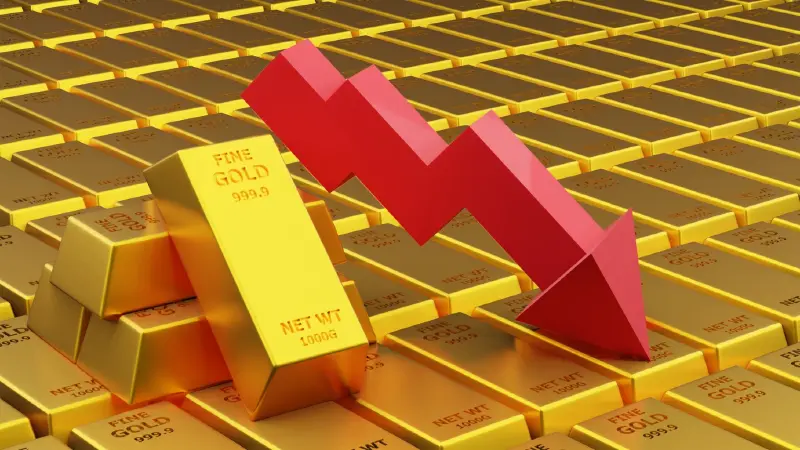


Global gold prices fall nearly 3% after October US inflation beats expectations, lifting the dollar and yields while fueling rate-hike fears.
- Gold prices dropped by nearly 3% on November 10, 2026, after the US Consumer Price Index (CPI) came in higher than economists' forecasts.
- The stronger-than-expected inflation data fueled investor expectations that the US Federal Reserve would implement more aggressive interest rate hikes.
- The prospect of higher interest rates caused the US dollar and Treasury yields to rise, increasing the opportunity cost of holding non-yielding gold and making it more expensive for foreign buyers.
Global gold prices fell sharply by nearly 3% on Tuesday (10 Nov 2026) after US inflation data came in higher than expected, driving up the US dollar and Treasury yields while reinforcing expectations that the Federal Reserve may raise interest rates at a faster pace this year.
Market conditions and latest trading prices
Spot gold declined 2.8% to 4,021.36 USD per ounce, while US gold futures for December delivery dropped 1.9% to 4,036.00 USD per ounce.
Edward Meir, an analyst at Marex, stated, "I think the slightly higher-than-expected inflation figures are a negative factor for gold in the short term."
Meanwhile, spot silver fell 3.9% to 51.32 USD per ounce, and palladium dropped 2.0% to 1,021.22 USD per ounce.
Inflation factors and Federal Reserve stance
The US Bureau of Labor Statistics reported that the headline Consumer Price Index (CPI) increased by 0.4% last month following a 0.6% rise in September, while economists surveyed by Reuters had forecast a 0.3% increase from the previous month.
Following the inflation release and comments from Federal Reserve Governor Christopher Waller—who stated he would support adopting a stricter policy stance if the CPI report proved excessively hot—investors increased bets that the Fed might hike interest rates by 0.50 percentage points in December.
Data from CME's FedWatch tool indicated that markets have fully priced in a 0.25 percentage point rate hike, while the probability of a 0.50 percentage point increase rose to 10.5% from 0% prior to the data release. Additionally, Dallas Fed President Lorie Logan stated that she still sees a need to raise rates by at least two increments of 0.25 percentage points each, though hikes may need to proceed more rapidly than the Fed's pace since the autumn.
Dollar pressure and market trends
The US dollar strengthened against a basket of major currencies while US Treasury yields climbed. A stronger dollar makes gold more expensive for buyers holding other currencies, while higher bond yields increase the opportunity cost of holding bullion, which yields no interest.
Standard Chartered noted in a briefing that "gold continues to trade above the key 4,000 USD per ounce level," adding that "crude oil prices, inflation risks, and equity markets remain key factors driving gold trading as the market focuses on rate-hike expectations for the December Fed meeting."
At the same time, the Monetary Authority of Singapore announced it would launch a gold bullion depository service for foreign central banks and reduce taxes for certain companies in the precious metals market to capture a larger share of the bullion business.
Wednesday morning trading overview (11 November 2026)
Gold prices edged up 0.1% to 4,036.30 USD per ounce as of 07:31 Singapore time. Silver held steady at 51.56 USD per ounce following a 3.5% drop in the previous session, while platinum and palladium posted slight gains.
Bullion traded near 3,030 USD per ounce after falling 2.6% in the previous session. US Treasury yields climbed significantly across all maturities, and the Bloomberg Dollar Spot Index surged following the release of the October CPI.
