
Thailand targets December Cabinet review of e-waste controls after breaches at 375 factories
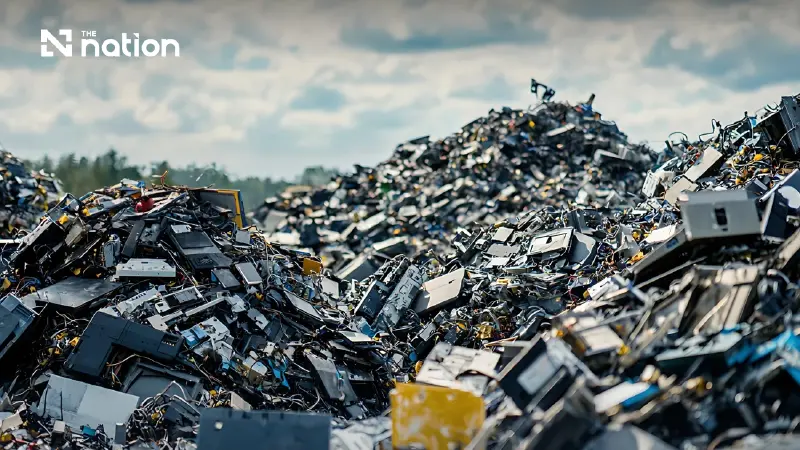


Thailand is considering deportation for foreign waste smugglers, while proposed scrap-metal rules would tighten imports and restrict some exports.d
- Thailand's government intends to submit tighter controls on e-waste and scrap metal to its Cabinet for review in December 2026.
- This action is a response to recent inspections that found 375 out of 752 waste-management and recycling facilities were in breach of the Factory Act.
- The proposed new measures include stricter import controls for iron, aluminum, and copper scrap.
- Authorities are also considering tougher penalties, including the deportation of foreign nationals found to be illegally importing hazardous waste.
Thailand aims to submit tighter scrap-metal controls to the Cabinet in December 2026 and is considering deportation for foreign nationals who illegally import hazardous waste, deputy government spokesperson Lalida Persvivatana said. Inspectors have found Factory Act breaches at 375 of 752 facilities checked.

Speaking at Government House, Lalida outlined the first 2026 meeting of the committee tackling electronic waste, chaired by Deputy Prime Minister and Commerce Minister Suphajee Suthumpun.
The e-waste committee endorsed three parallel work streams:
1. Inspection and enforcement: investigate factories and complaints, intercept illegal imports and pursue offenders.
2. Import and export controls: prevent electronic and hazardous waste entering Thailand through high-risk product categories.
3. Legal reform: close loopholes and strengthen penalties and enforcement over the longer term.
Suphajee stressed that the e-waste measures must be practical and enforceable, covering imports, factory operations, illegal dumping and waste disposal.
Thailand reviews deportation for foreign waste smugglers
Thailand’s e-waste committee is reviewing tougher civil, criminal and administrative measures, including proposed deportation for foreign nationals who illegally import hazardous waste. A legal working group will assess penalties against the severity of the harm caused.
“We will increase penalties to include deportation for foreigners who bring toxic waste into the country,” Lalida said of the proposal. “Civil and criminal penalties will be tougher.”

Lalida called for coordinated enforcement by the Industry and Commerce ministries and the Pollution Control Department. Agencies must also clarify their legal powers and procedures for immigration action against foreign offenders alongside prosecutions.
The e-waste legal review will be linked to draft industrial-waste legislation based on the polluter-pays principle, including a proposed fund for environmental restoration and compensation for affected communities.
The e-waste committee also instructed agencies to discuss investigations into official failures, connect incident-reporting information and coordinate prosecution mechanisms.
Scrap-metal controls targeted for December Cabinet review
A working group co-chaired by the directors-general of Customs and Foreign Trade must submit detailed scrap-metal proposals to the e-waste committee in the fourth week of November 2026. The proposals would then proceed through the National Environment Board and the Cabinet, with Cabinet consideration targeted for December 2026.
The proposed import controls cover iron, aluminium and copper scrap. Options include contamination standards, certification from the country of origin, importer eligibility requirements and joint inspections by the Customs Department, Department of Industrial Works and Pollution Control Department.
The e-waste committee also considered banning exports of selected scrap-metal categories to retain raw materials for domestic industry. The scope and exceptions require further study to reflect practical industrial needs.
Officials developing the scrap-metal measures must account for attempts to evade controls through tariff classifications, inspection capacity and the recycling industry’s raw-material requirements.
Thai factory checks find breaches at 375 of 752 facilities
The Industry Ministry deployed 50 joint teams from the Department of Industrial Works and provincial industry offices to inspect category 105 and 106 waste-management and recycling facilities. Of 3,049 registered target facilities, 752 had been checked and 375 were found to have breached the Factory Act.
The Industry Ministry issued 470 administrative orders, mostly requiring factories to correct identified deficiencies. Lalida reported that eight facilities had been ordered to stop operations for improvements and one had lost its licence for seriously violating a suspension order.
The Industry Ministry will monitor compliance deadlines and will not grant repeated extensions without justification. Factories that fail to make required improvements could face suspension, followed by licence revocation if they continue to defy orders, subject to legal procedures.
The e-waste committee instructed agencies to distinguish offence categories and enforcement outcomes clearly so the public can track action against individual violations.
Thai Customs seizes 89 containers as dumping checks expand
Thailand’s Customs Department reported seizing 89 illegally imported containers weighing approximately 1.9 million kilograms between October 1 and November 9, 2026.
Customs is working with the Department of Industrial Works and the Pollution Control Department to tackle false declarations, electronic waste concealed among scrap metal and tariff reclassification used to evade inspections.
The Pollution Control Department and the Natural Resources and Environment Ministry’s special task force investigated seven complaints and pollution cases in eastern Thailand. These concerned illegal dumping, warehouses containing materials and equipment suspected to be electronic waste, and unlicensed factories.
The Pollution Control Department coordinated with relevant agencies over suspension orders, seizure or sealing of machinery and criminal complaints according to the facts of each case. Cases involving large quantities of seized materials are being prepared for referral to the Department of Special Investigation.
The e-waste committee ordered inspections to extend beyond licensed facilities to illegal factories and businesses outside the registration system. The Interior Ministry must coordinate governors, district chiefs, subdistrict heads, village heads and local authorities to identify illegal factories and industrial-waste dumping or burial sites.
Government records for 2025–2026 identified more than 40 illegal dumping and burial sites containing over 100,000 tonnes of industrial waste, including electronic waste, in Rayong, Chonburi, Chachoengsao and Prachin Buri. Many sites were concentrated around provincial boundaries, including areas adjoining Sa Kaeo, requiring coordinated inspections and enforcement.
Alleged negligence or failures by officials must be investigated carefully and fairly, with legal and disciplinary action where warranted, the committee instructed.
The e-waste committee agreed to retain the Natural Resources and Environment Ministry’s existing complaint-investigation teams to avoid duplicating operations.
“The government will not stop at identifying violations or issuing orders. We must follow up to ensure problems are corrected, offenders face legal action and illegal imports or dumping do not recur,” Lalida said.
Lalida said the three work streams would address the full waste-management chain and strengthen enforcement to protect public health and the environment and prevent Thailand becoming a destination for hazardous foreign waste.
The e-waste committee will monitor agencies’ work and report progress to the prime minister every 15 days.
