
Bangkok-area PM2.5 expected to rise as nine locations exceed limit
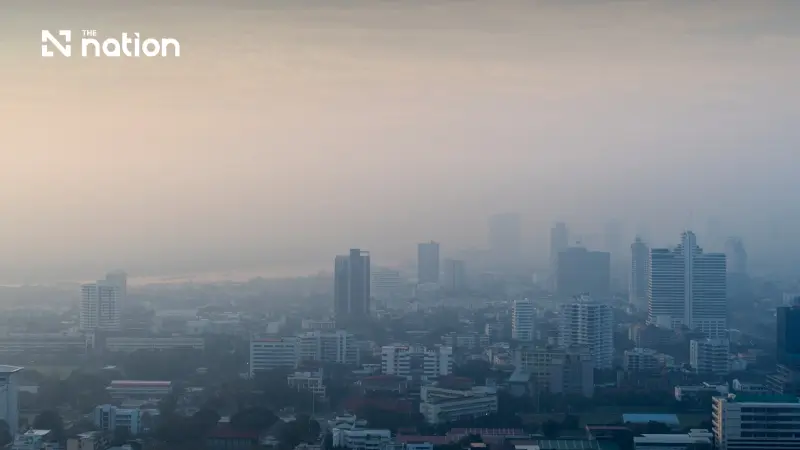


PM2.5 may rise across Bangkok and nearby provinces on 19–20 November, after nine locations exceeded the national standard in the 14 November report.
- PM2.5 pollution is expected to rise in the Bangkok area on November 19-20 due to a strengthening cold air mass that traps pollutants.
- Nine locations across Bangkok and its surrounding provinces have already recorded PM2.5 levels exceeding the national standard, reaching the "orange" category which can affect health.
- The Pollution Control Department attributes the pollution build-up to winter weather conditions that limit the dispersal of fine particulate matter.
- Residents, especially vulnerable groups, are advised to monitor air quality, reduce time outdoors, and wear protective masks.
PM2.5 concentrations are expected to rise again in parts of Bangkok and surrounding provinces on November 19–20 2026, as a stronger cold air mass creates conditions favourable to pollution accumulating near ground level, according to the Pollution Control Department (PCD).
The outlook follows the department’s report on Saturday (November 14), issued through its Air Pollution Mitigation Communication Centre, which identified nine locations with PM2.5 levels above the national standard. These areas reached the orange category, indicating that air pollution was beginning to affect health.
Nine locations above the national standard
Five affected locations were in Bangkok: Pom Prap Sattru Phai, Pathum Wan, Yan Nawa, Lat Krabang and Bang Khen districts.
The other four were Phra Pradaeng and Mueang Samut Prakan districts in Samut Prakan province, Mueang Samut Sakhon district in Samut Sakhon province, and Mueang Nakhon Pathom district in Nakhon Pathom province.
The PCD called for close monitoring of Bangkok and surrounding provinces, where PM2.5 concentrations ranged from 21.9 to 44.2 micrograms per cubic metre (µg/m³).
Air quality elsewhere largely within standards
Most of Thailand remained within national air-quality standards in the November 14 report, although particulate pollution was beginning to increase in several Bangkok-area locations.

PM2.5 readings ranged from 4.6–15.2 µg/m³ in the North, 8.8–27.0 µg/m³ in the Northeast, and 18.4–35.8 µg/m³ in the Central and Western regions.
The East recorded concentrations of 11.3–27.2 µg/m³, while the South recorded 5.0–6.9 µg/m³.
Winter conditions favour pollution build-up
Thailand officially entered the winter season on November 9, according to the Thai Meteorological Department.
Winter weather can favour the accumulation of fine particulate matter, particularly when atmospheric ventilation is weak. Limited air movement reduces the dispersal of pollutants, allowing particles to build up near ground level and increasing PM2.5 concentrations.
Hotspot monitoring recorded 30 hotspots across Thailand on November 13, mostly in rice fields in the lower North and Central region.

With a strengthening cold air mass expected to encourage further accumulation on November 19–20, the PCD urged residents to follow air-quality reports regularly and prepare for a possible increase in pollution.
Health precautions and measures to reduce emissions
The department advised residents to protect their health, particularly children, older people, pregnant women and people with respiratory conditions.
Vulnerable groups should reduce the time they spend on outdoor activities. Anyone who needs to go outside should wear a mask designed to protect against PM2.5 and follow Ministry of Public Health advice.
The PCD also called on all sectors to reduce air pollution by avoiding all forms of open burning, keeping vehicle engines properly maintained and choosing public transport to cut traffic-related emissions.
These measures would help alleviate PM2.5 pollution and reduce its effects on public health, the department noted.
Real-time air-quality updates are available through the Air4Thai website and the Air4Thai application.
