
Thai Navy reviews 16.73bn-baht frigate tender on Nov 16 after reported restart order
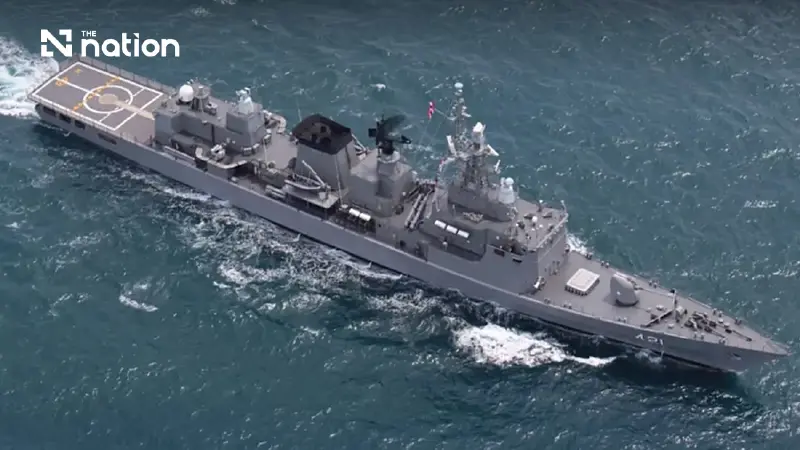


Thailand’s navy chief has not seen a letter reportedly ordering a new frigate tender after the Thai Frigate Building Consortium’s appeal.
- The Royal Thai Navy is reviewing its 16.73-billion-baht frigate procurement following a reported order to cancel and restart the bidding process.
- The order reportedly came from a government appeals committee which upheld a significant point in an appeal from the Thai Frigate Building Consortium.
- The committee reportedly rejected the appeals of four other bidders: Singapore Technologies Engineering, TAIS Gemi İnşa ve Teknoloji, ASFAT, and Hyundai Heavy Industries.
- South Korea’s Hanwha Ocean had previously been selected as the winner for the contract before the review was ordered.
Royal Thai Navy commander-in-chief Admiral Nares Wongtrakul said on Monday (November 16, 2026) that officials were checking information on its 16.73-billion-baht frigate procurement following reports of an order to cancel and restart the process. Nares stressed that he had not personally seen the letter.
The reported order came from the Appeals and Complaints Committee under the Comptroller General’s Department (CGD), which had considered appeals from five bidders, according to Bangkok Biznews.
Nares has yet to see frigate procurement letter
Nares said his understanding was that the letter asked the Royal Thai Navy to review the frigate procurement. He reiterated that he had yet to examine its wording or recommendations.
Officials involved in the frigate project had been asked to submit supporting information for consideration, Nares said, adding that clear guidelines and procedures were in place for deciding how to proceed.
Thai Frigate Building Consortium’s appeal reportedly upheld
Bangkok Biznews reported that the Appeals Committee had upheld a material point raised by the Thai Frigate Building Consortium joint venture because it significantly affected the procurement. The committee had examined all five appeals and checked the facts previously considered by the procurement committee using the selection method.

The Appeals Committee reportedly found insufficient grounds to uphold the appeals of four companies: Singapore Technologies Engineering Ltd.; TAIS Gemi İnşa ve Teknoloji A.Ş.; Askeri Fabrika ve Tersane İşletme A.Ş. (ASFAT); and Hyundai Heavy Industries Co., Ltd.
According to Bangkok Biznews, the Appeals Committee ordered the Royal Thai Navy to cancel the current procurement and conduct a fresh process in accordance with relevant rules and procedures, citing Section 119, paragraph two, of the Public Procurement and Supplies Administration Act B.E. 2560 (2017).
Hanwha Ocean selected for 16.73-billion-baht package
South Korea’s Hanwha Ocean Co., Ltd. had been selected to supply a new frigate. The 16.73-billion-baht offer covered one vessel with associated systems, equipment and support, including training, testing, spares and warranty cover.
Royal Thai Navy spokesman Rear Admiral Parach Rattanachaiphan said at the time that Prime Minister Anutin Charnvirakul had acknowledged the selection summary on September 4, before the permanent secretary for defence approved the outcome on September 7.
Navy defended frigate bidding rules in September
At a September 18 briefing, then Royal Thai Navy chief Admiral Pairote Fuangchan denied that the frigate specifications had been tailored to favour a bidder. He outlined five principles: legal compliance, transparency, equal treatment, value throughout the vessel’s service life and maximum benefit for Thailand, including technology transfer and support for domestic industry.
Pairote maintained that all bidders had received the same conditions and could ask questions, but could not amend their proposals or supply additional documents after bids were opened if they had failed essential requirements.
Pairote linked the frigate purchase to protecting Thailand’s sovereignty, shipping routes and maritime interests, stressing that combat readiness depended on integrated systems and support for maintenance and upgrades throughout the ship’s service life.
The Royal Thai Navy also said on September 18 that Hanwha’s negotiated offer included offshore patrol vessel and unmanned surface vehicle designs, alongside rights to access technical knowledge and further develop a tactical data link and combat management system to support domestic defence capabilities.
