
Chiang Rai urine tests find elevated arsenic in 31 of 549 residents
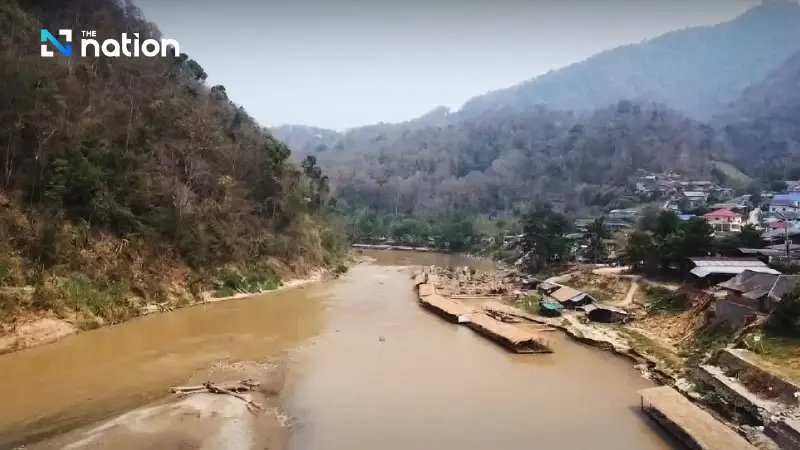


Chiang Rai health officials are tracing the source of arsenic exposure after 31 of 549 residents tested above the reference level. Results are pending for 399 people in Mae Sai.
- Out of 549 at-risk residents tested in Chiang Rai, 31 were found to have inorganic arsenic in their urine above the reference level.
- The rate of those tested with elevated levels was 5.6% in 2026, a sharp increase from 0.3% in 2025, after the province broadened its criteria for who was eligible for testing.
- Health officials are monitoring the 31 affected residents while investigating the source of the exposure, which has not yet been identified.
Dr Somruek Jungsaman, Thailand’s permanent secretary for public health, said on 19 November 2026 that 31 of 549 at-risk residents tested in Chiang Rai had inorganic arsenic in their urine above the reference level. Health officials are monitoring each resident and investigating how the exposure occurred. They have yet to establish whether any of the 31 were exposed through the Kok, Sai or Ruak rivers.

Dr Somruek announced the findings during visits to Mae Sai and Chiang Saen districts. The Chiang Rai Provincial Public Health Office and partner agencies screened 6,269 people across 338 villages in all 18 districts of the province and collected urine samples from 549 of them.

Chiang Rai widened its testing criteria in 2026
Chiang Rai broadened the criteria for urine testing in 2026 to include more people considered at risk. Of those tested, 5.6% had inorganic arsenic above the reference level, compared with 0.3% in 2025, when one of 322 people exceeded it. Post Today calculated that the proportion was about 18 times the previous year’s figure. The change in who qualified for testing limits what the comparison can tell us about exposure across the province.
Mae Sai awaits results for 399 people
In Mae Sai, the Department of Disease Control is monitoring arsenic and lead exposure in five subdistricts. Laboratory results are pending for 399 people in the latest round of screening. All 52 people tested in 2025 had results within the reference range, as did the 25 retested in 2026.
The Ministry of Public Health instructed the Department of Health to monitor village tap water and the Department of Medical Sciences to test water, vegetables and fish. The Department of Medical Sciences collected 23 samples in five Mae Sai subdistricts between 13 and 17 November. The Department of Disease Control is working with local health services to trace exposure and monitor each person whose result exceeded the reference level.

Seven-province survey found 94 people above the reference level
Across seven northern and north-eastern provinces, 94 of 1,269 people tested in 2026 (7.4%) had total arsenic in their urine above the reference level, according to Department of Disease Control figures reported by Thai PBS on 3 November.
In Mae Hong Son, in the Salween River basin, 17 of the 99 people tested (17.2%) exceeded the reference level for total arsenic. Two of the 99 exceeded the separate reference level for inorganic arsenic.
In four north-eastern provinces along the Mekong, the department reported results above reference levels in six of 76 people tested in Loei, 17 of 177 in Nong Khai, six of 108 in Bueng Kan and 10 of 159 in Nakhon Phanom.

