
Sophon reveals how Thailand persuaded Cambodia to drop 20,000 displaced people claim at AIPA
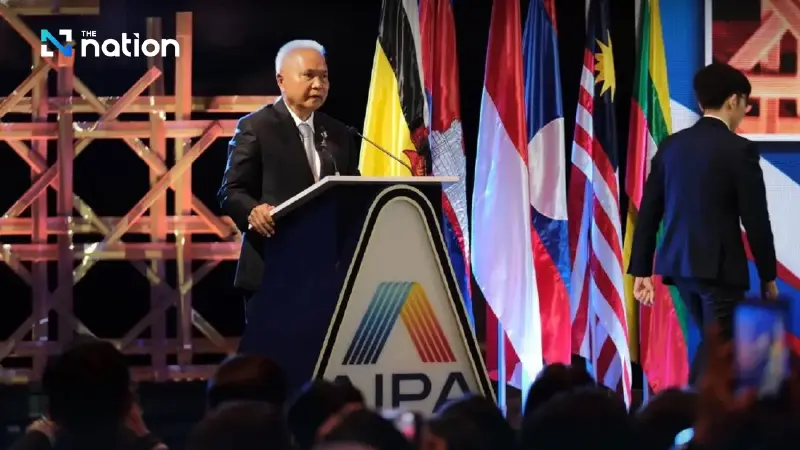


House Speaker Sophon Saram reveals how Thailand lobbied 27 countries to secure the removal of Cambodia's disputed reference to 20,000 displaced civilians from an AIPA report.
House Speaker Sophon Saram has revealed how Thailand's parliamentary delegation mounted a co-ordinated diplomatic campaign involving representatives from 27 countries, which he said led Cambodia to withdraw a disputed reference to more than 20,000 displaced civilians from an ASEAN Inter-Parliamentary Assembly (AIPA) report.
Speaking on Friday (November 20, 2026), Sophon, who also serves as President of Thailand's Parliament, said Cambodia's decision to remove the wording followed sustained objections by the Thai delegation during the 47th AIPA General Assembly in Manila, the Philippines.
He said the removal eliminated language that Thailand regarded as making allegations against it, allowing the Thai delegation to endorse the report at the Political Committee meeting at 9am on November 19.
The disputed reference concerned more than 20,000 civilians reportedly displaced by the Thailand–Cambodia border conflict, a figure and related claims that Thailand maintained had not been jointly verified.
Sophon reveals strategy behind Thailand's diplomatic push
Sophon said he had personally devised a step-by-step strategy for "Team Thailand", combining interventions during formal meetings with diplomatic engagement outside the conference rooms.
The campaign began with a two-minute intervention at the AIPA–ASEAN Interface meeting, during which he made clear that Thailand could not accept disputed figures or allegations that had not undergone joint verification.
He and the Thai delegation subsequently reiterated that position at the AIPA Executive Committee meeting before presenting Thailand's arguments at the plenary session of the 47th AIPA General Assembly.
According to Sophon, the successive interventions ensured that parliamentary representatives from participating countries understood Thailand's objections and its position on the border dispute.
He said the delegation had sought to prevent unverified claims by one country from being presented as an agreed position or consensus of AIPA.
Thai delegation delivers letters to 27 countries
Alongside its interventions during the meetings, Thailand pursued a diplomatic campaign outside the formal proceedings.
Sophon said he had sent an official letter to the AIPA president explaining Thailand's objections to the disputed reference.
He also instructed members of the Thai parliamentary delegation to personally deliver letters to the heads of delegations from 27 countries.
The letters outlined Thailand's reasons for challenging the reference to displaced civilians and reiterated its position that the figures and associated allegations remained contested.
Sophon said the diplomatic outreach was intended to ensure that other parliamentary delegations understood Thailand's position before the report was considered for endorsement.
The Thai delegation maintained that the border dispute should be addressed through bilateral mechanisms rather than allowing disputed claims to be incorporated into regional parliamentary documents.
Thailand refuses to endorse report until wording removed
Sophon said the final stage of the strategy took place at the AIPA Political Committee meeting.
He instructed Thai representatives on the committee to maintain their objections and make clear that Thailand would not endorse the report while the reference to more than 20,000 displaced civilians remained.
According to Sophon, Cambodia eventually agreed to withdraw the disputed wording, clearing the way for Thailand to endorse the report on November 19.
He said the final wording no longer contained language that Thailand considered accusatory, while his earlier objections at the AIPA–ASEAN Interface meeting remained on record.
The removal of the reference, however, did not resolve the underlying disagreement over civilian displacement along the Thailand–Cambodia border.
Cambodia has maintained that approximately 20,000 of its citizens remain unable to return home because of the border conflict, while Thailand has disputed the figures and associated allegations, calling for joint verification.
Sophon credits teamwork for outcome
Sophon attributed the outcome to the co-ordinated efforts of Thailand's parliamentary delegation, saying its members had worked together throughout the meetings to defend the country's position.
He said responsibilities had been divided among delegates, who maintained close communication during the AIPA–ASEAN Interface, Executive Committee meetings, plenary proceedings and Political Committee discussions.
The approach allowed Thailand to present a consistent position across several parliamentary forums while engaging directly with representatives from other countries.
Sophon said the delegation's objective had been to prevent Thailand from being placed at a disadvantage or allowing its national interests to be undermined by disputed information in an official regional document.
He described the outcome as the result of careful planning, sustained diplomatic engagement and teamwork, from his initial two-minute intervention to the Political Committee discussions that ultimately allowed Thailand to endorse the report.
