
All 10 Mae Sai rice samples meet arsenic limits, ministry ready to buy and destroy any batch that fails future tests
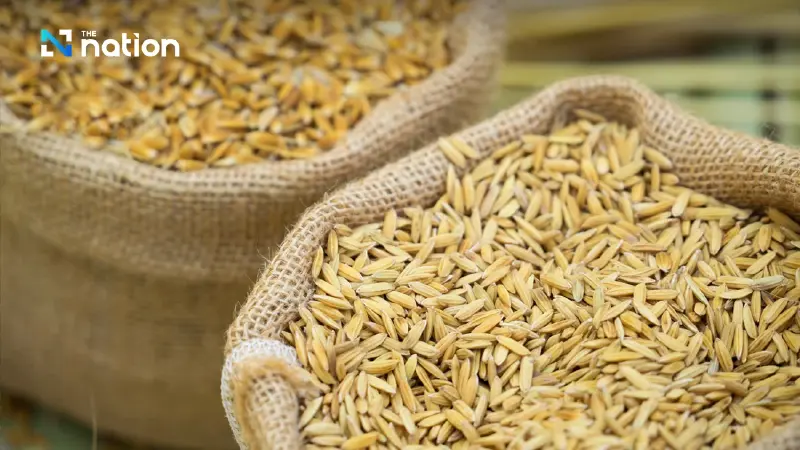


Thai officials are ready to buy and destroy any Chiang Rai rice that fails future safety tests and have ordered hourly water quality checks.
- Thailand's Rice Department announced on November 20 that tested rice samples from Chiang Rai showed no contaminants above established safety limits.
- Separate tests on 10 white and brown rice samples from Mae Sai district also confirmed they all met international safety standards for inorganic arsenic.
- The findings were released to reassure consumers and farmers, as contamination concerns had previously led some local mills to halt rice purchases.
- The government has a contingency plan to buy and destroy any future rice lots that are found to exceed safety limits before they can be sold.
Thailand’s Rice Department found no contaminants above safety limits in the Chiang Rai rice it tested, Deputy Agriculture and Cooperatives Minister Piyarat Tiyapairat said on 20 November 2026. If future tests identify rice that exceeds those limits, the ministry is ready to work with the Bank for Agriculture and Agricultural Cooperatives to buy and destroy the affected lots before they leave the area.
Piyarat and Deputy Interior Minister Jeseth Thaiseth announced the findings after a meeting of the committee overseeing disaster prevention and response in northern Thailand. The meeting, held at the Department of Disaster Prevention and Mitigation, lasted nearly two and a half hours.

All 10 Mae Sai rice samples meet arsenic limits
Researchers at Rajamangala University of Technology Lanna’s Chiang Rai campus also reported results for 10 rice samples from Mae Sai district. The researchers and provincial officials collected the samples on 17 November and reported the findings to the governor on 19 November. All seven white rice samples and three brown rice samples met international Codex limits for inorganic arsenic. Some local mills and buyers had paused purchases over contamination concerns as the harvest approached.
Piyarat said the Rice Department would continue checking rice quality and share its findings with government scientists. She sought to reassure both consumers buying Chiang Rai rice and farmers concerned about selling their harvest.
Waterworks ordered to check quality hourly
Jeseth said the Provincial Waterworks Authority would check water quality every hour and monitor turbidity, a measure of cloudiness, around the clock. Cloudier water can indicate that arsenic levels may have risen. If raw water exceeds the applicable standard, operators must immediately stop treating it for public supply. The instruction also applies to village and municipal waterworks.
Provincial officials will check village systems drawing on surface water, groundwater and mountain streams. In affected areas, they will collect samples before pumping and after filtration for testing by the Metropolitan Waterworks Authority, whose laboratory Jeseth cited for its accuracy. Where checks identify unsafe supplies or a risk to users, officials will suspend use until a remedy is in place. Residents can receive tested water from the Provincial Waterworks Authority or water supplied through mobile filtration units.
Jeseth acknowledged pollution in the rivers and said sampling times helped explain differences between test results. At some points, arsenic readings had fallen far enough for waterworks to resume treating the raw water. Officials will publish results for both raw and treated water so residents can see what was measured.

Risk zones could change what farmers grow
The Agriculture and Cooperatives Ministry will test soil and all types of agricultural produce across affected areas. It plans to classify farmland into red, yellow and green risk zones. In some places, farmers may be advised to switch from food crops to other commercial crops or to trees grown for furniture and other uses. Piyarat said she favoured daily soil and water tests because residents wanted current figures. The wider testing schedule was due for discussion on 21 November.
The Royal Irrigation Department will oversee waterways serving homes and farmland. The Pollution Control Department will test the main rivers and extend sampling coverage, while the Public Health Ministry will check safeguards for drinking water and other household uses.
The Ministry of Higher Education, Science, Research and Innovation has asked Thailand Science Research and Innovation to assess whether community filtration systems would be cost-effective to install and how much repairs would cost. Deputy Prime Minister Yodchanan Wongsawat, who heads the ministry, wants promising filtration research put to use in communities.
Upstream weirs await decision ahead of Myanmar talks
Prime Minister Anutin Charnvirakul was scheduled to meet the agencies at 11am on 21 November to consider safeguards and proposed sites for upstream weirs that would trap arsenic-bearing sediment. The natural resources and agriculture ministries had identified possible sites. Jeseth said the government needed to assess the effects on nearby communities and address residents’ concerns before deciding where to proceed.
The Department of Disaster Prevention and Mitigation will reconcile the agencies’ findings and publish water and crop results. Each agency was asked to bring its evidence and proposed response to the prime minister’s meeting. Departments can seek central funding if their budgets fall short, provided their requests do not overlap.
Thailand and Myanmar are due to hold working-group talks in Bangkok on 25–26 November. Officials will consider scientific measurements, research and the maximum amount of a pollutant a river can receive each day while still meeting water quality standards. Yodchanan has also raised the issue with Chinese leaders, and the Chiang Rai governor plans to speak with Myanmar representatives.
The Industry Ministry is preparing an order to halt exports of products or substances used in mining operations that harm people in Thailand. It also wants importers to identify where minerals originate. Jeseth said activities that benefit individuals or groups at residents’ expense should be suspended while safeguards for the waterways are developed.
