
Ministry to propose pollution control area for about 150km of Kok River
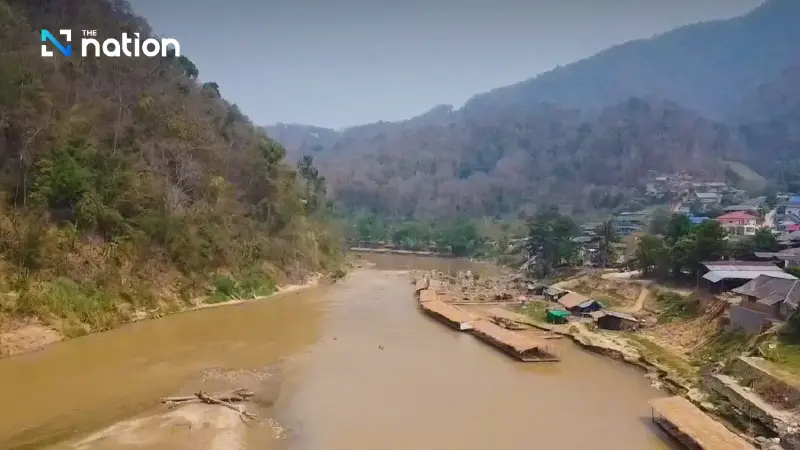


Water test results from Bangkok have taken 20 days to a month. The ministry plans to set up laboratories in Chiang Mai and Chiang Rai so samples can be tested locally.
- Thailand's Ministry of Natural Resources and Environment will propose designating a 150-kilometer stretch of the Kok River as a pollution control area.
- The proposal aims to coordinate agency efforts to tackle toxic contamination, monitor water quality, and secure safe raw water sources for tap water production.
- If the plan is approved, immediate measures will include establishing local water testing labs, installing 20 real-time water quality monitoring stations, and providing twice-daily public updates.
- Following approval, the governors of Chiang Rai and Chiang Mai will be responsible for creating specific action plans for their areas.
The Ministry of Natural Resources and Environment is preparing to ask the National Environment Board to designate a stretch of about 150 kilometres along the Kok River in Thailand as a pollution control area.
The proposal aims to coordinate the work of agencies tackling toxic contamination in the river, from monitoring water quality to securing the raw water needed to produce tap water.
Dr Raweewan Bhuridej, the ministry’s permanent secretary, will chair the first preparatory meeting on Friday (November 27, 2026).
She and the directors-general of the relevant departments will set out the work plan and draft a report for submission to the board.
The board, chaired by Deputy Prime Minister Songsak Thongsri, is due to consider the proposal on December 2.
If the board approves the proposal, the designation will be published in the Royal Gazette.
The governors of Chiang Rai and Chiang Mai will then draw up action plans and determine which measures to apply in each area.

Water samples from the area have had to be sent to Bangkok for testing, with results taking between 20 days and a month.
The ministry is therefore preparing to establish water testing laboratories in Chiang Mai and Chiang Rai so officials can analyse samples and obtain results locally.
Measures planned from December 2 include the installation of 20 stations to monitor water quality in real time.
The stations would cover more than 100 kilometres of the Kok River, as well as the Sai and Ruak rivers.
The Department of Disaster Prevention and Mitigation will work with both provinces to coordinate information for twice-daily public updates on water quality.
The aim is to reduce confusion when residents receive information through different channels.

The Department of Water Resources is stepping up its survey of additional raw water sources in cooperation with the Department of Groundwater Resources and the Provincial Waterworks Authority.
The aim is to secure reserves that can be used to produce safe tap water for households that rely on it.
The relevant agencies also plan to work with the Ministry of Agriculture and Cooperatives to assess the impact on fish, crops and rice fields. Two sets of findings will be important after the board’s meeting.
The survey will help identify which raw water sources could serve as reserves, while local test results will provide information for farmers in both provinces.

