
NIDA Poll: Support for Kamnan Mano's protest outstrips plans to join
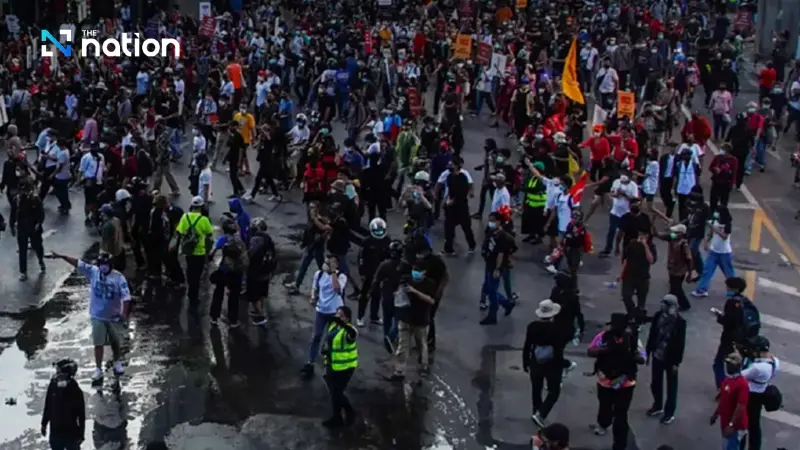


A NIDA Poll finds that 64.97% back Kamnan Mano's protest, but 78.86% of supporters and those giving no view have no plans to join; most doubt a 10-baht-per-litre fuel price cut.
- A NIDA poll has found that almost 65% of respondents support the protest movement led by Kamnan Mano.
- Despite this widespread support, the survey reveals that the vast majority of sympathisers (nearly 79%) have no plans to join the demonstrations.
- The poll also indicates that almost half of those surveyed do not believe the protest will escalate into a large-scale movement or cause political unrest.
- A significant majority of respondents (over 71%) view the protest's key demand for a 10-baht-per-litre fuel price cut as unlikely or impossible to achieve.
A NIDA Poll has found that nearly 65% of respondents support the protest movement led by Kamnan Mano outside Government House in Bangkok, although most of those asked about participating have no plans to join the demonstrations.
The survey, titled "How far will Kamnan Mano's protest go?", was conducted by the NIDA Poll Centre at the National Institute of Development Administration (NIDA) on November 17 and 18.
It involved 1,310 respondents aged 18 and over nationwide and examined public attitudes towards the demonstrations led by Mano Khrueakaew, known as Kamnan Mano, the subdistrict headman of Krabi Noi in Krabi province.

Nearly 65% express support for the protests
The findings showed that a combined 64.97% of respondents supported the movement, while 34.65% opposed it.
Asked about their level of support for the protesters outside Government House, respondents gave the following answers:
- 32.60% somewhat supported the demonstrations.
- 32.37% strongly supported them.
- 18.55% strongly opposed the movement.
- 16.10% somewhat opposed it.
- 0.38% were unsure or declined to answer.

Most supporters have no plans to join
Despite widespread support, the survey highlighted a significant gap between public sympathy for the movement and willingness to participate.
Among 856 respondents who expressed support for the protests or did not state a position:
- 78.86% had no plans to join the demonstrations.
- 13.55% preferred to wait and see how the situation developed before deciding.
- 3.97% definitely intended to join in the near future.
- 2.22% planned to participate, but not in the immediate future.
- 1.40% had already participated in demonstrations in Bangkok, other provinces or both.

Almost half expect protests to remain limited
The poll also explored whether Kamnan Mano's movement could expand into large-scale protests and trigger wider political unrest.
Almost half of those surveyed believed the protests would neither grow into a large-scale movement nor cause political disruption.
The findings showed that:
- 49.47% believed the movement would not develop into a large-scale protest or cause political unrest.
- 22.52% expected the demonstrations to grow significantly and trigger political unrest.
- 18.47% believed the protests could become large-scale without causing political disruption.
- 7.63% expected the movement to remain relatively small but still generate political unrest.
- 1.91% were unsure or did not respond.

Over 71% doubt the feasibility of a 10-baht-per-litre fuel price cut
The survey also assessed public views on the feasibility of Kamnan Mano's demand for an immediate 10-baht-per-litre reduction in fuel prices.
A combined 71.68% considered the proposal unlikely or impossible to implement, compared with 28.09% who believed it could be achieved.
The responses were as follows:
- 39.39% considered the proposed reduction unlikely.
- 32.29% believed it was completely impossible.
- 21.91% thought the reduction was likely to be achievable.
- 6.18% believed it was definitely possible.
- 0.23% declined to answer or expressed no interest.
Overall, the survey suggests that while Kamnan Mano's movement has attracted considerable public support, that backing has yet to translate into a strong willingness to participate in the demonstrations.
Public expectations of a major escalation also remain limited, while most respondents question whether the movement's demand for an immediate 10-baht-per-litre fuel price reduction can realistically be met.
