
Phiphat responds to Thaksin over soaring Chiang Mai airfares, urges passengers to book directly with airlines
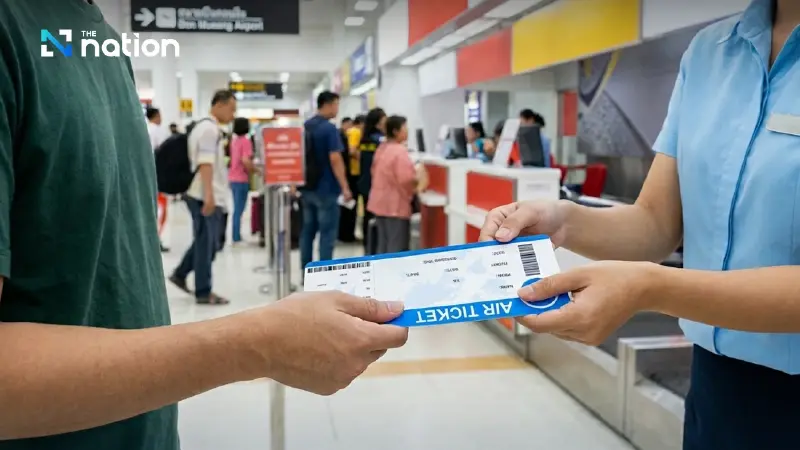


Transport Minister Phiphat Ratchakitprakarn insists airline fares remain within regulatory ceilings after Thaksin complained of Chiang Mai return tickets costing nearly 30,000 baht.
Deputy Prime Minister and Transport Minister Phiphat Ratchakitprakarn insisted on Friday (November 27) that airfares charged by airlines remained within regulatory ceilings, following a complaint by former prime minister Thaksin Shinawatra over soaring ticket prices between Bangkok and Chiang Mai during the Loy Krathong festival.
Phiphat said the Transport Ministry would ask the Civil Aviation Authority of Thailand (CAAT) to clarify its fare regulations to improve public understanding of pricing mechanisms and applicable fare ceilings.

He explained that the airline industry operates in a partially liberalised market, limiting the government’s ability to intervene directly in operators’ pricing decisions.
Global energy price fluctuations have also affected aviation fuel costs, he said, adding that the government must take airlines’ operating expenses into consideration.
Phiphat advised passengers to plan their journeys in advance, book early and purchase tickets directly from airlines to avoid additional charges imposed by intermediaries.
Thaksin complains of nearly 30,000-baht return fares
Earlier on Friday, Thaksin posted on his personal Facebook page expressing frustration over the cost of travelling on low-cost airlines during the Loy Krathong festival in Chiang Mai.
He said his secretary had struggled to find available tickets, with return fares starting at more than 13,000 baht.
Changing the booking would have pushed the cost to 23,000 baht, while prices quoted on some booking websites approached 30,000 baht — more expensive, he said, than a return flight to Hong Kong.
Thaksin questioned whether budget airlines could still be considered low-cost carriers, recalling that promotional return fares between Bangkok and Chiang Mai had once been available for just 999 baht.
He urged the Transport Ministry to ensure that effective maximum fare limits were in place to protect consumers, while allowing reasonable adjustments in response to changes in fuel costs.
Phiphat says operating costs have changed
Responding to Thaksin’s complaint, Phiphat said he had never personally encountered Bangkok–Chiang Mai return fares as high as 23,000–30,000 baht.
However, he acknowledged having encountered one-way fares of between 7,000 and 10,000 baht on southern routes, including Phuket and Hat Yai, when booking at short notice.
Phiphat declined to comment directly on Thaksin’s comparison with historical ticket prices, saying economic conditions and operating costs differed considerably between periods.

Foreign booking platforms complicate fare regulation
CAAT had previously warned on November 12 that exceptionally high ticket prices during the Loy Krathong and Yi Peng festivals were linked to strong travel demand and limited seat availability.
Flight schedules had also been adjusted to accommodate sky lantern releases in Chiang Mai, further reducing available seats.
The regulator said unusually high fares displayed on third-party booking websites did not necessarily reflect prices offered directly by airlines.
Under existing regulations, the fare ceiling for low-cost airlines operating the Bangkok–Chiang Mai route is approximately 5,000 baht per leg, excluding certain taxes, fees and additional services.
However, the government has acknowledged that some overseas-registered online travel agencies operate outside CAAT’s regulatory jurisdiction and have offered tickets at prices exceeding the prescribed ceilings.
The Transport Ministry has been working with relevant agencies and airlines to strengthen oversight of online ticket sales and ensure sufficient flight capacity during peak travel periods.
Passengers are encouraged to compare prices, verify seat availability directly with airlines and carefully review additional charges before confirming their bookings.
