
Thai Cabinet approves four labour measures for three groups



Four Cabinet-approved proposals would extend seafarer protection, cover online homework and equalise benefits for state-enterprise spouses.
Thailand’s Cabinet has approved four Labour Ministry proposals, including two draft laws, intended to address gaps in statutory protection for seafarers, homeworkers and the legally recognised spouses of state-enterprise employees.
Labour Minister Julapun Amornvivat announced the decision on Tuesday (August 18), describing the package as an update to labour welfare and employment standards in response to changing social conditions and working arrangements.
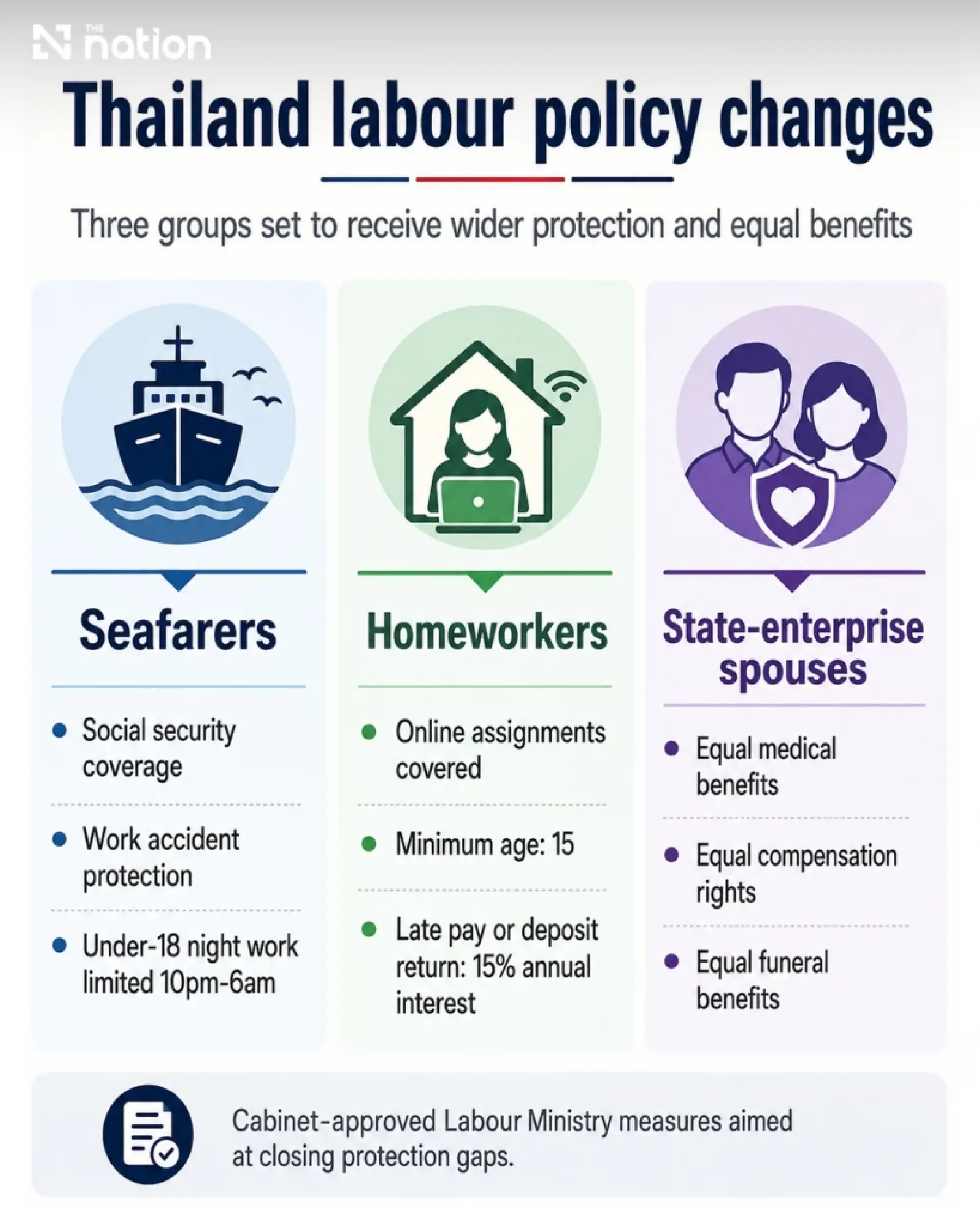
The proposals are grouped under three policy areas: extending social security and work-injury protection to seafarers, modernising legislation governing homework to include assignments obtained online, and aligning state-enterprise employee benefits with Thailand’s marriage equality law.


Seafarers to enter social security and compensation systems
A proposed amendment to the Maritime Labour Act would require employers to enrol seafarers directly in the social security system and the Workmen’s Compensation Fund.
The change would give seafarers access to all seven categories of social security benefits, as well as compensation and protection in the event of a work-related accident.
The draft law would also prohibit shipowners from assigning seafarers under 18 to work between 10pm and 6am.
Exceptions would apply where the work forms part of training or involves duties considered necessary under conditions prescribed by law.
The restriction is intended to protect the health and welfare of young seafarers and align Thai legislation with the International Labour Organization’s Maritime Labour Convention, 2006.

Homeworker law extended to online assignments
The proposed amendment to the Home Workers Protection Act would broaden the law to cover modern working arrangements, including assignments obtained through online systems.
Its scope would extend across industrial, commercial, agricultural and service-sector work.
The draft sets 15 as the minimum age for accepting homework and prohibits hirers from assigning hazardous duties to workers under 18 or pregnant women.
A hirer who employs a child under 15 would face up to two years in prison or a fine ranging from 400,000 to 800,000 baht.
The bill would also establish standards for fair remuneration and strengthen the financial liability of hirers who fail to pay workers or delay returning security deposits.
In such cases, the hirer would be required to pay interest at an annual rate of 15%.
Marriage equality applied to state-enterprise benefits
The Cabinet also approved a draft announcement by the State Enterprise Labour Relations Committee to bring employee welfare entitlements into line with the marriage equality law.
The proposed rules would allow legally recognised spouses of state-enterprise employees to receive the same benefits regardless of gender.
The equalised entitlements would cover medical expenses, compensation payments and funeral expenses.
The Labour Ministry estimates that more than 12,000 people would benefit from the expanded medical entitlement.


Policy package targets gaps in labour coverage
Julapun said the reforms were designed to close gaps in labour protection and improve welfare standards across groups whose employment arrangements or family status were not fully covered by existing rules.
The package combines employment protection, social security access, safeguards for young and pregnant workers and equal recognition of legally married spouses.
Its stated objective is to bring Thailand’s labour framework into closer alignment with changing forms of work and the country’s broader legal recognition of equal marital rights.
