
No approval for 5–10% consumer goods price rises from Oct 1, DIT says
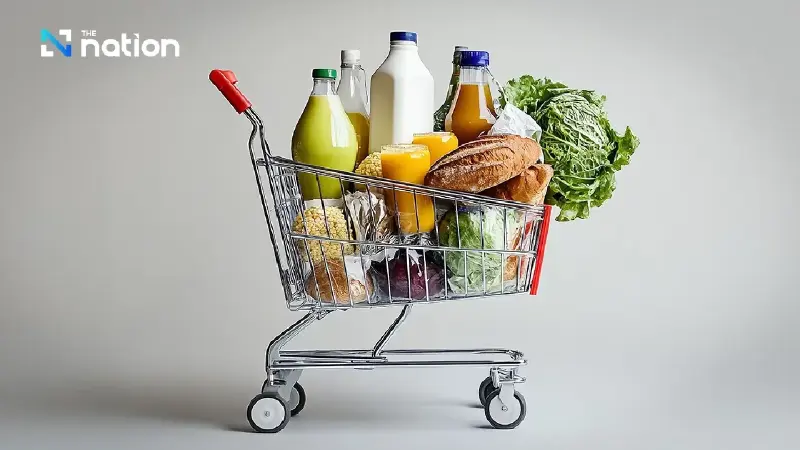


Thailand’s Department of Internal Trade (DIT) had not approved reported 5–10% increases in consumer goods prices scheduled for October 1, 2026, director-general Wittayakorn Maneenetr said on September 24. Some manufacturers had submitted applications, but the department had not authorised the increases
- Thailand's Department of Internal Trade (DIT) has officially denied approving applications from manufacturers for a reported 5–10% price increase on consumer goods.
- The DIT suggests that perceived price hikes are likely due to businesses reducing promotions (like "buy one, get one free") or raising prices within previously approved limits, neither of which requires new approval.
- Despite the DIT's stance, price increases on various food and household products have been reported, with businesses citing rising costs for raw materials, energy, and transport.
Thailand’s Department of Internal Trade (DIT) had not approved reported 5–10% increases in consumer goods prices scheduled for October 1, 2026, director-general Wittayakorn Maneenetr said on September 24. Some manufacturers had submitted applications, but the department had not authorised the increases. Prices of some food and household products had reportedly already risen by 5–10%, with new prices for certain products announced to take effect on October 1.
DIT says checks found no signs of planned increases
Wittayakorn said repeated field visits and checks with major consumer goods manufacturers had found no reports or signs of the anticipated price increases. The DIT was closely monitoring 16 essential consumer products.
For products outside the 16-item group, the DIT’s market monitoring had also found no information or notifications indicating imminent price increases, Wittayakorn said.
The Central Committee on Prices of Goods and Services’ 2025 price-control framework covered 59 controlled items under Thailand’s goods and services pricing law. Examples included meat and eggs, milk powder and fresh milk, tinned fish, seasonings and dried foods, agricultural products, soap, shampoo and washing powder.
DIT cites fewer promotions and rises within existing ceilings
Wittayakorn offered two possible explanations for reports of 5–10% price increases:
- Reduced or changed promotions. Wittayakorn said some businesses had withdrawn offers such as buy one, get one free or buy three, get one free, returning products to their regular selling prices. The average cost per unit could therefore rise even though the product’s base price remained unchanged.
- Higher selling prices within approved ceilings. Wittayakorn gave the example of a product with a ceiling of 60 baht that had previously sold for 50 baht. Raising the selling price to 52–55 baht would remain within the existing approved limit. In such cases, operators needed to notify the DIT but did not have to obtain fresh approval, he said.
Overall market prices remained stable as of September 24, according to Wittayakorn. Competition would also constrain businesses: operators that cut promotions too sharply risked losing customers to rivals that continued offering discounts.
Wittayakorn said the DIT was also working alongside the government’s Thais Help Thais measures and preparing to finalise plans shortly for joint activities to reduce household living costs.
Price rises reported for groceries and chicken
Reported increases in food and household product prices began in April 2026, with businesses citing higher operating, raw material, energy and transport costs. Further increases followed around the middle of the year, with another round reported in mid-September.
The reported grocery price changes included:
- Three-in-one coffee, tinned fish, soap, toothpaste and talcum powder: increases of 5–10%.
- Monosodium glutamate: 80g packs up 5 baht each; 250g and 500g packs up 10 baht each.
- Grains: prices of 100g packs unchanged; 500g packs up 10 baht each.
- Seasonings: increases of 5–10 baht.
Reported increases in chicken prices were:
- Chicken tenderloins: from 100 to 105 baht per kg.
- Grade A chicken liver: from 90 to 95 baht per kg.
- Chicken carcasses: from 23 to 25 baht per kg.
A market survey quoted these pork, chicken and egg prices:
- Pork tenderloin: 165 baht per kg.
- Pork loin: 155 baht per kg.
- Pork belly: 182.50 baht per kg.
- Chicken drumsticks and thighs: 95 baht per kg.
- Chicken wings: 95 baht per kg.
- Chicken breast: 95 baht per kg.
- Size 0 eggs: 5.19 baht each.
- Size 1 eggs: 4.90 baht each.
- Size 2 eggs: 4.59 baht each.
- Size 3 eggs: 4.35 baht each.
Restaurant leader expects selective 5–10% menu increases
Sorathep Rojpotjanaruch, president of the Restaurant Business Club and honorary adviser to the Thai Hostel Association, said restaurants were likely to raise prices on selected dishes by 5–10% in the fourth quarter of 2026.
Sorathep said fresh and dried food costs continued to fluctuate seasonally. Prices of vegetables such as choy sum, water spinach and Chinese kale could rise during the October–November rainy period, when flooding was possible, while meat costs remained relatively stable.
Seafood was a particular concern because persistently high and rising oil prices were increasing fishing and transport costs, pushing up ingredient costs, Sorathep said.
Sorathep said weak consumer purchasing power left restaurants little room to pass on higher costs. Operators were expected to increase prices only for dishes whose costs had risen significantly, particularly seafood, while trying to absorb higher costs elsewhere to avoid losing customers.
