
Huang admits infidelity as Nvidia opens inquiry on 8 Nov
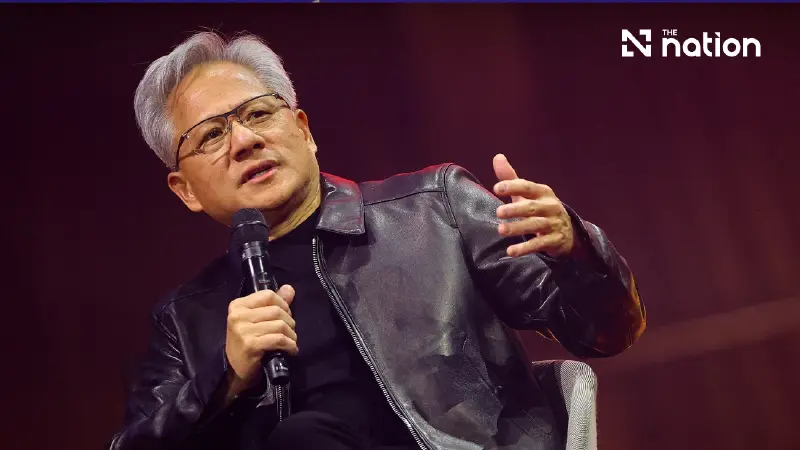


US chipmaker Nvidia backs CEO Jensen Huang, who admits infidelity and pledges to cooperate with an inquiry into alleged foreign spying.
- Nvidia has launched an independent investigation into CEO Jensen Huang following reports that he was targeted by a foreign intelligence operation.
- In a message to employees, Huang admitted to infidelity, which reportedly involved a former executive of a client company who is alleged to be a Chinese intelligence asset.
- The allegations have raised national security concerns, prompting US Republicans to request a congressional briefing and analysts to warn of risks to Huang's leadership.
US chipmaker Nvidia announced an independent investigation on 8 November 2026 into reports that its co-founder and chief executive, Jensen Huang, had been targeted by a foreign intelligence operation.
Nvidia said a committee of independent directors, assisted by independent external lawyers, would oversee the review. The board retained confidence in chief executive Jensen Huang and his management team and said it had no reason to believe US national security or company secrets had been compromised.
Nvidia said the inquiry would consider all available information and that Huang supported the review. The company also confirmed his commitment to continuing as chief executive without interruption.
Jensen Huang admits infidelity in staff message
Jensen Huang acknowledged in a message to Nvidia employees that he had been unfaithful to his wife and accepted responsibility for hurting his family.
“There is no excuse for what I did. I am deeply sorry,” Jensen Huang wrote, apologising to his wife and children.
Jensen Huang acknowledged that he had fallen short of his responsibilities to Nvidia’s employees, board, partners and shareholders, promising to rebuild their confidence. The chief executive pledged to cooperate with the investigation, protect Nvidia and support US national security.
The New York Times reported in October that Jensen Huang had a relationship with Alice Huang, an unrelated former executive at Singapore-based Megaspeed who allegedly passed information to Beijing. According to the newspaper, US authorities investigated Alice Huang and concluded that she was a Chinese intelligence asset.
Megaspeed, which buys Nvidia’s artificial intelligence chips, has faced scrutiny from US authorities over suspicions that it helped Beijing obtain advanced chips barred from shipment to China.
Jensen Huang told Bloomberg News in late October that his interactions with Alice Huang concerned Megaspeed and were “completely normal and not unusual”.
China’s foreign ministry and Megaspeed did not immediately answer Reuters’ enquiries about Jensen Huang; Megaspeed was contacted outside business hours.
US Republicans request briefing on security concerns
Senior Republicans in the US House of Representatives have asked Jensen Huang to brief Congress in November about the New York Times report. A letter dated 4 November raised concerns about China’s access to sensitive US technology and information and called for scrutiny of any risks to national security.
US President Donald Trump told reporters on 8 November that he had not discussed the allegations with Jensen Huang, but praised the Nvidia chief’s work and described him as an honourable person.
The New York Times reported that Trump received an intelligence briefing about Jensen Huang roughly a year before Nvidia’s investigation but took no action.
Trump rejected suggestions he should have acted on intelligence concerning Jensen Huang and suggested that the Nvidia chief might have an explanation. US Secretary of State Marco Rubio declined to comment when asked about Huang.

US restrictions imposed since 2022 cover China-bound advanced Nvidia chips and chipmaking equipment.
Analysts assess risks to Nvidia’s leadership and shares
Dan Ives, partner and senior managing director at Yorkville Ives & Co., said the inquiry could put Jensen Huang’s position at risk and weigh on Nvidia shares. Ives expected congressional inquiries and closer scrutiny of chip sales to China.
Nvidia, valued at US$4.5 trillion, has lost its 2026 share-price gains amid a wider technology sell-off driven by concerns about artificial intelligence spending. Jensen Huang has led Nvidia for more than three decades and has played a central role in its emergence as a dominant supplier of artificial intelligence chips.
Josh Gilbert, eToro’s lead analyst, said Jensen Huang’s importance meant uncertainty could weaken investor sentiment, with lasting effects depending on any leadership change.
