
Government Launches '1 District, 1 Rehab Centre' Project to Combat Drug Addiction Nationwide


The nationwide initiative aims to establish 716 district-level centres by 2027, offering community-based treatment and preventing relapse
- The Thai government has launched the "1 District, 1 Rehab Centre" project, a national initiative to establish 716 district-level drug treatment facilities by 2027.
- The program uses a community-based approach, involving local leaders and health volunteers to provide treatment and support close to patients' homes, preventing isolation.
- The initial rollout targets 35,800 low-to-moderate risk drug users, who will participate in a 9-day intensive life-skills development course.
- Following the course, participants will undergo a one-year social tracking and monitoring period with 24 follow-up sessions to prevent relapse and aid reintegration into society.
The nationwide initiative aims to establish 716 district-level centres by 2027, offering community-based treatment and preventing relapse.
The Thai government has officially launched the "1 District, 1 Drug Rehabilitation Center" initiative, an ambitious national policy designed to establish district-level treatment facilities across all 76 provinces by the 2027 fiscal year.

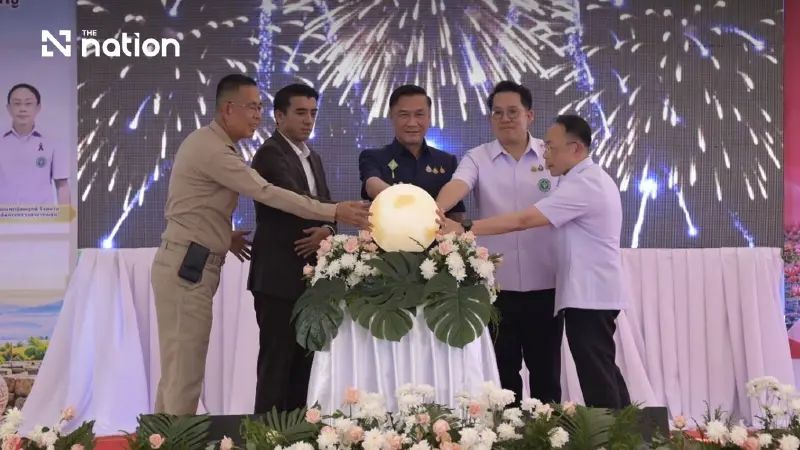
Presiding over the project's opening at Phen Hospital in Udon Thani Province on Tuesday (November 3), Deputy Prime Minister Songsak Thongsri outlined the government's strategy to tackle drug abuse as a "structural national issue" requiring a serious, systematic, and community-driven response.
The scheme is a joint effort led by the Ministry of Public Health and the Ministry of Interior, supported by local administrative networks, civil society, village headmen, and Village Health Volunteers (VHVs).

Establishing Community-Based Recovery
The initiative aims to set up rehabilitation facilities across 716 districts nationwide. By integrating local community leaders and health volunteers, the project leverages local context to monitor recoverees and provide continuous support.
Speaking at the event, Deputy Prime Minister Songsak emphasised that strengthening communities at the grassroots level serves as the "best shield" to protect youth from narcotics.
Public Health Minister Phatana Promphan explained that the policy is built on bringing comprehensive physical, mental, and social rehabilitation closer to patients' homes, ensuring rapid and convenient access to healthcare without isolating individuals from their families.


Initial Target and Year-Long Follow-Up
The initial rollout targets 35,800 low-to-moderate risk drug users (classified into "green" and "yellow" categories), enrolling 50 participants per district across the country.
Under the programme's framework:
• 9-Day Intensive Course: Participants will undergo a 9-day life-skills and quality-of-life development curriculum hosted at local district centres, utilising community spaces such as schools or religious sites.
• 1-Year Social Tracking: Following the intensive course, participants will receive continuous social assistance and progress monitoring across 24 follow-up sessions over a one-year period.
Minister Phatana noted that the primary benchmark of success will be measured by improved quality of life, high retention rates throughout the one-year monitoring phase, and a sustainable reduction in relapse rates, allowing recoverees to reintegrate into society with dignity.


