
Anutin bypasses protest after villagers dare him to eat fish from polluted rivers
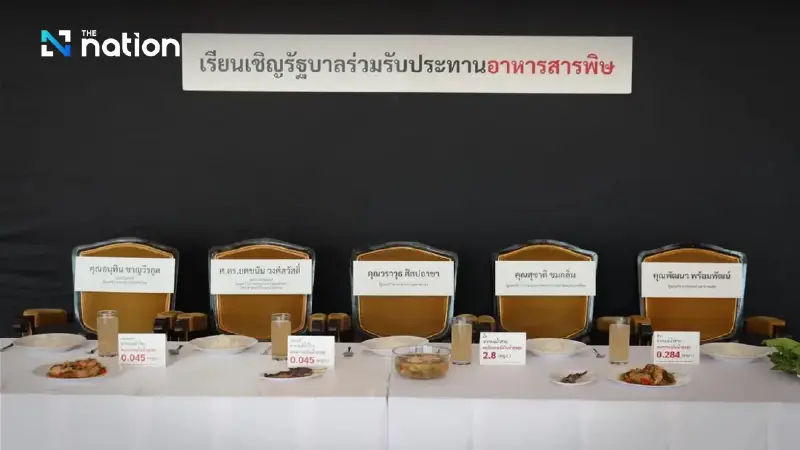


Anutin bypassed a river pollution protest at Parliament. Residents had challenged him to eat fish from the Sai and Khong rivers and called for clean water.
- Villagers from northern Thailand protested at Parliament by daring Prime Minister Anutin Charnvirakul to eat fish cooked from the polluted Sai and Khong rivers.
- Although Anutin initially told reporters he would be "happy to" accept the dare, he later bypassed the protest site upon his arrival at Parliament.
- The protest aimed to highlight severe river pollution, allegedly from mining in Myanmar, which has contaminated local food and water sources and disrupted residents' lives for nearly three years.
- In response to the concerns, Anutin stated he was arranging a visit to the affected Mae Sai district to investigate the contamination.
Prime Minister Anutin Charnvirakul bypassed the river pollution protest site when he entered Parliament on November 25, hours after residents from northern Thailand dared him to eat fish they had cooked from the contaminated Sai and Khong (Mekong) rivers.
Asked about the invitation at 12.15pm, Anutin told reporters, “I’d be happy to.” By the time he arrived at Parliament that afternoon, residents had cleared the food from the hall beside the Sala Kaew pavilion. He went to the House chamber, where he took part in the first-reading vote on a Cabinet-sponsored amendment to the Government Pension Fund Act.
Residents bring river fish to Parliament
At 10.30am, residents from Mae Ai district in Chiang Mai and other affected communities had set out dishes of cooked fish and containers of river water. They invited Anutin and four Cabinet ministers to share the meal, asking them to consider the choices families face when the rivers they depend on for food and water become polluted.

Saengrawee Suweerakan, a resident of Tha Ton in Mae Ai, urged Anutin and his Cabinet to visit the communities. She said residents were entering their third year of disruption after noticing changes in the rivers and learning of mining activity upstream in Myanmar.

Anutin said he was arranging a visit to Mae Sai district in neighbouring Chiang Rai with Deputy Prime Minister Yodchanan Wongsawat to look into concerns about contamination.
One filtration point for more than 20,000 people
Saengrawee said families in Tha Ton once used the Kok River for drinking water, household chores and farming. They now had to buy all their drinking and household water and bring in vegetables from elsewhere. More than 20,000 people had been affected, she said, yet the subdistrict had only one water filtration point.

“We have natural water sources in the mountains, so we asked for somewhere to store the water. Two or three years have gone by, and we’re still waiting,” she said.
Uncertainty about the reach of the pollution had also cost farmers sales, Saengrawee said. Without clear information showing which areas were affected, growers struggled to sell produce even from land outside those areas. Tourism had suffered too. She said Songkran used to bring Tha Ton between 50 million and 80 million baht in revenue, while the once-busy Loy Krathong festival now drew few visitors. Hotels and restaurants had closed.
Opposition presses for six rivers to be covered in talks
Opposition leader Natthaphong Ruengpanyawut joined the residents at Parliament and accepted a letter setting out their demands. The People’s Party leader urged the government to publish a risk map drawn up by a House subcommittee, academics and community groups so buyers and farmers could see where agriculture could continue safely.

The residents called for immediate clean water supplies and relief for households that had lost income. They also asked the Cabinet to put pollution in the Kok, Sai, Ruak, Khong, Kra Buri and Salween rivers on the national agenda. Natthaphong urged Thai officials to raise all six rivers at water quality talks with Myanmar scheduled for November 25–26.
