
PM Anutin holds talks with Myanmar’s president on river pollution
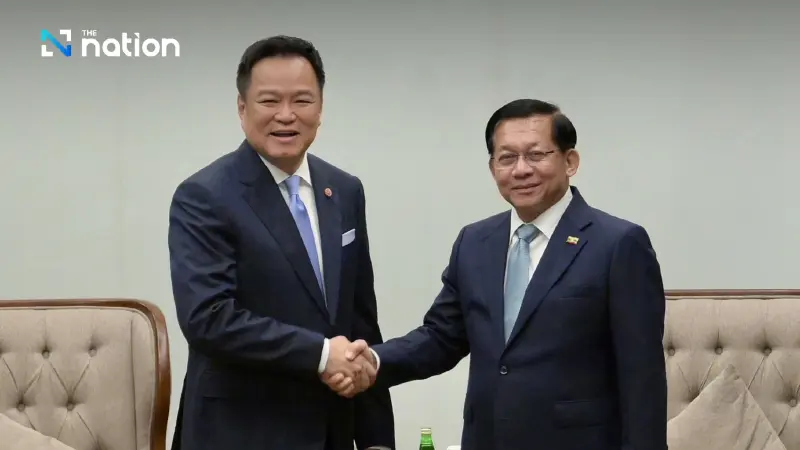


In Hanoi, Anutin sought tighter checks on people crossing from Thailand into Myanmar. The talks also covered cross-border haze and energy security.
- Thai PM Anutin urged Myanmar's president to urgently address cross-border water pollution, specifically in the Sai and Kok rivers, due to its impact on local communities.
- Anutin called for enhanced cooperation through a joint working group to monitor water quality, share data, and systematically tackle pollution at its source.
- Myanmar's president affirmed full cooperation, shared findings from their own water tests, and committed to enforcing laws against activities like illegal mining and harmful agricultural chemical use.
Thai Prime Minister and Interior Minister Anutin Charnvirakul held bilateral talks with Myanmar’s president during his visit to Hanoi for the 11th ACMECS Summit, government spokesperson Ekkapob Pianpises said.
Ekkapob outlined the discussions on Sunday (November 29, 2026) at the Meliá Hanoi hotel in the capital of the Socialist Republic of Viet Nam.
Tackling water pollution
Anutin stressed the importance and urgency of tackling cross-border water pollution, particularly in the Sai and Kok rivers, given the direct link between water quality and the health, safety and livelihoods of local people.
He urged the two countries to step up cooperation through their joint working group, monitor water quality, share data and tackle pollution systematically at its source.
The prime minister thanked Myanmar for working with Thailand and supporting its efforts, including by taking part in a meeting in the past week to address the problem.
Myanmar’s president confirmed that his country was ready to cooperate fully with Thailand and shared the findings of water quality tests that Myanmar had carried out on three rivers using Thai and international standards.
Addressing Thai media coverage, the president said the tests had not shown pollutant levels above the limits in all three rivers. He expressed concern that some reports could cause more alarm than the findings warranted.

The president reiterated that Myanmar’s central government did not support illegal mining or illegal mineral exports in border areas, or activities affecting the environment and the safety of people in both countries.
Myanmar was committed to working with Thailand to tackle the problem, he said. It would oversee activities that could affect water quality, including the use of agricultural chemicals, and strictly enforce the law.
Anutin thanked Myanmar for taking the problem seriously and said he was confident the joint working group would help resolve it.
The results of the group’s work, together with reports showing better results from tests for toxic substances, would give people tangible evidence of progress and restore their confidence, Anutin said.

Tackling air pollution
Anutin stressed the importance of reducing cross-border haze and PM2.5 pollution.
He said Thailand had strict legal controls on burning on farmland and encouraged the use of agricultural residues, such as maize cobs, to produce energy and fuel.
The aim was to reduce burning and create added value for the agricultural sector.
Myanmar’s president said hotter weather in 2026 could increase the risk of forest fires.
Myanmar would closely monitor and control hotspots and was ready to work with Thailand and share experience in dealing with the problem, he added.
Border security and efforts to combat transnational crime
Anutin stressed the importance of maintaining order along the border, preventing adverse effects on the public and working together more effectively to tackle illicit drugs and online crime networks.
He asked Myanmar to tighten checks on people crossing from Thailand into Myanmar to disrupt transnational crime networks.
This would complement the strict checks already in place on people entering Thailand.
Myanmar confirmed that it was ready to cooperate fully.
Energy
Anutin thanked Myanmar for its cooperation on liquefied natural gas (LNG) and stressed the importance of continued cooperation on energy to strengthen the two countries’ shared energy security.
During the talks, Myanmar’s president invited Anutin to visit Myanmar to strengthen ties and build on cooperation between the two countries.

