
Messi retires from Argentina after historic 20-year career
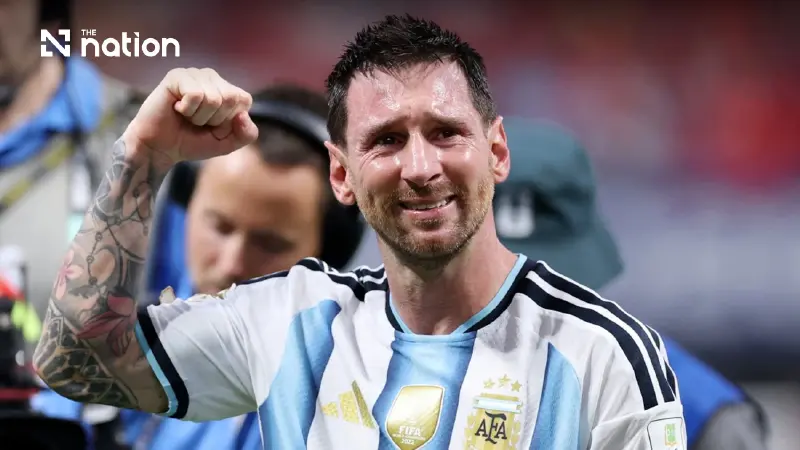


Lionel Messi has retired from Argentina duty aged 39, ending a record-breaking career of 207 appearances, 125 goals and a 2022 World Cup title.
Lionel Messi has announced his retirement from international football, bringing an end to a remarkable 20-year career with Argentina in which he became the country’s most-capped player and all-time leading goalscorer.
The 39-year-old captain announced his decision in an emotional social media message on Monday (August 31), saying that stepping away from the national side was painful but that the right moment had arrived to create opportunities for a new generation of players.
Messi leaves Argentina after scoring 125 goals in 207 appearances. His final international match was the 2026 World Cup final, in which Argentina suffered a 1-0 extra-time defeat by Spain after narrowly missing the chance to retain the title they won in Qatar four years earlier.


Messi says he gave everything for Argentina
In his farewell message, Messi said he had given everything to Argentina throughout his international career — not only during the recent period of unprecedented success but also through the years of disappointment and criticism that preceded it.
He said his goal had always been to bring happiness to supporters and make Argentinians proud through football.
Messi thanked his family, supporters, coaches, team-mates and football officials who had accompanied him during what he described as a beautiful but difficult journey.
He said he would now become another supporter watching from outside the team, while maintaining that he had always loved and would continue to love representing Argentina.
“I leave with peace and pride,” Messi wrote, reflecting on the moments that he and his team-mates had once only dreamed of achieving.

Father’s death reinforced retirement decision
Messi revealed that he had written his farewell message on July 21, two days after the World Cup final, but had not published it immediately.
The death of his father, Jorge Messi, on August 8 reinforced his conviction that it was time to end his international career. His father had played a central role throughout his football journey, serving as both a source of personal support and his long-time representative.
Messi said the decision had been made only after extensive reflection and stressed that several talented young players were ready to take greater responsibility for the national side.

From early disappointment to global triumph
Born in Rosario on June 24, 1987, Messi made his senior Argentina debut against Hungary in 2005 at the age of 18.
His international career was initially defined by repeated near misses. Argentina lost the 2007 Copa América final, the 2014 World Cup final and consecutive Copa América finals in 2015 and 2016.
After the 2016 defeat, Messi briefly announced his retirement from international football but later returned to the team.

His relationship with the national side was ultimately transformed by a run of major trophies. Messi captained Argentina to the Copa América title in 2021, ending the country’s 28-year wait for a major senior trophy.
Argentina then defeated Italy in the 2022 Finalissima before winning the World Cup in Qatar later that year. Messi scored twice in the final against France and helped Argentina prevail on penalties following a 3-3 draw.
He subsequently led the country to another Copa América title in 2024 before taking Argentina to a third World Cup final in 2026.

Record eight Ballon d’Or awards
Messi is widely regarded as one of the greatest footballers of all time and holds the record of eight Ballon d’Or awards, won in 2009, 2010, 2011, 2012, 2015, 2019, 2021 and 2023.
He is also the only player to have won the World Cup Golden Ball twice, receiving the award in 2014 and again in 2022.
At club level, Messi played for Barcelona from 2004 to 2021, winning four UEFA Champions League titles, 10 La Liga championships, seven Copa del Rey trophies and three Club World Cups.
He joined Paris Saint-Germain in 2021 and won two Ligue 1 titles before moving to Inter Miami in 2023.

Messi will continue his club career with Inter Miami, having signed a contract extension running through the 2028 Major League Soccer season. His honours with the US club include the Leagues Cup, MLS Supporters’ Shield and MLS Cup.
Although his international career has now ended, Messi leaves Argentina as a World Cup-winning captain, a two-time Copa América champion and the holder of the country’s principal appearance and goalscoring records.
His retirement closes one of the most celebrated chapters in international football — a journey that began with a teenager’s debut in 2005 and ended with Messi firmly established as an enduring symbol of Argentina’s national team.
