
Thai Cabinet endorses 30-day visa exemption deal with Sri Lanka
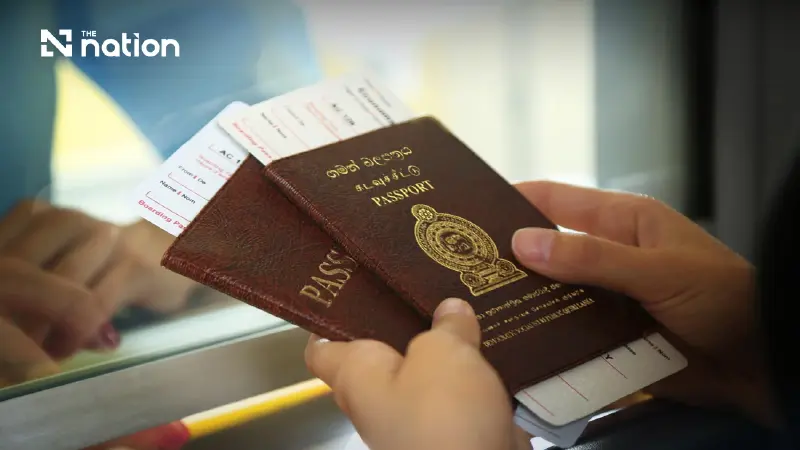


Thai and Sri Lankan ordinary passport holders would be able to stay in the other country for up to 30 days per visit, with a cumulative limit of 90 days within 180 days.
- The Thai Cabinet has endorsed a visa exemption agreement with Sri Lanka for holders of ordinary passports.
- The agreement will allow citizens of both countries to enter the other's territory for stays of up to 30 days without a visa.
- Total stays under the exemption are limited to 90 days within any 180-day period.
- Visas will still be required for individuals intending to stay longer than 30 days, work, or study.
Deputy government spokesperson Ploythalay Laksameesaengjan said the Cabinet on Tuesday (November 17, 2026) endorsed a draft agreement between the governments of the Kingdom of Thailand and the Democratic Socialist Republic of Sri Lanka on visa exemption for ordinary passport holders.
The Cabinet also authorised the foreign minister or a representative to sign the draft agreement.
It also authorised the Ministry of Foreign Affairs to issue a full powers document to any representative designated to sign.
The ministry was further authorised to take the necessary steps for the agreement to enter into force.
The ministry could make necessary amendments to the draft, provided they remained consistent with the principles approved or endorsed by the Cabinet.

It would then have to inform the Cabinet, explaining the reasons for the changes and the benefits to Thailand.
The draft agreement would exempt ordinary passport holders of either country from visa requirements when entering, leaving or transiting through the other country’s territory, for stays of no more than 30 days per visit.
Total stays would be limited to 90 days within a 180-day period.
Nationals of either country wishing to stay in the other for more than 30 days, work, study or undertake activities requiring prior authorisation from the other country’s authorities would have to obtain the appropriate visa before entry.
Ploythalay said either party could suspend the agreement in whole or in part on grounds of public order, public health or national security.
The other party would have to be notified in writing through diplomatic channels of any suspension or cancellation no fewer than 30 days in advance.
The agreement would enter into force on the 60th day after receipt of the last written notification through diplomatic channels confirming that both parties had completed the necessary domestic procedures.
Either party could terminate the agreement by notifying the other in writing through diplomatic channels, with termination taking effect on the 90th day after the other party received the notification.
“The agreement will facilitate travel for ordinary passport holders from both sides and promote people-to-people interaction between the two countries, which share close Buddhist and cultural links. It will also help enhance the capacity of Thailand’s tourism industry, particularly cultural tourism and religious activities,” Ploythalay said.
