
Korat pairs street culture with a trade fair at K-BATTLE 2026
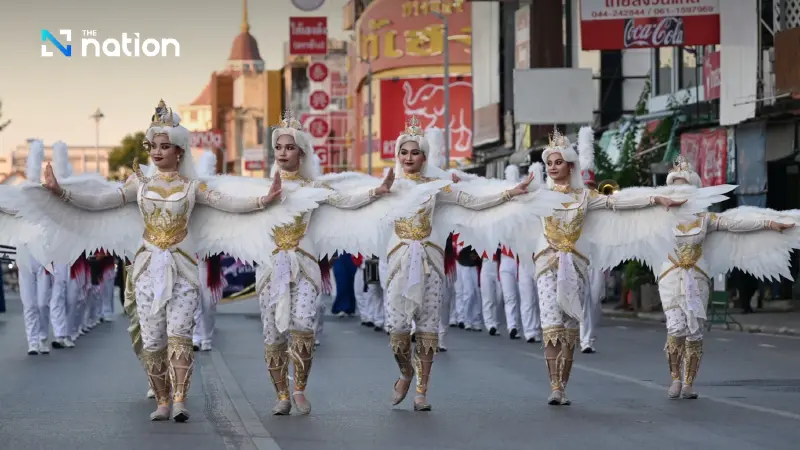


Korat’s K-BATTLE brings folk singers, rappers and dancers to the stage, while a creative industries expo connects local artists and businesses with buyers.
- The K-BATTLE 2026 in Korat (Nakhon Ratchasima) is an event that combines an international street culture festival with a trade fair.
- The street culture aspect includes competitions and performances featuring hip-hop, B-boy dancing, BMX, and skateboarding alongside traditional Thai arts.
- The event incorporates the K-BATX Creative Industries Expo, a trade fair designed to give local artists, designers, and businesses a platform to exhibit work and connect with buyers.
- Originating as a local dance contest in 2009, the festival is now being developed with support from the Thailand Convention and Exhibition Bureau (TCEB) to become a signature event for the city.
Korat folk singer Kampan Banthaen traded verses with rappers and khon masked dancers faced off against hip-hop performers at Suranaree Square on November 27. Their performances marked the formal opening of the K-BATTLE International Street Culture Festival 2026 in Nakhon Ratchasima, where a dance contest that a local crew started 17 years ago has grown to include a music festival and a trade fair.
A street dance contest becomes a city festival
The BBOY KORAT crew staged its first contest in 2009 to give dancers from across Thailand’s Northeast a place to compete. This year’s festival ran from November 20 to 29. For the opening ceremony on its final weekend, a procession along Chom Phon Road to Chumphon Gate brought together BMX riders, skateboarders, parkour athletes and young practitioners of Muay Korat and pencak silat. Marching bands and pong lang folk ensembles joined the parade.

Kosol Pattama, adviser to the minister attached to the Prime Minister’s Office, presided over the ceremony. Nakhon Ratchasima Governor Nattapong Sanguanjit and Dr Supawan Teerarat, president of the Thailand Convention and Exhibition Bureau (TCEB), also attended.

Korat’s festival proposal ranked first at TCEB’s 2025 City Expo pitching event, making the province the first pilot for its 2026 programme. The bureau and local organisers want K-BATTLE to become a festival people associate with Korat, draw visitors into its old town and give local artists and businesses access to new markets.
A trade fair for businesses and rehearsals for young musicians
Alongside the K-BATTLE Street Culture Competition, the K-BATX Creative Industries Expo at Central Korat Hall gave designers, artists and entertainment businesses space to exhibit their work and meet prospective buyers. SOUNDER International Music Connection brought performers and music professionals together.

At Suranari Witthaya School, seven band specialists from Japan, Singapore and Thailand coached school and university students during Korat Band Master 2026, part of the SOUNDER programme.
Korat’s food, craft and art beyond the festival
On November 27 and 28, TCEB led its second Korat City Expo media tour, focusing on six themes spanning heritage, food, businesses, craftsmanship, arts and creative communities. At Khanom Jeen Pradok Ban Kru Yod, a third-generation restaurant that began as a street vendor’s noodle business, visitors sampled fermented rice noodles with fish and coconut curry while Kru Yod played the ranat, a Thai xylophone.

The family behind the Nong Hua Fan noodle factory showed how it is developing new products from traditional Korat noodles. The tour also visited Khorat UNESCO Global Geopark and Khao Yai Art Forest in Pak Chong, where Thai and international artists exhibit outdoors on land undergoing ecological restoration.

