
Typhoon Dolphin floods Shanghai as 943 flights cancelled



Dolphin weakened after making landfall in Zhejiang with 151 km/h winds, but its rain clouds spread inland as Beijing raised flood warnings.
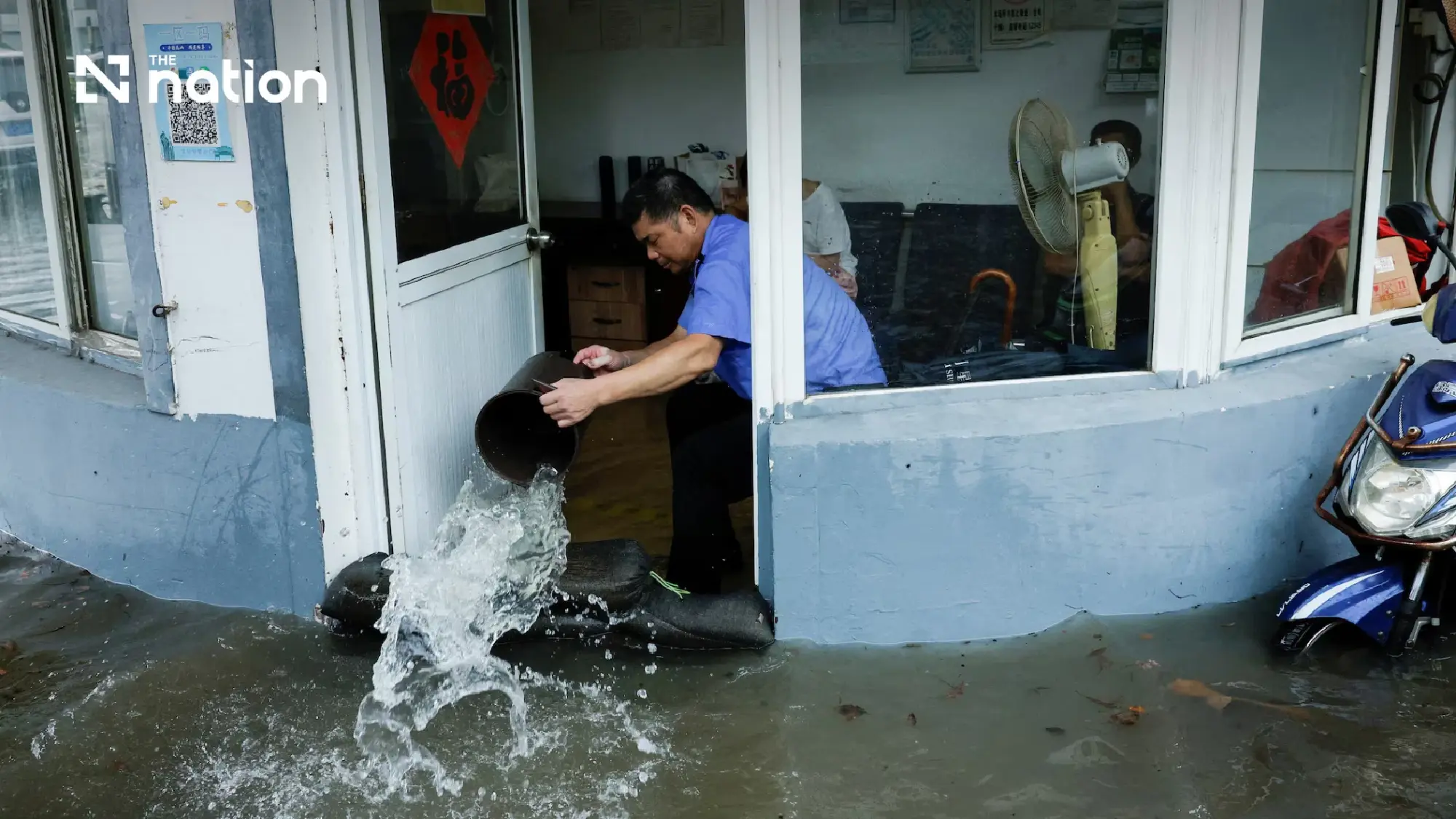
Torrential rain from Typhoon Dolphin flooded roads and commercial areas across Shanghai on Monday (August 10, 2026), forcing the city’s two airports to cancel 943 flights and reducing their combined capacity by nearly 40%.
The disruption continued after Dolphin made landfall in Zhejiang province, south and west of Shanghai, on Sunday evening with maximum sustained winds of 151 kilometres per hour near its centre. The system subsequently weakened to a tropical storm, but its remaining rain clouds continued to drench large parts of eastern China.
Shanghai, China’s second most populous city, reported widespread street flooding, including in major commercial districts. China Eastern Airlines said it was working to restore flights to Shanghai, Zhejiang and other destinations progressively as conditions allowed.


Floodwater disrupts transport and daily life in Shanghai
Streets in the suburban districts of Jiading and Qingpu remained waterlogged. Live video shared by residents on social media appeared to show people moving through knee-high water, although Reuters said it had not independently verified the footage.
Hou Lina, a 39-year-old sales worker in Jiading, told Reuters that rain had continued through most of the night and that she awoke to find her neighbourhood and surrounding streets severely flooded. She described it as the most widespread typhoon-related flooding she had experienced during 10 years in Shanghai.
Authorities in Shanghai’s Jinshan district said non-essential businesses and organisations could temporarily suspend operations as strong winds and heavy rain continued. Classes, outdoor activities and transport services could also be halted.
In Zhejiang’s Wenzhou city, footage posted on TikTok appeared to show a truck overturned by powerful winds and driving rain. The condition of the driver was not known.

Dolphin’s rain clouds spread across eastern China
Dolphin’s remaining cloud system brought further rain to Anhui, Jiangsu and Shandong provinces on Monday. The storm, described as the strongest typhoon to strike China this year, was forecast to move farther inland towards the central provinces of Hubei and Henan while pushing additional moisture northwards.
State broadcaster CCTV reported that Dolphin had travelled about 6,000 kilometres before reaching China, giving it a life cycle three times longer than that of an ordinary typhoon. Its unusually large cloud system covered much of the country’s east.
Chinese state media compared the storm’s potential reach with Typhoon Doksuri, which crossed the country in 2022 after causing damage in the south-eastern province of Fujian and later bringing record rainfall to Beijing.


Beijing prepares for flash floods and landslides
Authorities in Beijing raised warnings for torrential rain and prepared to activate the capital’s flood-control response on Tuesday morning.
Heavy rainfall was forecast from Tuesday through Thursday, with officials warning that intense downpours could trigger flash floods in the city and landslides in surrounding mountainous areas.
Beijing, Tianjin and Hebei were told to prepare for rain lasting into Thursday as Dolphin’s moisture-laden clouds moved north and encountered colder air.

