
Colombia quake kills 111 in strongest tremor this century
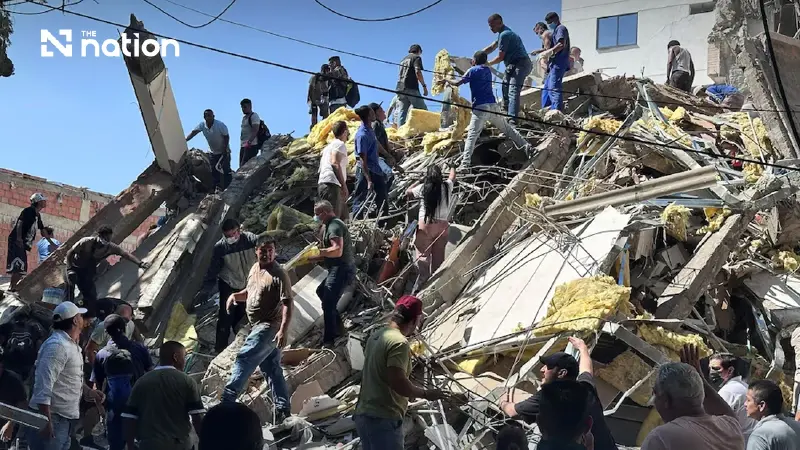


A magnitude 7.4 earthquake killed at least 111 people and injured 87 in western Colombia, leaving buildings collapsed and rescue teams searching for survivors
At least 111 people were killed and 87 injured after a magnitude 7.4 earthquake struck western Colombia on Monday (August 10), toppling buildings and leaving rescue teams searching for people trapped beneath the rubble.
Colombian geological authorities described it as the country's strongest earthquake of the 21st century.

The disaster struck only days after Abelardo De La Espriella was sworn in as president, confronting his new administration with its first major crisis.
It also came while memories remained fresh of two devastating earthquakes that struck neighbouring Venezuela in June.
De La Espriella declared a nationwide state of emergency and addressed the country at around 1pm local time.
He said the government had deployed its resources to protect lives, support affected communities and deliver aid where needed.

“The first priority is rescuing the people trapped under the rubble,” he said.
Preliminary reports showed 111 deaths, 87 injuries and dozens of collapsed buildings and damaged homes.
Communications disrupted near epicentre
The US Geological Survey recorded the earthquake at magnitude 7.4 and a depth of 107 kilometres.

Colombia's geological service described it as the strongest earthquake recorded in the country during the 21st century.
Information from Chocó, near the epicentre, emerged slowly because of communications outages.
Some areas remained without mobile-phone service several hours after the earthquake.
Governor Nubia Carolina Cordoba reported 12 deaths and 84 injuries across the largely rural department.

Rescue teams search damaged Pereira
The heaviest casualties appeared to be concentrated in Risaralda, part of Colombia's coffee-growing region.
Pereira, the capital of Risaralda, suffered extensive damage.
Rescue workers continued searching collapsed buildings for survivors as emergency operations remained under way.


