
Thai Customs proposes scrap metal import curbs and raises fines
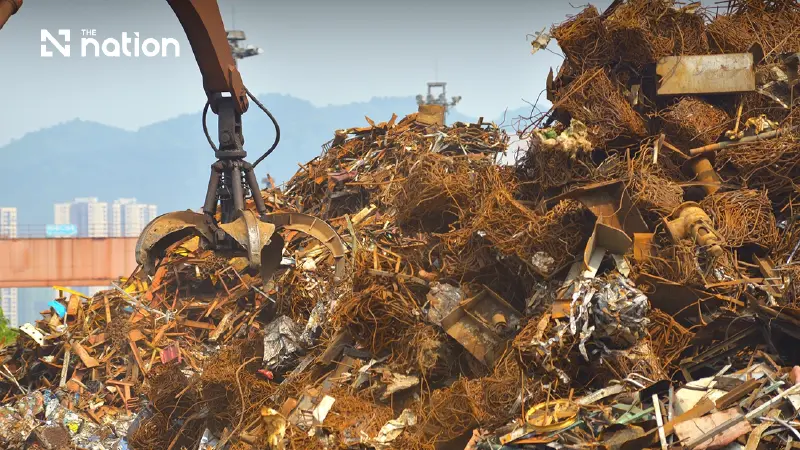


Thailand's Customs Department plans to restrict scrap metal imports to licensed recyclers and has introduced THB500,000 fines for breaches of waste import rules.
Thailand's Customs Department is preparing to restrict scrap metal imports to licensed recycling operators while enforcing tougher penalties against illegal shipments of hazardous waste.
Phantong Loykulnanta, director-general of the Customs Department, announced that the proposed restrictions would be submitted to a committee addressing electronic waste, chaired by Deputy Prime Minister and Commerce Minister Suphajee Suthumpun, on Wednesday (November 11, 2026).
The measures are intended to prevent Thailand from becoming a destination for hazardous waste from overseas, particularly electronic waste, plastic scrap and municipal waste, which pose risks to public health and the environment.

Scrap metal imports could be restricted to licensed recyclers
Under the proposal, unrestricted imports of scrap metal would be discontinued, with permission granted only to operators running recycling facilities equipped with legally authorised smelting plants.
Waste traders and intermediaries without their own recycling and smelting facilities would no longer qualify to import scrap metal.
Phantong explained that the restrictions would help close loopholes used to smuggle illegal waste into the country while enabling authorities to trace imported materials from their point of entry to their final destination.
The proposal forms part of broader efforts to strengthen controls over imported waste and improve accountability throughout the recycling process.

Maximum THB500,000 fines introduced for illegal waste shipments
The Customs Department has also revised its procedures for settling cases involving attempts to evade legal restrictions or prohibitions on imported goods.
Since early November, settlement fines for such offences have been set at the maximum permitted by law of THB500,000.
Previously, fines were calculated at 20% of the value of the goods, subject to a ceiling of THB500,000.
Offenders must also bear the full cost of transporting seized goods back out of Thailand.
The department expects the higher financial burden to discourage illegal imports and reduce the risk of hazardous waste entering the country.

Illegal waste seizures reach three-year high
Stricter inspections of high-risk import containers contributed to the Customs Department recording its highest number of illegal waste cases in three years during fiscal 2026.
The department recorded 198 cases involving 20.50 million kilogrammes of seized waste, valued at more than THB243.15 million.
By comparison, fiscal 2024 saw 92 cases involving 2.30 million kilogrammes of seized materials worth THB17.9 million.
The quantity of confiscated waste in fiscal 2026 was therefore nearly nine times the level recorded two years earlier.
Customs attributed the increase in detected violations to enhanced screening and enforcement measures targeting shipments considered vulnerable to illegal waste smuggling.
X-ray screening and physical inspections expanded
To improve detection, the Customs Department has increased its use of X-ray technology to examine imported containers.
The screening is supplemented by random physical inspections at customs checkpoints and destination factories across Thailand.
These measures are intended to identify illegally imported materials, strengthen monitoring of high-risk shipments and prevent hazardous waste from being handled in ways that could cause lasting environmental damage.
Phantong reaffirmed the department's commitment to strengthening enforcement against illegal waste imports and improving cooperation to protect public health and the environment.
