
Japan’s summer holiday rail traffic stays steady despite Kyushu quake
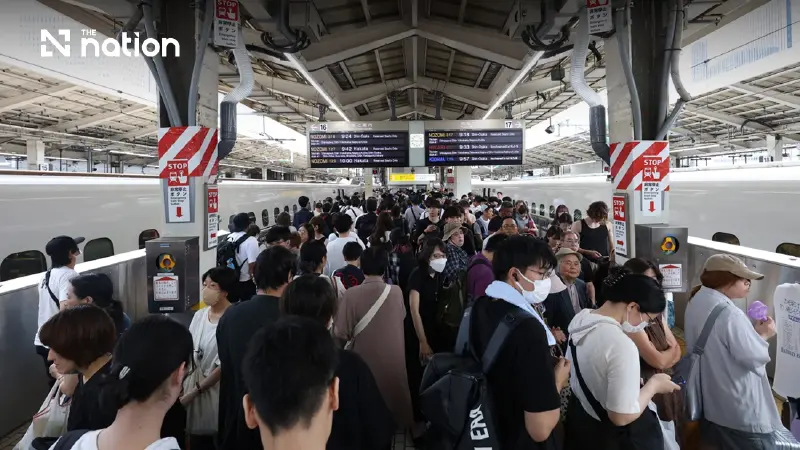


Rail operators carried about 13.21 million passengers during the Bon break, with national demand holding firm despite earthquake-related disruption in Kumamoto.
- Overall passenger numbers on Japan's major rail lines during the summer holiday period remained almost unchanged from the previous year.
- The earthquake-affected Kyushu Shinkansen line saw a sharp decrease in traffic, with one section experiencing a 39.8% drop in passengers.
- The decline in Kyushu was offset by strong performance on other routes, such as the Tokaido Shinkansen, which saw a 1% year-on-year increase and a record daily average.
Japan’s Shinkansen network delivered sharply contrasting results during the Bon summer holiday, with the Tokaido route reaching a record daily average while passenger numbers fell heavily on part of the earthquake-affected Kyushu line.
Kyushu Railway Company (JR Kyushu) remained unable to operate services between Kumamoto and Shin-Minamata stations after a powerful earthquake struck Kumamoto Prefecture in south-western Kyushu late in July.
Traffic on the section linking Hakata Station in Fukuoka Prefecture with Kumamoto Station was 39.8% lower than a year earlier.
“Homecoming travellers and tourists are believed to have decreased following the earthquake, but we are not sure about the extent of the disaster’s impact on Kyushu Shinkansen passenger traffic,” a JR Kyushu official said.
The Tokaido Shinkansen recorded a markedly stronger performance.
Central Japan Railway Company (JR Tokai) carried about 4.14 million passengers on the route, representing a year-on-year increase of 1%.
A revised timetable raised the maximum frequency of Nozomi services to 13 trains an hour, while average daily passenger numbers reached their highest level on record.
Across the country, the six passenger railway companies in the Japan Railways Group (JR Group) carried about 13.21 million people on Shinkansen and limited express services between August 7 and Sunday (August 16).
The figures released on Monday (August 17) covered 46 major rail sections and were almost unchanged from the previous year.
Business and tourism demand appeared to keep passenger traffic firm, while no major transport disruption was reported outside the earthquake-affected areas.
Airline figures for the same period showed broader declines.
Domestic passenger traffic fell by 7.7% at All Nippon Airways (ANA) and by 5.8% at Japan Airlines (JAL), apparently because typhoons forced flight cancellations.
International passenger numbers decreased by 0.7% at ANA and by 8.1% at JAL.
