
South Korea plans wider exam rules following smart-glasses cheating
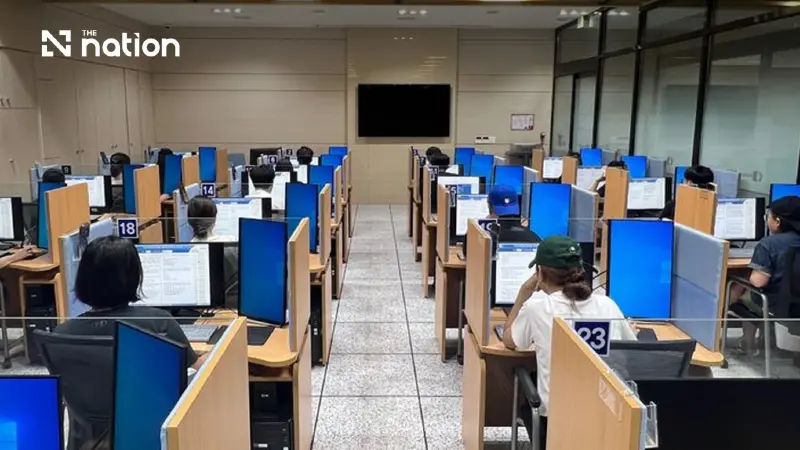


Current regulations do not explicitly name smart glasses, despite five cheating cases in May and June and three referrals to prosecutors.
- At least five candidates were caught using smart glasses to cheat on South Korea's national technical qualification exams in May and June.
- In response, the Labour Ministry is preparing to revise the National Technical Qualifications Act to make restrictions on smart glasses and other new electronic devices clearer.
- The new rules will feature more flexible, future-proof wording to allow for the restriction of new technologies without requiring constant amendments.
- The problem extends beyond technical exams, as similar cheating attempts have been detected in major language tests like TOPIK and TOEIC.
Candidates found using smart glasses in South Korea’s national technical qualification exams may be removed and have their scores invalidated, even though the enforcement rules do not identify the devices by name.
The discovery of at least five cheating cases within two months has now prompted work on broader rules.
The Human Resources Development Service of Korea (HRDK) put smart glasses on its prohibited-device list in May.
Electronic and communications equipment is barred from exam rooms under the list, while existing rules cite mobile phones, digital cameras and camera-equipped pens as examples of devices that may be used for cheating.
Changes being prepared by the Labour Ministry under the National Technical Qualifications Act would make the restrictions on smart glasses and other emerging electronic devices clearer.
More flexible wording is also being considered so unfamiliar equipment can be restricted without another amendment whenever technology changes.
The ministry plans to begin the public-notice process around September and aims to complete the revision before year-end.
“It is difficult to revise the enforcement rules every time a new device emerges, so we are considering making the regulations somewhat more flexible so that we can respond more quickly to technological changes,” a Labour Ministry official said.
Rep. Kim So-hee of the main opposition People Power Party received figures from HRDK on Monday covering five candidates caught in May and June.
One case occurred in each of Seoul, Daegu and Ulsan, while Gwangju and Mokpo accounted for the two recorded in Jeonnam-Gwangju.
All five candidates were sanctioned, and the cases in Gwangju, Mokpo and Daegu were referred to prosecutors.
Inspection of the glasses uncovered the Seoul and Ulsan cases.
A camera lens had been built into the frame worn by the Seoul candidate, who was sitting an information processing engineer exam.
In Ulsan, another candidate’s glasses contained both a lens and a display.
Light, sound and an activated display alerted invigilators to the other three cases.
During a fire protection system engineer exam in Gwangju in May, light was noticed coming from a candidate’s glasses.
Pressing a side button produced a blue display on the lens of the device used in Mokpo, while an electronic sound led to the Daegu candidate being caught.
Concerns have also extended beyond technical qualification exams. Three cases involving smart glasses were detected during Test of Proficiency in Korean (TOPIK) exams last year.
Two attempted cases were also identified during regular Test of English for International Communication (TOEIC) tests in Korea in May.
The National Institute for International Education, which administers TOPIK, installed radio-frequency and metal detectors at all domestic test centres in April and plans to extend their use to overseas centres next year.
The Education Ministry is also considering further measures to prevent technology-assisted cheating in TOPIK.
Source: The Korea Herald
