
Hun Manet declares Cambodia will not be a safe haven for online scams
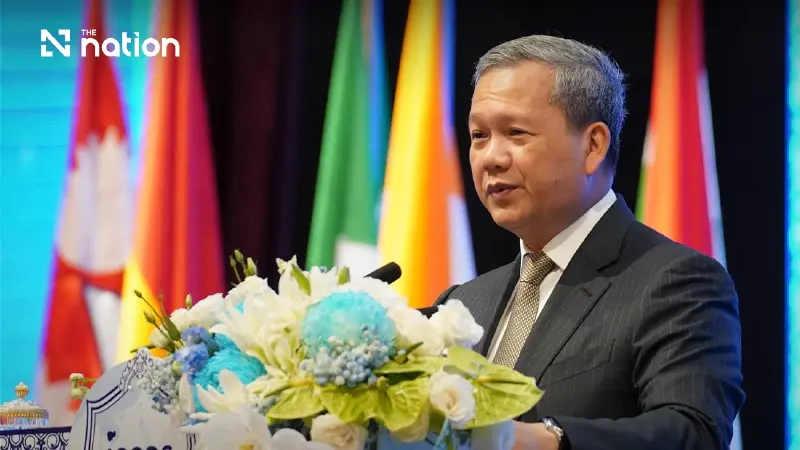


Hun Manet says Cambodia will not shelter online scam syndicates, while questions persist over whether raids have reached those alleged to protect the networks.
- At a global cyberfraud conference, Prime Minister Hun Manet declared that Cambodia will not be a sanctuary for online scam operations and called for greater international cooperation.
- As evidence of its crackdown, the Cambodian government claims to have raided hundreds of scam compounds, deported hundreds of thousands of people, and eradicated large-scale operations.
- Despite the government's actions, analysts and opposition figures express skepticism, suggesting that high-level, politically connected individuals protecting the criminal networks have not been targeted.
Cambodia’s campaign against online scam centres came under scrutiny as Prime Minister Hun Manet opened a global cyberfraud conference in Phnom Penh on Wednesday (September 23, 2026).
Delegates from more than a dozen countries, including the United States and China, attended as the government sought to show the results of its crackdown on the multibillion-dollar industry.
“Cambodia will never be a safe haven for online scams,” Hun Manet said.
“Cambodia will not allow criminal syndicates to undermine our country's progress and the livelihood of over 17 million Cambodian people.”
He called for wider international cooperation, including real-time intelligence sharing.

In recent years, Cambodia and other Southeast Asian countries have become hubs for transnational cyber scams.
Mostly Chinese-led gangs have run compounds where trafficking victims are held and forced to carry out romance scams, police-impersonation fraud and other schemes.
The Cambodian government says it has eradicated industrial-scale scam compounds.
Reporters who toured centres closed by the authorities on Monday and Tuesday saw one that had housed as many as 20,000 workers.
They also saw seized materials, including fake FBI and Chinese police badges used to impersonate officers.
Cambodia says it has raided hundreds of compounds and deported hundreds of thousands of people over the past year.

The action has come under pressure from countries including the United States, which estimates that Americans lost more than US$10 billion in 2024 alone to scammers operating in the region.
Some analysts doubt that the raids have reached high-level figures.
Analysts and opposition figures say politically connected people alleged to have protected the networks have been left untouched, while criminal groups have split into smaller units and moved operations overseas.
Delphine Schantz, regional representative of the United Nations Office on Drugs and Crime, called the conference a sign of “growing openness to cooperate”.
“But it is clear that more can and needs to be done, both at national levels, and in terms of international cooperation,” she said.
Schantz called for a shared understanding of key trends, coherent regulatory frameworks and investment in collecting digital evidence.
Mu Sochua, an exiled opposition politician, said the crackdown’s credibility “will depend on whether the Cambodian state is willing to investigate all credible allegations, regardless of wealth, influence or official position”.


