
Iran urges talks on Sept 27 after Trump rejects seven-day Hormuz plan
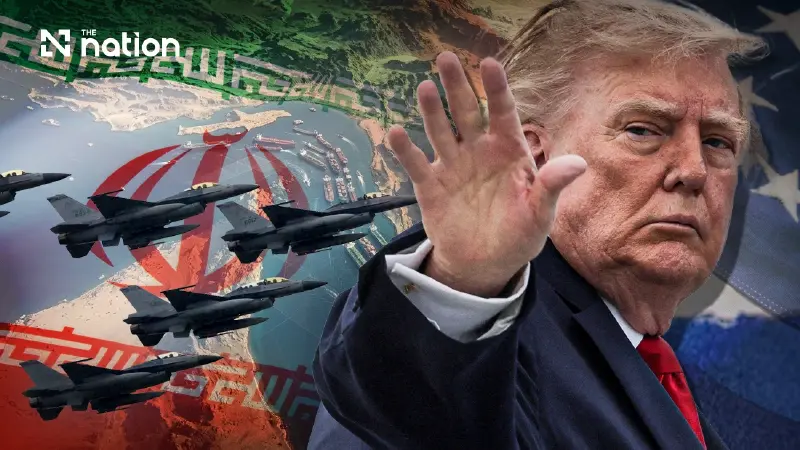


Iran’s foreign minister says mediators have not formally conveyed US rejection of a plan to reopen the Strait of Hormuz and pause regional fighting.
- Iran renewed its call for diplomatic talks on September 27, even after US President Donald Trump publicly rejected its recent proposal.
- President Trump rejected the Iranian plan, attributing Tehran's push for a deal to desperation caused by the ongoing US economic blockade.
- The rejected proposal involved a conditional seven-day countdown to reopen the Strait of Hormuz and pause regional fighting, contingent on US agreement.
- Despite Trump's public comments, Iran's foreign minister stated that Tehran is still awaiting a formal US response through official mediators before deciding its next steps.
Iran renewed its call for diplomacy on Sunday (September 27) after US President Donald Trump rejected its proposal to reopen the Strait of Hormuz and pause regional fighting. Iranian Foreign Minister Abbas Araqchi said Tehran was still awaiting a formal response through mediators.
Araqchi said mediators had not officially conveyed Washington’s rejection despite Trump’s public comments. Iran would decide how to proceed once it received the definitive US position through those channels.
Maintaining that negotiations were the only way to resolve Iran’s conflict with the United States and Israel, Araqchi wrote on social media: “Our conditions are clear, and any move towards reopening the Strait of Hormuz is contingent on these conditions being met. Only a negotiated solution can get them out of this deadlock.”
Iran’s seven-day Hormuz timetable depends on US agreement
Iran’s proposal would trigger a seven-day countdown towards reopening the Strait of Hormuz and pausing regional fighting if Washington accepted the terms, according to Araqchi. The timetable remains conditional on US agreement, rather than a confirmed reopening date.
Iran presented the proposal at the United Nations General Assembly in New York and said it had been delivered to Washington through Qatari mediators.
Araqchi said preparations were in place to begin the process if the United States was serious about reaching an agreement.
Acceptance could also allow the parties to begin wider negotiations on mutually agreed issues, potentially including Iran’s nuclear programme.
Trump rejects Hormuz proposal as US blockade continues
Trump rejected the Iranian proposal on Saturday (September 26), arguing that desperation was driving Tehran’s push for an agreement. “They want to make a deal to open the Hormuz Strait immediately because they’re losing so badly,” Trump told reporters at the White House.
The United States has imposed an economic blockade on Iran to pressure Tehran to stop attacks on vessels in the Strait of Hormuz. Those attacks have sharply reduced shipping through the waterway, despite Trump’s repeated assertions that the United States controls it.
Iran’s conflict with the United States and Israel, now in its seventh month, has disrupted oil flows through the Strait of Hormuz and weighed on the global economy.
The Wall Street Journal first reported Trump’s rejection of the proposal, citing unnamed US officials. The newspaper reported that Trump doubted Iran would meet his demands and had told aides he considered a renewed bombing campaign likely after the US midterm elections in November.
Iran offers nuclear talks but maintains enrichment position
Iranian President Masoud Pezeshkian said Tehran was prepared to discuss its nuclear programme and other issues, while a senior Iranian official told Reuters that Iran would make no concessions over uranium enrichment or sending highly enriched uranium out of the country.
Trump has maintained that Iran must never acquire a nuclear weapon. The senior Iranian official said Tehran would not soften its position on its nuclear programme even if Washington accepted the peace proposal.
In an interview with CBS’s “Face the Nation”, Pezeshkian rejected “bullying or coercion” and said Iran did not want war but would defend itself against pressure, threats and attacks. Pezeshkian also reiterated that Iran had already agreed not to develop nuclear weapons.
