
Kumamoto earthquake leaves 1,514 in shelters as recovery continues
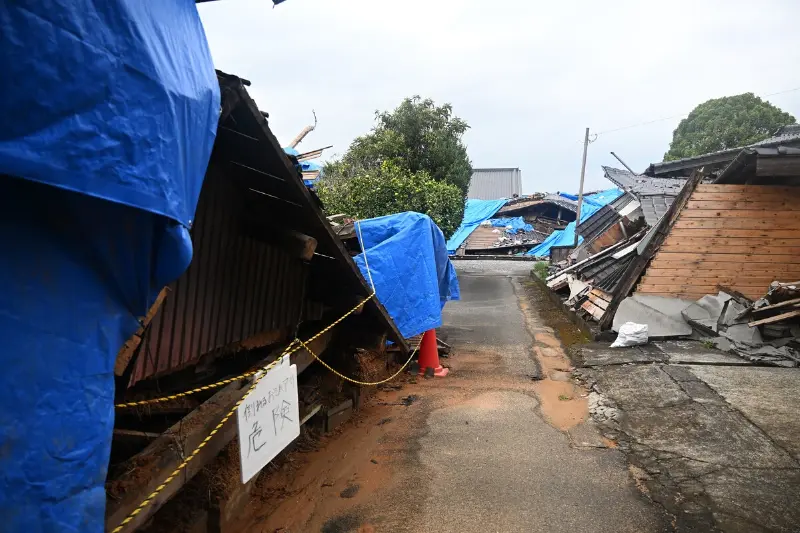


Evacuees have begun entering temporary housing nearly two months after the July 28 earthquake, while building assessments and well restoration remain incomplete.
- Nearly two months after the July 28 earthquake, 1,514 people remain in 32 evacuation centers in Kumamoto Prefecture.
- Recovery efforts are underway, with the Kyushu Shinkansen bullet train line fully restored and evacuees beginning to move into temporary housing.
- The earthquake resulted in 38 deaths and damaged over 71,500 residential buildings, with more than 9,500 completely or partially destroyed.
- To aid economic recovery, a publicly funded travel discount program is being launched in October to support the local tourism industry.
Trains are again running across the full Kyushu Shinkansen route, and evacuees in Kumamoto Prefecture have begun moving into temporary housing.
Even so, 1,514 people remained in 32 evacuation centres on Friday (September 25), nearly two months after the July 28 earthquake in southwestern Japan.
The reported death toll of 38 includes cases in which an indirect link to the quake is suspected.
Kyushu Railway Co. (JR Kyushu) restored service between Kumamoto and Shin-Minamata on September 18.
That section had been closed since the earthquake, and its reopening brought the entire bullet train line back into service.
The company has also announced that trains between Uto and Yatsushiro on the Kagoshima Main Line will resume on October 10.
Evacuees have started moving into 182 emergency temporary housing units established across 10 complexes in Hikawa, Kosa, Uki and Kumamoto city, the prefectural capital.
Plans provide for another 700 units at 25 complexes, with evacuees due to move in by the end of the year.
In Hikawa, construction has also begun on temporary housing on the grounds of residents’ homes.
Of the 71,518 residential buildings damaged by the quake, 9,540 were completely or partially destroyed.
Assessments remained unfinished for 10,663 buildings, while only 776 cases of publicly funded demolition had been approved.
The earthquake reached a maximum seismic intensity of 7, the highest on Japan’s scale.
Emergency restoration work on water services has been completed following outages that affected up to 108,000 households.
In Yatsushiro, where many residents depend on well water, damage to wells has been reported at about 4,500 households.
It remains uncertain when restoration there will be fully completed.
To support tourism, a publicly funded Kumamoto travel discount programme is scheduled to begin in October, covering up to 60% of travel and accommodation costs.
Sales of eligible travel and accommodation plans began on September 15.
About 370 accommodation facilities in the prefecture are set to participate, and some reached their planned limits shortly after sales began.

[Copyright The Jiji Press, Ltd.]
