
Philippine Embassy honours Japanese winners of Magsaysay Award
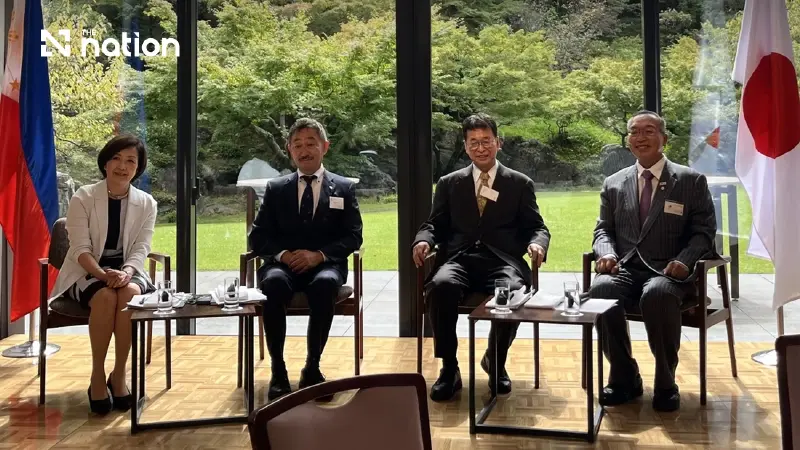


Tadashi Hattori discusses keeping his medical work going beyond his own involvement as an exhibition celebrates 28 Japanese award recipients.
- The Philippine Embassy in Tokyo hosted an event to honor Japanese recipients of the Ramon Magsaysay Award.
- The ceremony was part of the commemorations for the 70th anniversary of normalized diplomatic relations between the Philippines and Japan.
- The event, titled “The Ramon Magsaysay Laureate Reunion,” included an exhibition showcasing the 28 Japanese awardees and a panel discussion.
- Laureate Dr. Tadashi Hattori attended in person, while representatives and family members of other past winners were also present to be honored.
The Philippine Embassy in Tokyo honoured Japanese recipients of the Ramon Magsaysay Award on Wednesday (October 7) as part of commemorations marking 70 years since the Philippines and Japan normalised diplomatic relations.
The anniversary itself fell in July.
Philippine Ambassador to Japan Mylene J. Garcia-Albano said the two countries now “enjoy friendship that President Magsaysay could perhaps only have imagined”.
Relations were normalised during the presidency of the late Ramon Magsaysay, she noted, and his legacy subsequently inspired the award.
Japan’s longstanding connections with other Asian countries also featured in the closing address by Ramon Magsaysay Award Foundation president Susanna B. Afan.
“Japan is such an important partner in building bridges,” she said, highlighting education, culture and service in particular.

Individuals and organisations serving people in Asia selflessly are recognised through the award, which was established in 1957 and is widely regarded as Asia’s Nobel Prize.
This year’s selection, announced on August 31, comprises three individuals.
Singaporean diplomat and scholar Tommy Koh is among them, chosen for his leadership in international diplomacy.
The Tokyo programme, entitled “The Ramon Magsaysay Laureate Reunion”, took place at the International House of Japan in Minato Ward.
It included an exhibition and a panel discussion.
The exhibition presented the accomplishments of 28 Japanese awardees and explained the grounds for their recognition.
Another part of the programme involved presenting portraits to ophthalmologist Tadashi Hattori and to representatives and family members of other laureates.
Representatives and relatives attending the reunion spoke for 12 other laureates.
Among those present was the daughter of the late physician Tetsu Nakamura, a recipient in 2003 who spent decades working on humanitarian aid projects in Afghanistan.
Hattori also attended in person.
His recognition in 2022 honoured his commitment to training doctors in Vietnam and providing eye operations there free of charge.
During the discussion, Hattori and other participants examined the changes in their activities following the award and their understanding of the missions ahead.
Hattori explained that his medical work had remained unchanged since becoming a laureate.
Helping someone see again, he stressed, went beyond a medical procedure: for people living in darkness, it offered a chance to “regain hope”.
The recognition had nevertheless brought his activities to wider attention and strengthened his sense of responsibility for their continuation.
Hattori described the need to establish a system that would sustain the work after he was no longer involved.


[Copyright The Jiji Press, Ltd.]
