
TMD’s 16th advisory warns South of flood risk on Nov 22
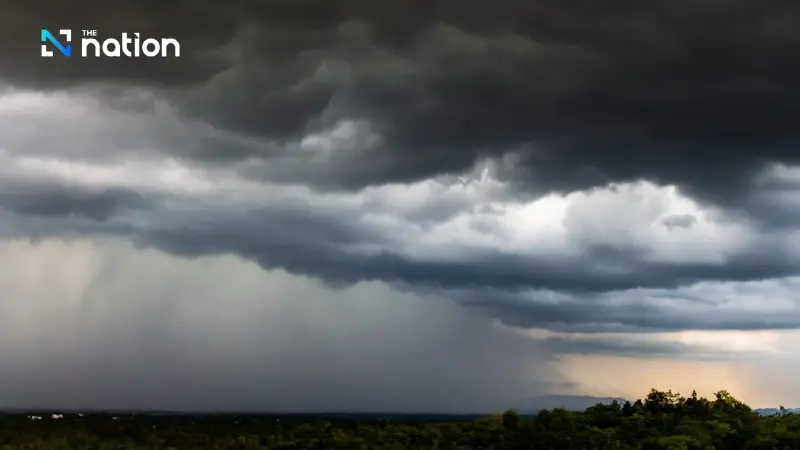


Flood alerts cover Narathiwat, Pattani and Songkhla as heavy rain persists, with small boats in the lower Gulf advised to stay ashore.
- The Thai Meteorological Department (TMD) issued its 16th advisory on November 22, warning of flash floods, overflowing waterways, and landslides in Southern Thailand due to heavy and accumulated rainfall.
- Six southern provinces were identified as being at high risk from heavy rain: Nakhon Si Thammarat, Phatthalung, Songkhla, Pattani, Yala, and Narathiwat.
- Residents in low-lying areas were urged to be alert, and small boats in the lower Gulf were advised to stay ashore due to waves reaching over 3 meters in thunderstorms.
- While this was the final advisory for the current weather event, the TMD also forecast another increase in heavy to very heavy rainfall for the South on November 24-25.
The Thai Meteorological Department (TMD) warned of flash floods, overflowing waterways and landslides in the South in its 16th weather advisory, issued at 5pm on November 22, 2026, as heavy rain and accumulated rainfall continued to pose a risk.
The bulletin, No.16 (324/2026), was signed by director-general Nattawut Dandee and designated the final advisory for the current weather event. TMD also forecast another increase in southern rainfall on November 24–25, with isolated heavy to very heavy downpours.
People living near waterways at the foot of hills and in low-lying areas were urged to remain alert, while small boats in the lower Gulf were advised to stay ashore amid strong winds and high waves.
Six southern provinces face heavy rain risk
The November 22 provincial rainfall outlook identified the following southern provinces as areas at risk from heavy rain:
- Nakhon Si Thammarat
- Phatthalung
- Songkhla
- Pattani
- Yala
- Narathiwat

TMD warned that heavy downpours and rain already accumulated could trigger flash floods and rapid runoff, particularly near foothill watercourses and in low-lying areas.
Rainfall was beginning to ease in parts of the South as the fairly strong northeast monsoon over the Gulf, southern Thailand and the Andaman Sea weakened. Isolated heavy downpours remained possible.
Small boats told to remain ashore in lower Gulf
Waves in the lower Gulf were forecast to reach 2–3 metres, rising to more than 3 metres in thunderstorms.
TMD advised mariners in the Gulf and the Andaman Sea to navigate cautiously and avoid thunderstorms. Small boats in the lower Gulf should remain ashore.
More heavy rain forecast for November 24–25
Southern Thailand is expected to see another increase in rainfall on November 24–25, including isolated heavy to very heavy downpours.
The renewed rain is forecast as the northeast monsoon strengthens over the Gulf, the South and the Andaman Sea, while an easterly wave moves into the lower Gulf and the lower South.
A new moderate high-pressure system from China is also expected to extend over upper Thailand during the same period, bringing lower temperatures and stronger winds.
Cool mornings forecast across upper Thailand
A high-pressure system from China already covering upper Thailand and the South China Sea was bringing cool morning conditions to the upper country, with isolated rain possible in the upper North.

TMD advised residents to take care of their health as the weather changes and urged farmers to protect crops against possible weather-related damage.
DDPM issues local flood alerts in three provinces
Separately, the Department of Disaster Prevention and Mitigation (DDPM) issued Cell Broadcast alerts for at-risk areas in Narathiwat, Pattani and Songkhla on November 22, citing continuing heavy rain and accumulated rainfall.
The local warnings covered flash floods, runoff, overflowing waterways and waterlogging, with mudslide risks also highlighted in Narathiwat and Songkhla’s Saba Yoi district.
Narathiwat alert issued at 3.17pm
DDPM sent a Cell Broadcast warning for Narathiwat at 3.17pm, warning that accumulated rainfall and continuing rain could cause flash floods, runoff from higher ground, mudslides, overflowing waterways and waterlogging.
The Narathiwat warning highlighted risks to people in low-lying areas, beside waterways and near foothills. Residents were advised to prepare to move belongings to higher ground, beware of electric shocks and look after vulnerable people.
Pattani warnings cover three districts and urban communities
In Pattani, a Cell Broadcast warning covered Panare, Mai Kaen and Yaring districts, where heavy rain was continuing.
Residents in the three districts were warned of flash floods, runoff and waterlogging in places where water could not drain quickly enough.
Earlier in the morning, DDPM had issued a separate warning for Mueang Pattani district, highlighting the risk of flash floods and slow-draining floodwater in urban communities amid persistent heavy rain.
Saba Yoi residents urged to move belongings and vehicles
DDPM issued a Cell Broadcast alert for Saba Yoi district in Songkhla at 2.46pm, warning that continuing heavy rain could cause flash floods, runoff from higher ground, mudslides, overflowing waterways and waterlogging.
People living in low-lying areas, along waterways and near foothills were urged to move belongings to higher ground and relocate vehicles away from at-risk locations.
The Saba Yoi warning also advised residents to beware of electric shocks, assist vulnerable people and follow official announcements closely.
Call 1784 for assistance
DDPM urged residents in areas covered by the alerts to move possessions to higher ground, watch for electrical hazards, look after vulnerable people and keep following official updates.
People needing help can contact district chiefs, subdistrict chiefs, village heads, local government executives and councillors, or community leaders.
Assistance is also available through DDPM’s 24-hour hotline, 1784.
