
Thailand approves THB0.60 diesel, petrol and gasohol rise from Oct 21
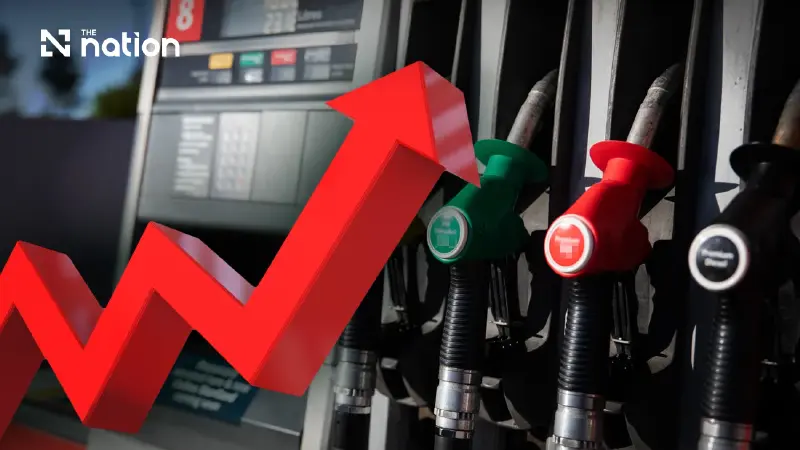


Revised levies and subsidies take effect on Wednesday (October 21, 2026), with the Oil Fuel Fund facing daily subsidy costs of about THB229 million.
- Thailand's Fuel Fund Executive Committee has approved a THB0.60 per litre price increase for B7 diesel, petrol, and E10 gasohol 95 and 91, effective October 21.
- The price hike is a response to rising global oil prices, driven by geopolitical conflicts, increased freight costs, and a decline in U.S. crude oil inventories.
- This measure is intended to manage the Oil Fuel Fund's subsidy costs, which have reached approximately THB229 million per day, and preserve its financial stability.
- As a result of the change, the new retail price for B7 diesel will be THB43.54 per litre, and petrol will rise to THB51.03 per litre.
The Fuel Fund Executive Committee has approved a THB0.60-per-litre increase in retail prices for B7 diesel, E10 gasohol 95 and 91, and petrol.
Global oil prices have risen mainly because of Houthi attacks on energy infrastructure in Saudi Arabia and shipping in the Persian Gulf.
Ships having to sail around Africa have driven up freight costs, reducing oil imports into Singapore and tightening supply.
A larger-than-expected decline of 3.2 million barrels in US crude oil inventories has added further upward pressure on global prices.
These fresh pressures pushed global oil prices higher on Tuesday (October 20, 2026), with figures of around US$178 per barrel for Singapore-market diesel and around US$136 per barrel for petrol.
The Oil Fuel Fund consequently faces subsidy costs of approximately THB229 million a day.
The committee therefore needs to adjust the fund’s levy and subsidy mechanisms to preserve liquidity for managing domestic energy prices, maintain long-term price stability and accommodate fluctuations in global fuel prices.
For diesel, the subsidy for regular B7 high-speed diesel will increase by THB0.69 to THB2.41 per litre, bringing the retail price to THB43.54 per litre.
The subsidy for B20 high-speed diesel will increase by THB1.08 to THB7.63 per litre, keeping the retail price unchanged.
Premium diesel will carry a levy of THB1.50 per litre.
For petrol and gasohol, the petrol levy will fall by THB0.29 to THB6.61 per litre, bringing the retail price to THB51.03 per litre.
The subsidy for gasohol 95 will increase by THB0.22 to THB0.28 per litre, bringing the retail price to THB42.04 per litre.
The subsidy for gasohol 91 will also increase by THB0.22 to THB0.28 per litre, bringing the retail price to THB41.67 per litre.
The subsidy for E20 gasohol will increase by THB0.69 to THB4.91 per litre, keeping the retail price unchanged.
The subsidy for E85 gasohol will increase by THB0.22 to THB1.62 per litre, also keeping the retail price unchanged.
The new fund rates will take effect on Wednesday (October 21, 2026).
With global oil prices expected to remain volatile, the Oil Fuel Fund called on people in all sectors to use fuel efficiently and only as necessary.
Small changes in behaviour would help reduce personal expenses and the country’s crude oil imports, while strengthening the fund’s resilience so it could return to supporting everyone on a sustainable basis.
