
Resort jobs in Japan offer older workers new places to live and work
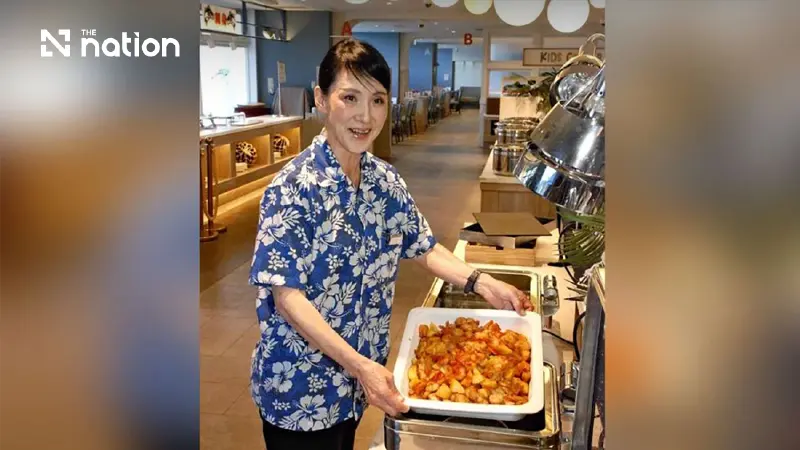


Humanic reports a rise in resort workers aged 50 and over as Kozue Takahashi explains the benefits and demands of taking jobs in new destinations.
- Older workers in Japan are taking jobs at resorts that provide both employment and a new place to live, often with benefits like covered rent and meals.
- The number of resort workers aged 50 and over is growing significantly, with one staffing company reporting a rise from roughly 50 in 2011 to an estimated 2,820 in 2025.
- These roles offer a desirable work-life balance, contribute to workers' well-being, and allow them to experience new regions more deeply than a tourist.
- The jobs, often in customer service, are accessible to those in their "second chapter" as they value life skills over specific past career experience.
At 59, Kozue Takahashi has changed her mind about stopping resort work at 60.
She now wants to continue until 65, finding that the balance between work and leisure appears to benefit both her physical and mental well-being.
“I want to keep working until I turn 65,” she said with a smile.
Making customers smile has mattered to her since her hairdressing days, and remains a source of fulfilment in her jobs at hotels and traditional Japanese inns, known as ryokan.
Her current placement, arranged by Tokyo-based staffing company Humanic Co., is at Maholova Minds Miura, a large resort hotel in Miura, Kanagawa Prefecture.
She left Sendai last October and now lives close to her workplace in an apartment.
The hotel covers her rent and supplies two meals each day.
Takahashi attributes the money she has left over to those benefits, despite an hourly wage she describes as around average.
She prepares meals and clears tables on roughly 20 days a month, working from 7am to 11am and returning from 4pm to 10pm.
For those considering resort jobs after their main career or child-rearing years, the search need not be confined to their former occupation, according to Kuniko Usagawa.
A specialist in working patterns, she is a senior chief researcher at the research centre of Tokyo-based Indeed Recruit Partners Co.
“Don’t limit yourself to jobs that require applying the career experience and skills you gained during past full-time roles.
Instead, choose a job where you can see results right away,” Usagawa advised.
“For instance, skills you developed in daily life — such as being able to cook quickly — are highly valued.”
“Rather than waiting for instructions, draw on your professional experience to think about what you can do and actively seek out work that matches your skill set.”
Takahashi’s experience comes as Humanic reports growing numbers of resort workers aged 50 and above: about 2,820 in fiscal 2025, against roughly 50 in fiscal 2011.
Humanic’s figures for January to September 2025 put the share of part-time resort workers in their 20s at 57%.
People in their 50s accounted for 8% and those aged at least 60 for 3%, making the two older groups roughly a tenth of the total.
Customer service predominated among the roles, including work at Japanese-style hot spring inns and theme parks.
Usagawa emphasised that employment status does not remove responsibility towards customers.
“While many part-time jobs at resorts involve customer service, customers do not know whether they are being served by a part-time worker or a full-time employee,” she explained.
“Don’t act irresponsibly just because you are a part-timer. Approach your work with the mindset that you represent the organization.”
Both part-time employment and moving between jobs every few months present challenges.
Takahashi approaches each placement by trying to “forget my age and work as a newcomer” and to “pay close attention to how things are done at each workplace”.
Photographs she has taken on her smartphone serve as a guide to arranging dishes and setting tables at her current hotel.
Alongside learning those practical details, she considers greetings such as “Good morning” and “Thank you for your hard work” essential.
Usagawa also pointed to the relationships that develop when colleagues spend their working day together and share accommodation.
“In addition, because you will work alongside others all day long and share living quarters, close relationships tend to form in these kinds of jobs.”
“It is important to make an effort to get along with others in the workplace.”
Enjoyment should help guide the choice of both job and destination, in Usagawa’s view.
“I recommend you choose a job based on your interests — something that makes you feel, ‘Even if it’s a little tough, I’ll give it my best.’”
“Try looking for work in a region you want to visit or in a field you enjoy. For example, if you like skiing, look for a job at a ski resort.”
Takahashi’s choice of Miura was influenced by her sister and brother-in-law, who live there and had called it a “nice, laid-back place”.
Seeing a vacancy at Maholova Minds Miura prompted an immediate application.
Her days off now include getting up early for beach walks in the morning sunshine.
A reporter visiting her travelled for around 90 minutes by train from Tokyo Station to Miurakaigan Station, then walked five minutes to the hotel, where she welcomed the reporter in the restaurant.
Before Miura, her search for placements had taken her beyond the Tohoku region, where she had worked at about 20 ryokan and hotels.
While employed at a ryokan on Sado Island in Niigata Prefecture, she could watch the sun disappear into the Sea of Japan every day.
The starting point was a live-in vacancy she discovered in 2020 at a ryokan with a hot spring in Kaminoyama, Yamagata Prefecture.
She applied and went on to work there.
“I can make the most of my freedom as a single person, and I might even be able to enjoy hot springs,” she had thought.
Hairdressing in her home prefecture of Miyagi had been part of her earlier working life.
She also enjoyed one- to two-week trips abroad while employed through a temporary staffing agency.
“I’m fulfilling my dream of hopping from place to place,” Takahashi said.
Such jobs at accommodation facilities, ski resorts and other tourist destinations can make living somewhere new possible during a “second chapter” after retirement.
For Takahashi, the attraction extends beyond the experiences of a short visit.
“The appeal of resort work is experiencing the charms of a place that you wouldn’t discover as just a tourist, as well as blending into the local community in a setting far removed from your ordinary life.”
Source: The Japan News
