
FAA halts US departures on Nov 13 amid about 11,000 flight disruptions
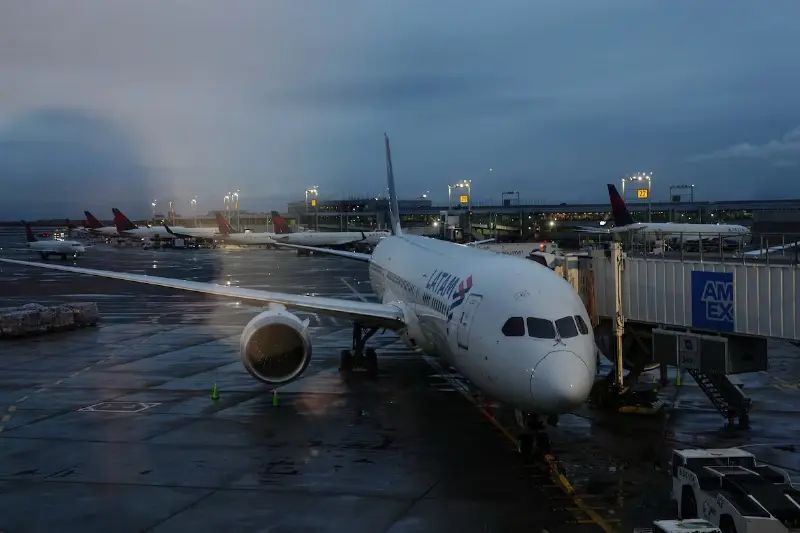


US authorities reported no immediate sign of a cyberattack after an air traffic communications failure halted take-offs but allowed landings.
- The FAA ordered a nationwide halt to all US departures on November 13 due to a communications failure affecting air traffic control centers.
- The ground stop caused approximately 11,000 flight disruptions, consisting of over 1,000 cancellations and nearly 10,000 delays.
- Officials described the incident as a telecommunications outage and stated there was no immediate indication of a cyberattack.
- This was only the second nationwide ground stop ordered since the September 11, 2001 attacks.
The US Federal Aviation Administration (FAA) ordered a nationwide halt to departures on November 13, 2026, after a communications failure affected air traffic control centres. Aircraft already flying were permitted to land, while FlightAware recorded more tahan 1,000 cancellations and nearly 10,000 delays.
The FAA issued the ground stop at 3.54pm Eastern Standard Time (8.54pm GMT), when 4,042 flights bound for US airports were airborne, according to Flightradar24. Air traffic in Chicago had already been halted because of communications problems.
Flight cancellations extended to Canada and Europe as the effects of the US departure ban spread internationally.

Mullin reports no immediate indication of cyberattack
US Homeland Security Secretary Markwayne Mullin described the incident as a telecommunications outage and said President Donald Trump had been briefed. Speaking outside the White House, Mullin reported no immediate indication that a cyberattack was responsible.
“There is no indication as of yet that this was a nefarious attack against us. It’s just a telecommunication outage as of right now,” Mullin told reporters.
“There’s no reason for the public to be afraid or scared for your loved ones. This isn’t another 9/11,” Mullin added.
Mullin said the Department of Homeland Security was examining every possible cause, including a new air traffic control system powered by artificial intelligence. Mullin did not identify a confirmed cause of the failure.
The US National Weather Service separately reported nationwide internet and communications problems on November 13. No immediate evidence connected those problems with the air traffic control outage.
European aviation had also experienced disruption earlier in November, when hoax bomb threats affected dozens of passenger flights, prompting unscheduled landings and fighter-jet escorts or interceptions. There was no immediate indication that those incidents were connected to the US communications failure.

Prolonged departure ban could disrupt airlines through weekend
“If the ground stop continues through the evening, it likely will take the weekend to resolve the disruptions to airlines’ networks,” said Robert Mann, an aviation analyst and principal of R.W. Mann & Co.
Airline officials said the FAA had not provided a time for lifting the departure ban, although early indications suggested communications were improving in some locations.
Passengers gathered at departure halls and airline counters in Boston, Seattle, New York and Los Angeles as delays and cancellations accumulated. Aircraft occupied gates, leaving some arriving flights waiting on taxiways.
“I might cry at some point but not yet,” said Louise Maher, 47, who still hoped to travel from Newark to London on a British Airways flight on November 13 despite warnings of a possible delay caused by air traffic control restrictions.

White House requests US$30.1 billion for aviation upgrades
The White House and the US Department of Transportation urged Congress on November 13 to provide a further US$30.1 billion for improvements to airports and the air traffic control system.
The US air traffic control network, which manages the world’s busiest airspace, has faced controller shortages, ageing infrastructure and repeated equipment and communications failures. Much of the FAA’s technology has been in service for decades.
The FAA announced on November 5 that floppy disks used to supply weather and other essential information at more than 400 facilities would be phased out by the end of 2028.
A mid-air collision at Ronald Reagan Washington National Airport killed 67 people in January 2025.
The November 13 shutdown was only the second nationwide ground stop since the September 11, 2001, attacks. The previous one, in January 2023, suspended domestic departures for less than two hours.
