
Trump, Xi and Putin make history with three-way summit, but major global conflicts remain unresolved
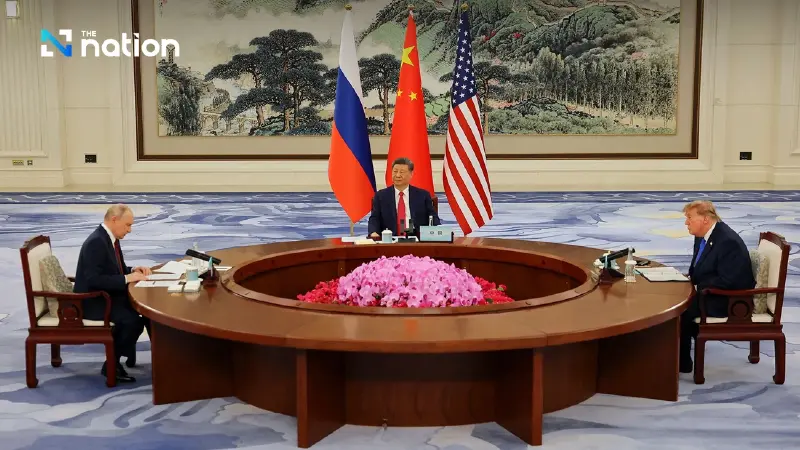


Donald Trump, Xi Jinping and Vladimir Putin hold an unprecedented trilateral summit in Shenzhen, but 81 minutes of talks produce no major breakthrough on Ukraine, Iran or nuclear arms control.
US President Donald Trump, Chinese President Xi Jinping and Russian President Vladimir Putin have held an unprecedented three-way summit in Shenzhen, China, bringing three of the world's most powerful leaders together for talks on global security, nuclear weapons, economic relations and regional conflicts.
However, the 81-minute meeting on Thursday (November 19), held on the sidelines of the Asia-Pacific Economic Cooperation (APEC) summit, produced no major diplomatic breakthrough, with officials having expected limited progress from the outset.
Instead, the meeting itself emerged as the principal achievement, offering all three leaders an opportunity to demonstrate their international influence and project an image of cooperation despite significant differences over global security and economic interests.

CNN identified five key takeaways from the historic encounter.
1. A historic meeting, but limited concrete results
The summit was initially proposed by Putin as an opportunity to discuss the war in Ukraine, despite the absence of Ukrainian representatives.
The proposal raised concerns in Kyiv and prompted comparisons with the 1945 Yalta Conference, when major powers negotiated the post-war international order and spheres of influence.
Both Xi and Putin referred to the historical role of major powers in shaping international affairs during their opening remarks.
Trump initially faced questions over whether Ukraine would be discussed, with US officials previously indicating that the issue would not be on the agenda. He later said he intended to raise the conflict.

For Trump, however, nuclear arms control appeared to be a more important priority. He wants Washington, Moscow and Beijing to negotiate a new agreement on nuclear non-proliferation.
Xi, meanwhile, has shown little interest in joining an agreement with the US and Russia, whose nuclear arsenals are considerably larger than China's.
The Chinese leader had also reportedly been reluctant to host a three-way meeting that could overshadow the APEC summit.
2. Personal relationships take centre stage
The summit highlighted Trump's efforts to build personal relationships with Xi and Putin, hoping that closer ties between leaders could help ease geopolitical tensions.
Trump has repeatedly referred to both presidents as friends and used personal diplomacy and public praise to strengthen those relationships.
During his meeting with Xi, Trump said: "I think as long as you and I are in charge of things, we'll never have a problem."
He also described the three-way gathering as an opportunity to make history.
However, the friendly exchanges have yet to translate into significant progress on major disputes.
Washington and Beijing continue to face disagreements over trade and shipments of rare earth materials, while both China and Russia maintain relationships with Iran and have provided assistance and technology to Tehran.
Xi and Putin, who declared their partnership to have "no limits" five years ago, have also maintained close ties through numerous bilateral meetings.
Their latest gathering with Trump offered both leaders an opportunity to reinforce their vision of a changing global balance of power, with China and Russia seeking greater influence in international affairs.

3. Ukraine and Iran conflicts remain unresolved
The wars involving Russia and Ukraine, and the United States and Iran, remained among the most difficult issues confronting the three leaders.
Both conflicts have lasted longer than anticipated, placing pressure on military resources and contributing to higher global prices.
Trump had hoped to enlist the support of Xi and Putin in bringing the conflicts to an end, as both countries maintain relationships with Tehran.
However, the absence of representatives from Ukraine and Iran limited the scope for meaningful negotiations involving the countries directly affected.
Trump has become increasingly frustrated by the prolonged conflicts. His pledge to end the Ukraine war within 24 hours of taking office remains unfulfilled, while the conflict involving Iran has generated growing domestic political pressure.
In Berlin, Trump's son-in-law Jared Kushner told European leaders that the US president had delivered a strong message to Xi and Putin about his desire to achieve peace.
US special envoy Steve Witkoff also said Ukraine and a peaceful resolution to the conflict had been central to Trump's message during the Shenzhen meeting.
Trump nevertheless expressed optimism that the discussions could eventually produce results.

4. Artificial intelligence emerges as another major battleground
Competition over artificial intelligence (AI) and advanced semiconductor technology was another important issue surrounding Trump's visit to China.
Shenzhen, one of China's leading technology and manufacturing centres, provided a backdrop for discussions about the future of AI and the global technology industry.
Before the summit, concerns over an alleged Chinese intelligence connection involving former Nvidia chief executive Jensen Huang had added to tensions within Washington.
The issue also exposed disagreements within Trump's administration over whether to restrict China's access to advanced American AI chips.
Some officials favour tighter controls to limit China's technological capabilities, while Trump has expressed opposition to measures that could undermine the development of AI.
"We do not want to do anything to destroy the tremendous potential of this technology," Trump said, while opposing what he described as global regulation.
He nevertheless acknowledged that AI carried potential risks and said governments needed to manage its negative consequences carefully.
The discussions highlighted the challenge facing Washington as it seeks to maintain its technological advantage while avoiding measures that could disrupt the development of an increasingly important industry.

5. Xi strengthens China's position as a global diplomatic power
The summit was widely viewed as a diplomatic success for Xi, who was able to position China as a central player in international affairs.
By bringing Trump and Putin together, Beijing demonstrated its ability to convene two major global powers despite their competing interests.
Trump's warm comments towards China and his emphasis on his personal relationship with Xi were also welcomed by Beijing, particularly as tensions remain over trade, technology and access to advanced semiconductors.
Importantly, the meeting allowed Xi to strengthen China's international standing without committing to major concessions on contentious issues.
Beijing also avoided the appearance of negotiating Ukraine's future over the heads of Ukrainians, an outcome that could have conflicted with its stated support for multilateral diplomacy.
The timing is significant for Xi as he prepares for a major Communist Party meeting next year, where he is expected to seek confirmation of a fourth term at the centre of China's political leadership.

What comes next?
The Shenzhen summit demonstrated that direct engagement between Washington, Beijing and Moscow remains possible, even as their interests diverge on major international issues.
For Trump, the meeting offered an opportunity to demonstrate his diplomatic influence and pursue cooperation on nuclear security, Ukraine and Iran.
For Putin, it provided a return to the highest level of international diplomacy alongside the leaders of the United States and China.
For Xi, hosting the unprecedented gathering strengthened China's image as a global power capable of bringing major rivals to the negotiating table.
Nevertheless, without concrete agreements on the wars in Ukraine and Iran, nuclear arms control or the economic disputes between the three countries, the long-term significance of the summit remains uncertain.
The challenge now is to turn diplomatic engagement and public displays of friendship into practical cooperation.
Source: CNN
