
Japan’s Gunma region promotes local sights with mascot Gunmachan
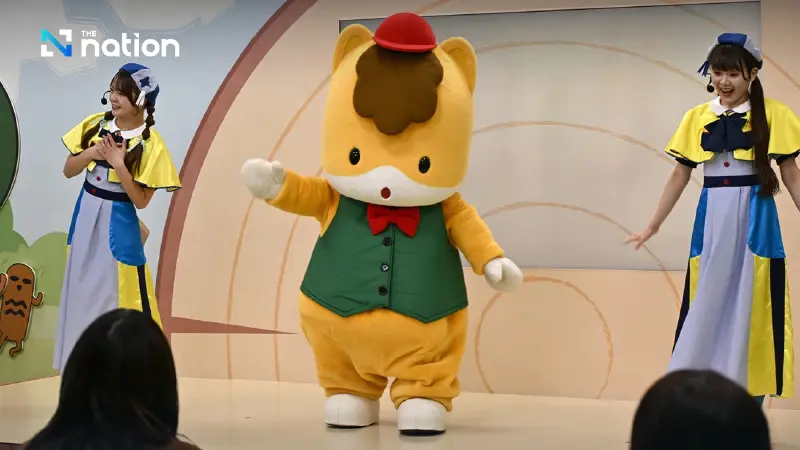


Gunma’s own anime series began its run on US television in October. Sales of Gunmachan goods reached a record 66 billion yen in 2025.
- Gunma Prefecture uses its mascot, Gunmachan, as an "advertising director" to promote local attractions and products through appearances at events in Japan and abroad.
- An anime series featuring the character began airing on US television, expanding the region's promotional efforts to an international audience.
- The prefecture aims to significantly boost the local economy through the mascot, setting a sales target of 150 billion yen for Gunmachan-related goods by 2028.
- Considered Japan's first local government mascot, Gunmachan's popularity was bolstered by winning a national mascot grand prix in 2014.
Gunmachan’s role as the official “advertising director” for Gunma Prefecture in eastern Japan is growing.
The mascot appears at events across Japan and travels to animation festivals abroad.
In October, US television began showing an anime series the prefecture produced about Gunmachan.
Gunma wants Japan’s first local government mascot to draw attention to the prefecture’s attractions and help local products reach wider markets.
A proposal calls for sales of Gunmachan goods to more than double in two years.
Governor Ichita Yamamoto has set a target of 150 billion yen for the 2028 financial year or later.
Sales have already more than doubled in six years.
In 2025, Gunmachan goods, from dolls to processed foods, brought in a record 66 billion yen.
Kumamon, the popular mascot from Kumamoto Prefecture in south-western Japan, was well ahead.
Sales of goods associated with Kumamon exceeded 150 billion yen that same year.
Gunmachan and Kumamon often make joint appearances.
Neither sees the other as a rival, according to officials in both prefectures.
“The two are friends,” they said.
Gunma’s mascot went by Yumachan in 1994, when Gunma hosted a sporting event for people with intellectual disabilities.
Its present design won the public competition for that event.

The artist was Fumiko Nakajima, 60, who used to work for the prefectural government. Yumachan became Gunmachan in 2008.
In 2014 it came first in Japan’s yuru-kyara grand prix, which drew some 1,700 mascots.
Nakajima laughed as she recalled people mistaking the small mouth for a nose.
At her talk “What Is Gunmachan?” on November 14 in Maebashi, the prefectural capital, she told about 100 people, fans among them, why she had given the character its slightly vacant look.
She wanted it to seem “always approachable and empathetic”.
“I didn’t want a character with a smile,” she said.
“I chose a design with a face that looks as though it could whisper the words I needed to hear.”

[Copyright The Jiji Press, Ltd.]
