
Ministry of Commerce Highlights China’s Booming Fresh Snacks Market Worth Around THB 200 Billion


Opening New Opportunities for Thai Businesses to Take Thai Products to the “NEXT LEVEL” From “Thai Product” to “Thai Brand”
Ms. Sunanta Kangvalkulkij, Director-General of the Department of International Trade Promotion (DITP), Ministry of Commerce, revealed that she has instructed Thailand’s overseas trade promotion offices worldwide to accelerate efforts to expand markets for Thai products and services.

The initiative is in line with the policy of Ms. Suphajee Suthumpun, Deputy Prime Minister and Minister of Commerce, which focuses on identifying new trade opportunities and enhancing the competitiveness of Thai products in the global market.
Most recently, the Thai Trade Center in Nanning reported that the Fresh Snacks market is emerging as one of the fastest-growing segments in China’s food industry. The trend is being driven by a new generation of consumers who increasingly prioritize freshness, quality, health, and convenience presenting significant opportunities for Thai food products and businesses.

According to market data, China’s Fresh Snacks market was valued at approximately RMB 18 billion in 2025, representing growth of more than 40%. In 2026, the market is projected to expand to approximately RMB 40–50 billion, equivalent to around THB 200–250 billion, underscoring the sector’s strong and rapidly growing potential.
Popular products span a wide range of categories, including dried and freeze-dried fruits, ready-to-eat fresh fruits, freshly baked goods, nuts and grains, dairy products, beverages, and healthy snacks. The Fresh Snacks business model combines elements of retail with ready-to-eat food services, focusing on products with relatively short shelf lives, freshly prepared items, simple ingredients, and products aligned with the growing Clean Label and Healthy Lifestyle trends.
Competition in the market is also expected to intensify as major retailers begin expanding into this segment. On July 22, 2026, 7-Eleven in Jiangsu Province launched “7 Fresh Snacks,” offering a broad range of products from grains, dried fruits, and nuts to meat-based products. The move reflects how Fresh Snacks are expanding beyond specialist stores into a wider range of retail channels, making these products increasingly accessible to a broader consumer base.

In terms of market entry, Thai businesses should place greater emphasis on brand building through China’s digital platforms and e-commerce channels, while simultaneously expanding into convenience stores, supermarkets, modern trade outlets, and dedicated Fresh Snacks stores. This multi-channel strategy will help integrate Thai products into the consumer journey of Chinese shoppers while reducing reliance on traditional distribution channels alone.
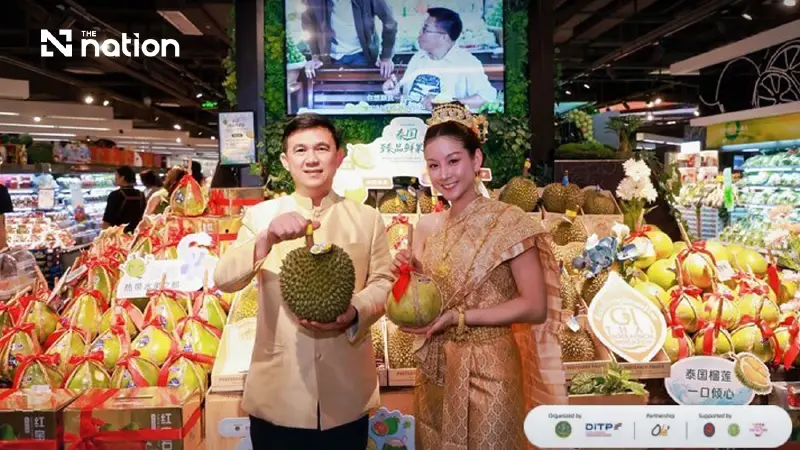
“The Fresh Snacks market represents another significant opportunity for Thai products, particularly durian, mango, coconut, banana, tropical fruit-based products, as well as health-oriented foods. These products are well positioned to meet the needs of Chinese consumers who increasingly value quality, safety, health, convenience, and new consumption experiences,” Ms. Sunanta said.
Thai entrepreneurs should also upgrade the value of their raw materials and establish stronger product identities through innovation, value-added processing, modern packaging design that responds to contemporary lifestyles, as well as distinctive branding and storytelling. These efforts will help Thailand move beyond the export of primary agricultural commodities toward higher-value products that can compete sustainably in the Chinese market.

This transformation is aligned with the “NEXT LEVEL” concept, which aims to elevate the potential of Thai products and services by combining quality, innovation, creativity, and Thai identity. Thailand’s opportunity should no longer be limited to serving merely as a “source of high-quality raw materials.” Instead, Thai businesses must transform these resources into “products, brands, and experiences” that create greater added value and encourage consumers worldwide to pay a premium.
China’s Fresh Snacks market therefore serves as a clear example of how changing consumer behavior can create new business value from freshness, health, quality, and convenience. It also represents an important opportunity for Thai businesses to make the transition from “Thai Product” to “Thai Brand” creating differentiation, increasing value, and strengthening Thailand’s long-term competitiveness in the global marketplace.
For more information on international trade opportunities and support provided by the Department of International Trade Promotion (DITP), please visit www.ditp.go.th, follow Facebook: Department of International Trade Promotion (DITP), contact LINE Official: @DITP, or call the DITP Hotline 1169.
