
Thailand’s Next MICE Chapter: Going Beyond Standards
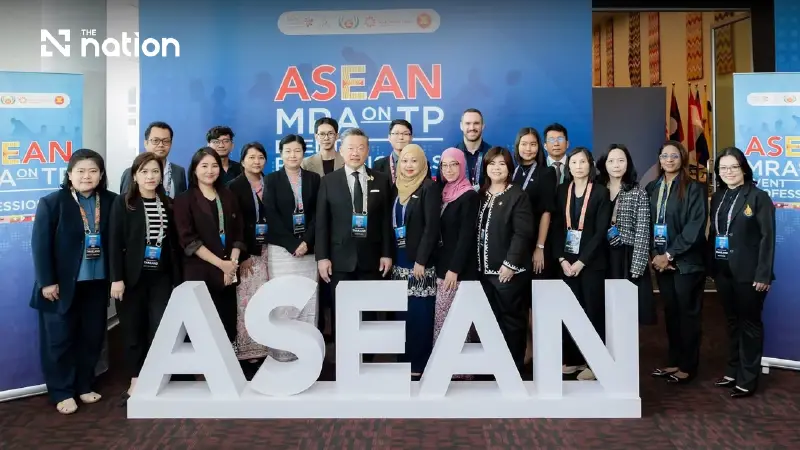


Salanroj Sutaschuto sees standards as the foundation — and strategic value creation as Thailand’s next competitive edge in ASEAN MICE
BANGKOK, August 2026 — As competition among MICE destinations intensifies across Asia, Thailand’s next challenge is no longer simply to meet international standards.
The bigger question is how the country can turn those standards into distinctive experiences, new business opportunities and long-term economic value.
Salanroj Sutaschuto believes this shift — from meeting standards to creating value beyond them — will be increasingly important to Thailand’s competitiveness in the regional MICE landscape.
His perspective comes as Thailand continues to engage in key ASEAN initiatives covering two fundamental components of the industry: people and places. These include the ASEAN Mutual Recognition Arrangement on Tourism Professionals (MRA-TP) for Event Professionals and the ASEAN MICE Venue Standard (AMVS).
While the two initiatives serve different purposes, Salanroj sees a broader strategic connection between them.
“Standards are the foundation, not the destination. They make us ready to compete. What makes us different is what we build on top of them.”

When standards become a baseline
Salanroj compares the evolution of MICE with other industries where technical quality is essential, but no longer sufficient to create leadership.
A great restaurant must first serve good food. But the world’s most compelling culinary destinations go further — transforming food into an experience, a culture and, ultimately, a lifestyle.
Likewise, craftsmanship is fundamental to fashion, but leading fashion destinations have built upon that foundation through design, creativity, branding and cultural influence.
For MICE, the principle is similar.
Having qualified professionals and internationally recognised venues is essential. But once these capabilities become the expected baseline across competing destinations, differentiation must come from somewhere else.
“The question should not stop at whether our professionals or venues meet the standard. We should be asking: how can we turn that readiness into greater value?”

From standards to strategic value
Salanroj sees three areas where Thailand can build on its existing MICE capabilities: experience, innovation and business opportunity.
A venue that meets international standards, for example, can become more than a functional event space. It can create an experience connected to the identity, culture and economic strengths of its destination.
Similarly, professional standards should go beyond certification. They can become a foundation for developing talent capable of innovating, collaborating across borders and competing in a regional market.
At the city level, the opportunity is even broader.
Rather than simply asking whether a destination is capable of hosting an international event, cities should consider a more strategic question
Why should this particular event come here?
Answering that requires each destination to understand its own economic and cultural DNA — whether in food, wellness, technology, trade, creativity, sustainability or another area of expertise — and connect those strengths with relevant international events and business communities.
This creates a progression from
Standard → Experience → Value → Competitive Advantage

MICE as an economic platform for cities
Recent ASEAN MICE-related activities in Songkhla, one of Thailand’s designated MICE Cities, also illustrate a broader opportunity to rethink the role of business events in regional development.
For Salanroj, the value of MICE should not be measured only through visitor numbers, hotel nights or immediate tourism expenditure.
Those are important, but they represent only the first layer of economic impact.
“If an event comes to a city and leaves behind only hotel, restaurant and transportation revenue, that is one level of impact. But if it also brings knowledge, business networks, investment opportunities and new connections for local entrepreneurs, the value becomes much greater.”
Under this approach, MICE becomes an economic platform — bringing together people, knowledge, industries and investment around the distinctive strengths of a destination.
The next evolution of Thailand’s MICE City strategy, therefore, could move beyond simply developing cities that are “event-ready” towards building cities that use business events to strengthen their own economic positioning.
From meeting standards to creating the difference
Thailand already possesses strong fundamentals: experienced professionals, quality venues, a well-established hospitality sector and diverse destinations.
The strategic opportunity now lies in turning these strengths into propositions that are difficult for competitors to replicate.
“Standards allow us to be in the game. Strategy is what allows us to differentiate. We need to ask what kind of Thailand MICE experience people would specifically travel here for — and how the strengths of each destination can be converted into real business opportunities.”
This also means looking beyond individual events.
The longer-term opportunity is to connect people, places and local economic strengths so that an event becomes a catalyst for business development, knowledge exchange and stronger destination competitiveness.
As ASEAN continues to strengthen professional and venue capabilities across the region, the competitive question for Thailand is therefore evolving.
It is no longer simply
How do we meet the standard?
It is
What do we create beyond it?
“Standard makes us ready. Strategy makes us different.”
For Salanroj, that distinction could define the next chapter of Thailand’s MICE competitiveness — moving from compliance to creativity, from readiness to value creation, and from hosting events to using MICE as a platform for economic opportunity.
Photo credit: MICE Capabilities
