Four royal barges carry Thai art and symbolism on November 6
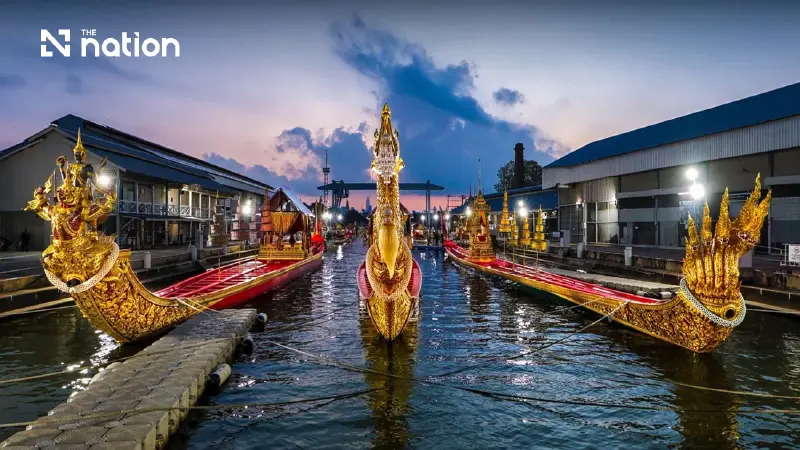


Bangkok’s Royal Barge Procession brings together 52 vessels, with four royal barges at the centre of the Stars Encircling the Moon formation.
- The four principal royal barges in the November 6 procession are the Suphannahong, Anantanakkharat, Narai Song Suban, and Anekkachatphutchong, each showcasing unique Thai craftsmanship and symbolism.
- Suphannahong, the highest-ranking barge with a golden swan figurehead, will carry Their Majesties the King and Queen to offer royal Kathin robes at Wat Arun.
- The Anantanakkharat, distinguished by its seven-headed Naga bow, is assigned the ceremonial role of carrying the Buddhist offering of royal Kathin robes.
- The other two barges, Narai Song Suban and Anekkachatphutchong, feature figureheads of the god Vishnu on a Garuda to symbolize divine protection and intricate smaller Naga carvings, respectively.
Four royal barges will place Thai craftsmanship, religious symbolism and royal tradition at the heart of Bangkok’s Royal Barge Procession on November 6, 2026. Their carved figureheads and gilded surfaces tell different stories, while their positions within the 52-vessel fleet reflect distinct ceremonial roles.
Their Majesties King Maha Vajiralongkorn and Queen Suthida Bajrasudhabimalalakshana will travel aboard Suphannahong along the Chao Phraya River to Wat Arun Ratchawararam to offer royal Kathin robes. The procession honours the Queen’s fourth-cycle, or 48th, birthday anniversary, which fell on June 3.
This will be the third Royal Barge Procession of the present reign, following the concluding coronation ceremonies in 2019 and the Kathin procession on October 27, 2024. The latter marked the King’s sixth-cycle, or 72nd, birthday anniversary on July 28 that year.
How 52 barges form ‘Stars Encircling the Moon’
The procession’s “Stars Encircling the Moon” formation places the principal royal vessel at the centre, surrounded by accompanying barges. Introduced in 1982 at the initiative of Her Royal Highness Princess Chulabhorn, the arrangement combines ceremonial hierarchy with a balanced composition across the river.

The fleet stretches 1,280 metres long and 90 metres wide, with five columns organised into three groupings. Its arrangement makes the different ceremonial roles of the royal barges visible within a single moving formation.
The central column, representing the “moon”, contains 10 vessels: the four principal royal barges; Tang Mo, the inner drum barge carrying the procession commander; E-Luang, the outer drum barge; three police barges; and Saeng 7.
Two inner columns form the closest ring of “stars”, with seven vessels on each side. These comprise Thong Khwan Fah and Thong Ba Bin as the leading gateway barges; Suea Thayan Chon and Suea Kamron Sin as the traditional destroyer barges; eight animal-figurehead barges; and the towing barges Ekachai Hern How and Ekachai Lao Thong.
The two outer columns contain 28 vessels: 22 Dang barges and six Saeng barges. Together, they provide protection around the front, rear and flanks of the royal formation.
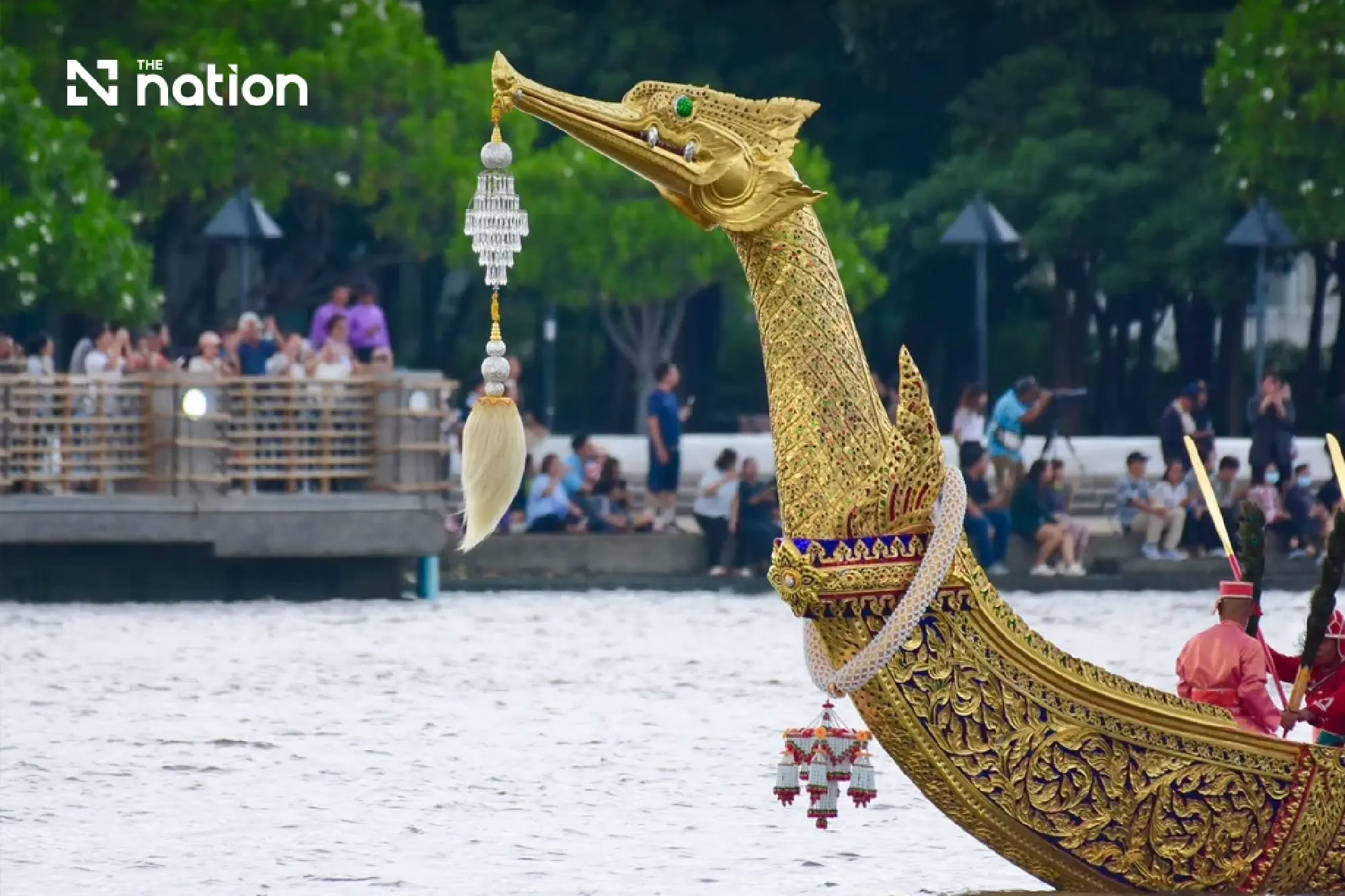

Suphannahong’s golden swan carries Their Majesties
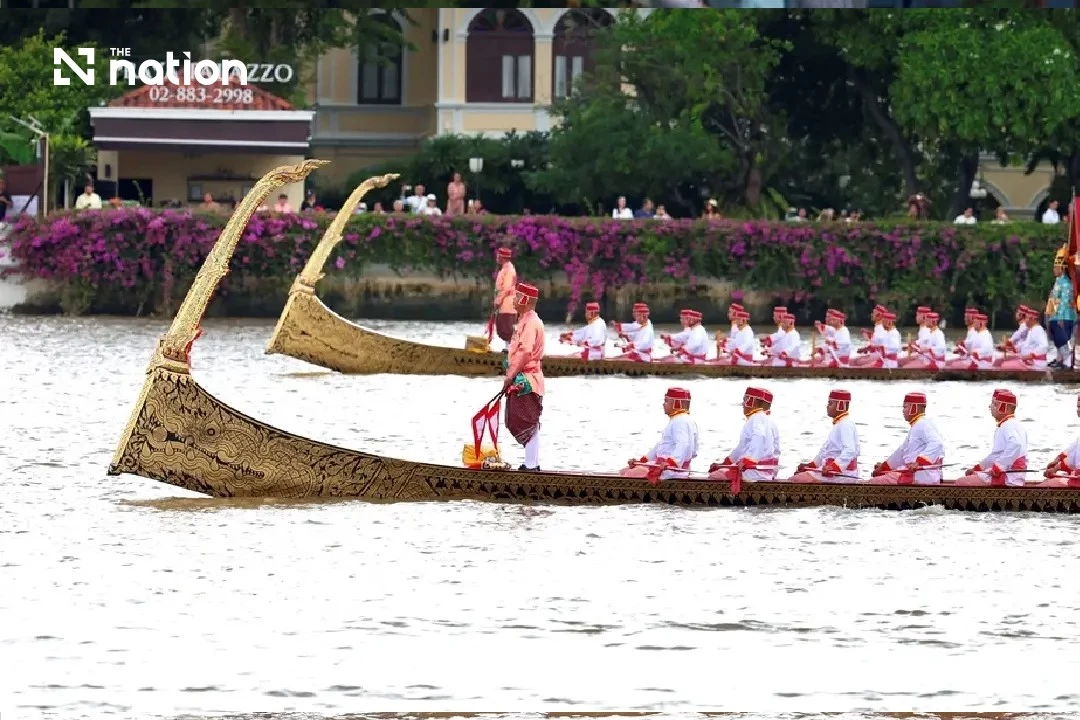
Suphannahong, the highest-ranking royal barge, will carry the King and Queen. Its golden swan figurehead is among the procession’s most recognisable images, but the smaller details also express the vessel’s royal status.
A carefully shaped tassel of white yak hair from Nepal hangs from the swan’s mouth, ending in cut crystal that catches the light. A garland of fresh flowers encircles its neck, while lacquer, gold leaf and mirrorwork decorate the exterior on a blue ground signifying a vessel of the monarch. The interior is painted red.
The name Suphannahong appears in records dating to the Ayutthaya period. The present vessel was commissioned during Rama V’s reign to replace a barge from Rama I’s reign, then completed and launched in 1911 under Rama VI. Its naval architect was Rear Admiral Phraya Ratchasongkhram, also known as Kon Hongsakul.
The World Ship Trust recognised Suphannahong with its Maritime Heritage Award on June 4, 1992, honouring the vessel’s historical importance, traditional craftsmanship and conservation.
Preparations for this year’s ceremony included the installation of tiered umbrellas, royal curtains, three-tailed flags and other regalia on October 20. The work brought together the Bureau of the Royal Household and the Royal Barge Section of the Small Boat Fleet, Naval Transportation Department.
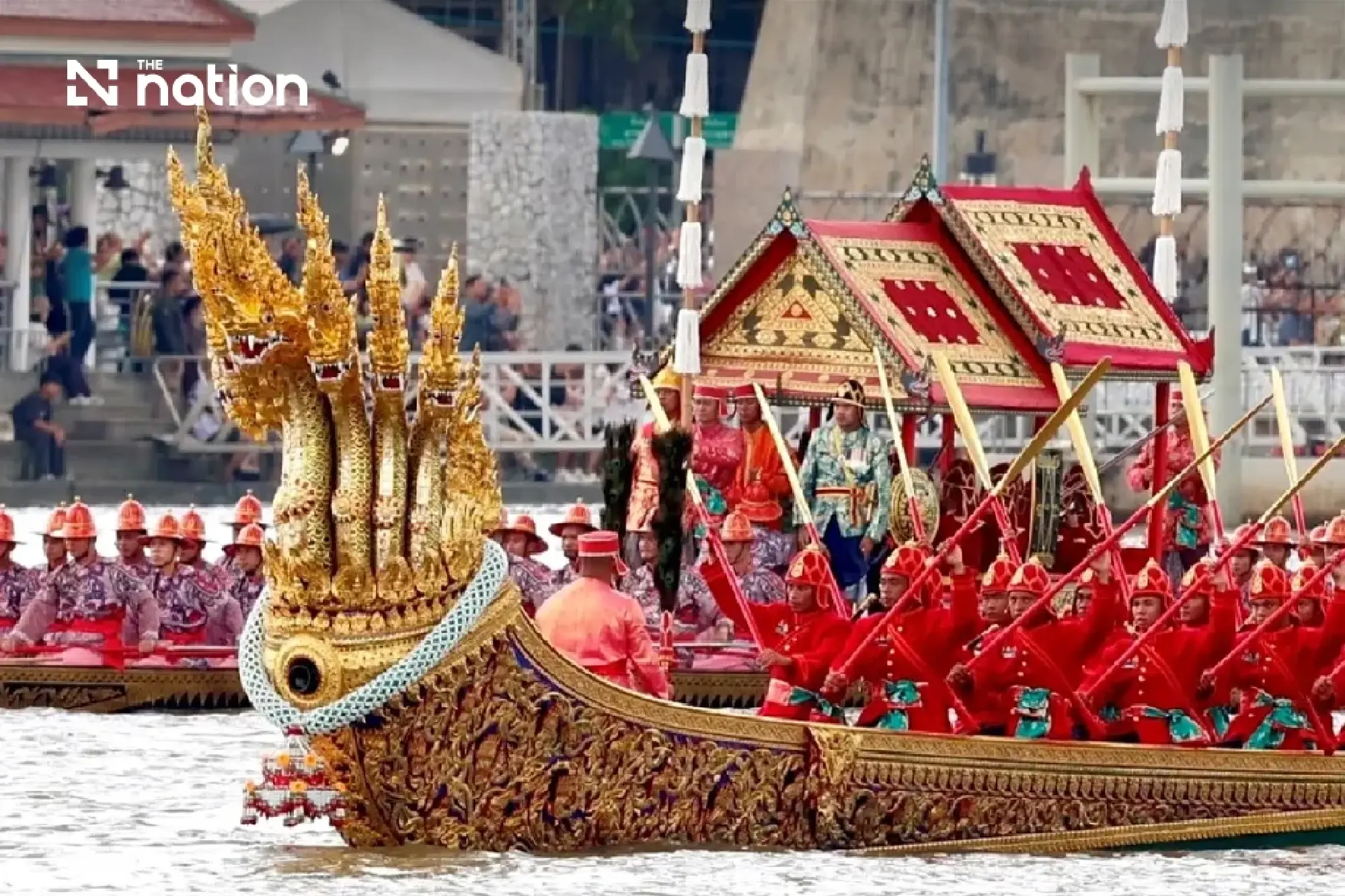

Anantanakkharat’s seven-headed Naga bears the robes
Anantanakkharat carries the royal Kathin robes in a busabok, an ornate pavilion. Its ceremonial purpose places the Buddhist offering itself within one of the procession’s most elaborate vessels.
The bow depicts Ananta, the seven-headed Naga whose name conveys the idea of an eternal serpent king. Lacquer, gold leaf and mirrorwork embellish the figurehead, while gilded scroll patterns and green glass decoration extend along the green exterior.
The first Anantanakkharat was built during Rama III’s reign. The present barge dates from 1914, in the reign of Rama VI.
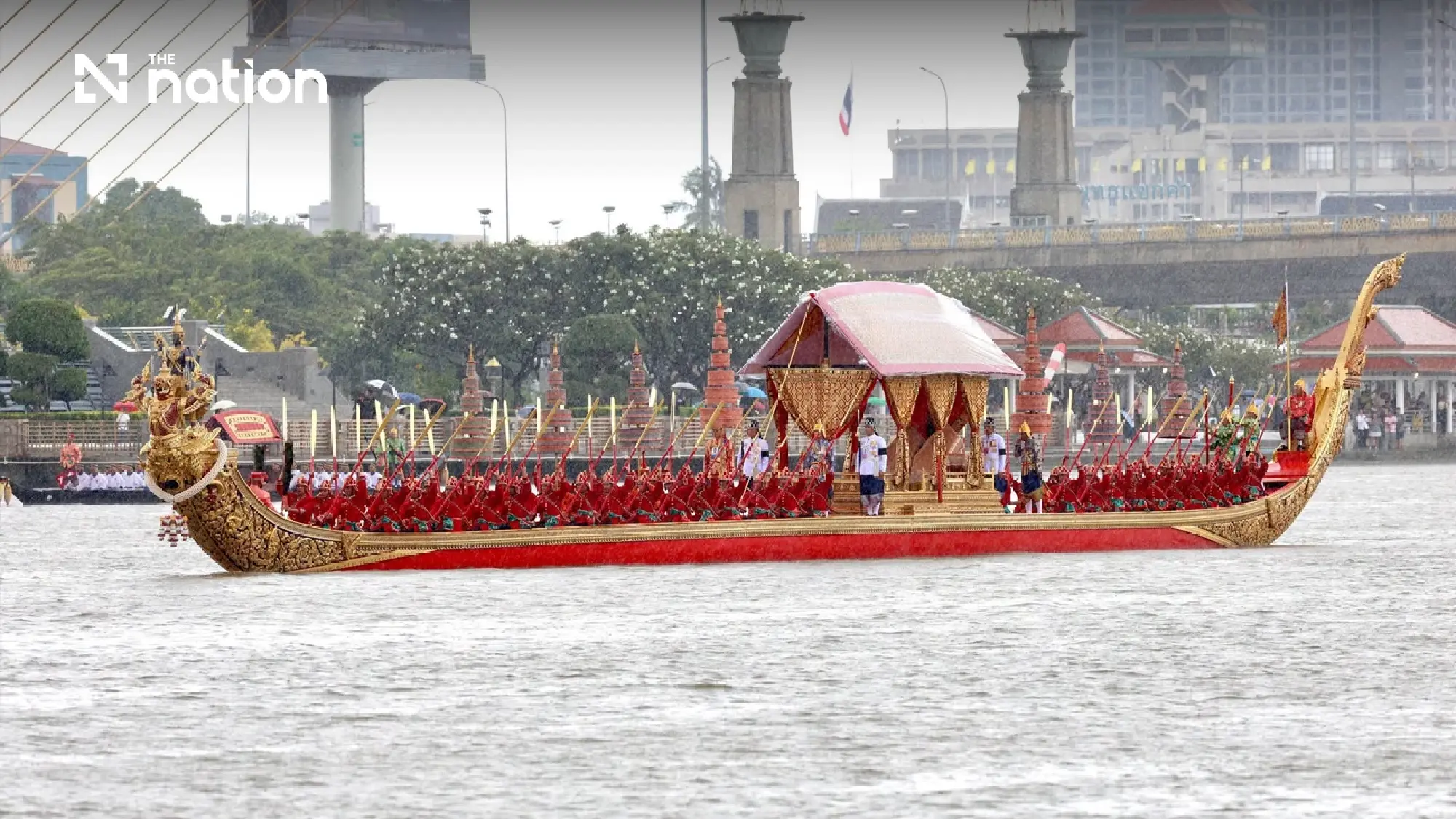

Narai Song Suban presents an image of divine protection
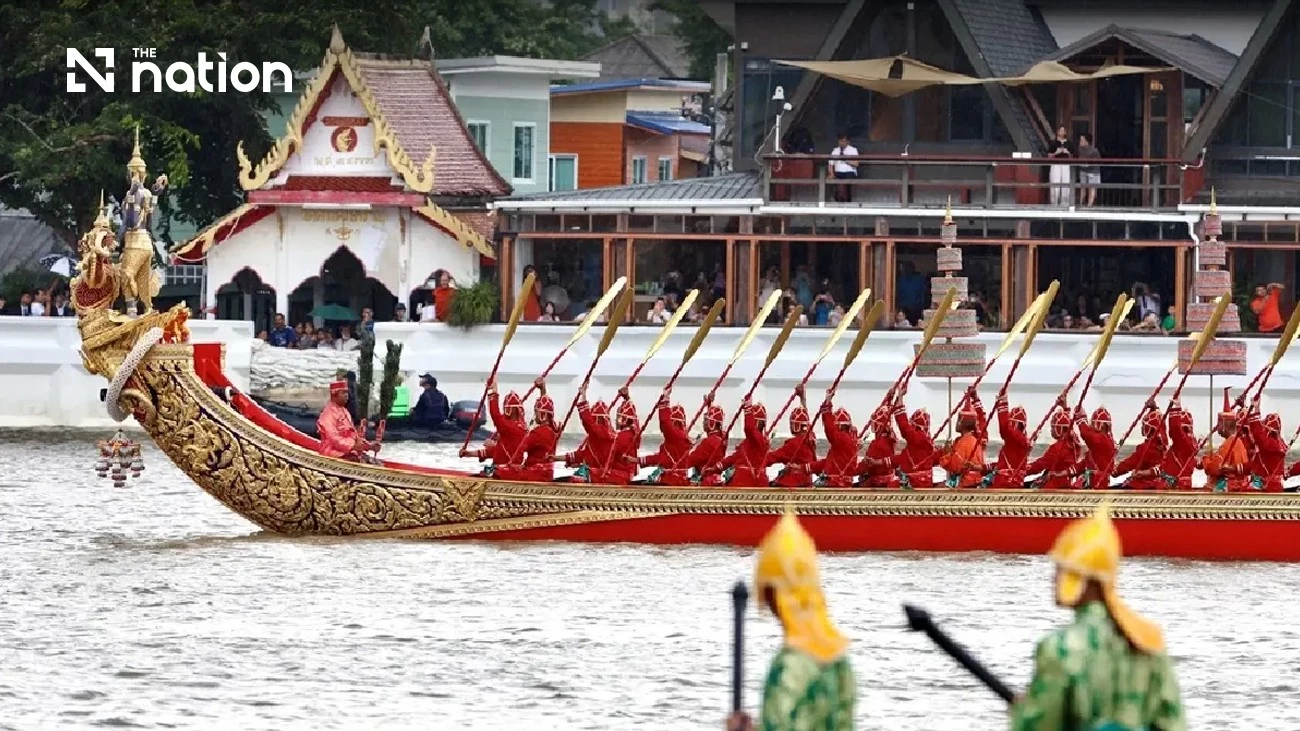
Narai Song Suban King Rama IX serves as a secondary royal barge. Its figurehead depicts the four-armed Vishnu, known in Thai as Narayana, standing on Garuda as the mythical bird grips Nagas.
Vishnu holds a trident, mace, discus and conch, creating an image associated with the power to protect the world. Beneath Garuda is an opening designed for a cannon, while the red hull is embellished with mirrorwork and a canopied throne occupies the centre.
Built jointly by the Royal Thai Navy and Fine Arts Department in 1996, the vessel marked King Bhumibol Adulyadej’s Golden Jubilee, celebrating 50 years on the throne. It was the only royal barge newly constructed during Rama IX’s reign, drawing on an earlier Narai Song Suban figurehead design developed during the reigns of Rama III and Rama IV.
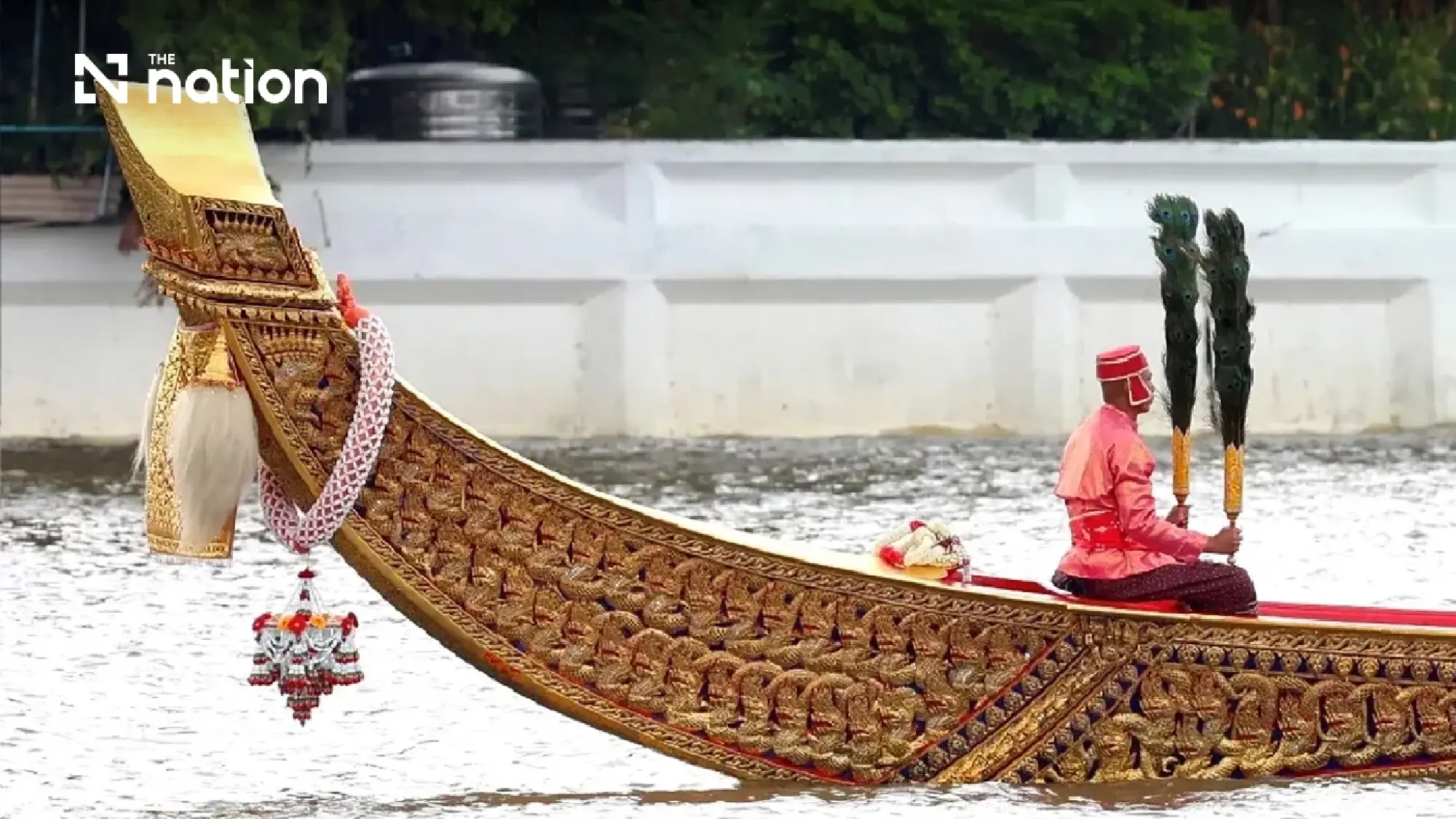

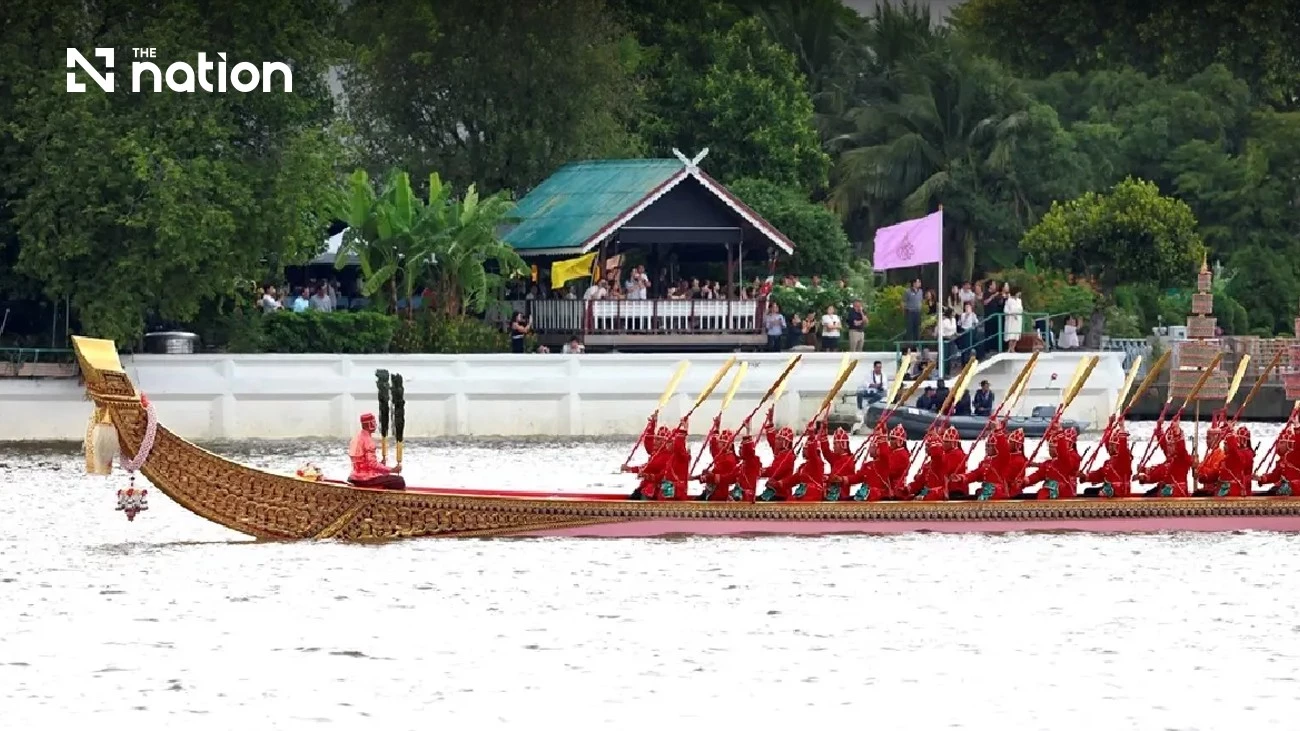
Anekkachatphutchong reveals its Nagas in finer detail
Anekkachatphutchong has a slender, upturned bow rather than a single large animal figurehead. Its decoration rewards closer inspection: gilded Naga carvings of different sizes cover the bow, including a transformed serpent with seven human faces.
The exterior is painted pink and the interior red, with a canopied throne at the centre. Built during Rama V’s reign, Anekkachatphutchong ranks as a secondary royal barge.
Its historical function was practical as well as ceremonial. The monarch could use the vessel to change royal attire or remove the ceremonial Kathin headdress before boarding or disembarking from the principal royal barge.
Four chant themes give the procession its voice
The barge chants connect the spectacle on the river with the purpose of the royal journey. For this ceremony, the Royal Thai Navy uses verses composed by Rear Admiral Thongyoi Saengsinchai, former director of the Chaplaincy Division at the Naval Education Department.
Thongyoi received recognition as an outstanding literary artist in 2002 and is a respected figure in Thai-language scholarship. His compositions span eight royal barge processions, including this year’s ceremony, across the reigns of Rama IX and the present King.
The verses follow four themes. One offers praise and blessings to the King and Queen; another describes the beauty of the barges. A third focuses on royal Buddhist devotion through the Kathin offering at Wat Arun, while the fourth celebrates Bangkok, the scenery along both riverbanks and peace under royal patronage.
The composer’s role is distinct from that of the lead chanter aboard a royal barge. The chanter delivers the melody, while the rowers respond in unison, linking their voices to the rhythm of the paddles.
‘Bird-flight’ strokes distinguish the royal barges
The four principal royal barges use the ceremonial “bird-flight” stroke, in which paddles rise to approximately 45 degrees. The coordinated movement gives the impression of wings lifting above the water.

Each stroke follows four stages: dipping the paddle into the river, drawing it towards the body, levering it to propel the vessel, and lifting it high above the gunwale. Royal tradition requires this stroke throughout the journey; a necessary or emergency change requires royal permission.
The accompanying Dang, Saeng, destroyer and animal-figurehead barges use the ordinary, low rowing stroke. Their paddles remain closer to the gunwale, providing steady propulsion as the vessels maintain their protective positions around the royal barges.
The procession involves 2,200 navy personnel, whose coordinated work brings the formation, chanting and rowing together.
Blessing rituals prepare the barges and their crews
Preparations combine the work of the Royal Thai Navy, Bureau of the Royal Household and Fine Arts Department with rituals intended to bring auspiciousness and strengthen the crews’ morale. A full-dress rehearsal took place on October 28.
At the National Museum of Royal Barges, the navy commander presided over offerings to the guardian spirits of the site and Buddhist ceremonies. The preparations included chanting, sprinkling holy water, anointing the vessels, applying gold leaf, tying coloured cloth, placing garlands and scattering popped rice and flowers.
The ceremony covered the four principal royal barges and four accompanying vessels: Ekachai Hern How, Krut Hern Het, Krabi Prap Mueang Man and Asura Vayuphak. Fine Arts Department performers presented the blessing dance Kritda Uayphon.
Further offerings took place at the Royal Motor Boat Division at Wasukri Pier for Ekachai Lao Thong, Krabi Ran Ron Rap, Krut Tret Traichak, Pali Rang Thawip, Sukhrip Khrong Mueang and Asura Paksi. These honoured Mae Ya Nang, the guardian spirit traditionally believed to inhabit and protect each boat, helping to ensure a safe passage.
A 3.9km journey from Wasukri Pier to Wat Arun
Their Majesties will travel by royal motorcade from the Grand Palace to Wasukri Pier before boarding Suphannahong. Official guidance places the procession’s departure from the pier at approximately 3pm on November 6.
The 52 vessels will travel downstream, passing beneath Rama VIII Bridge and continuing past Phra Pinklao Bridge, Siriraj Hospital, Tha Maharaj and Tha Chang. The approximately 3.9km journey ends at Ang Kaew Pier at Wat Arun, where Their Majesties will proceed to the ordination hall for the royal Kathin ceremony.
Riverside viewing areas
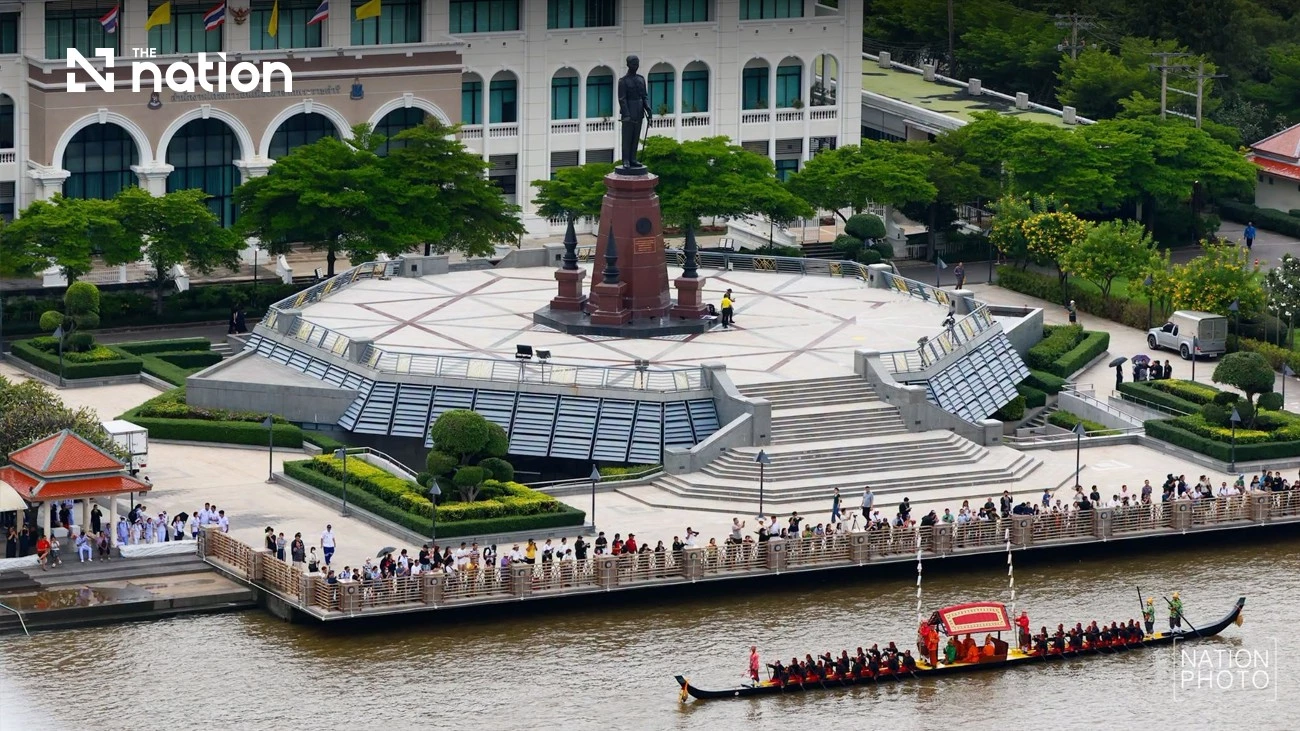
Public guidance has highlighted several places from which to watch the procession. On the Thonburi bank, these include the area beneath Rama VIII Bridge near the King Rama VIII monument, the 72nd Birthday Commemorative Park beside Siriraj Hospital, Wat Rakhangkhositaram Pier and the Wat Arun area.

On the Phra Nakhon bank, suggested locations include Santichaiprakan Park beside Phra Sumen Fort, Tha Maharaj and Tha Chang. Visitors should check the latest official ceremony-day viewing and access arrangements, as these suggested riverside locations are not an exhaustive list of designated sites.
The ceremony will be broadcast live through the Television Pool of Thailand, while Radio Thailand, operated by the Public Relations Department, will carry the sound of the barge chants.