
Energy Ministry plans fivefold rise in household solar quota
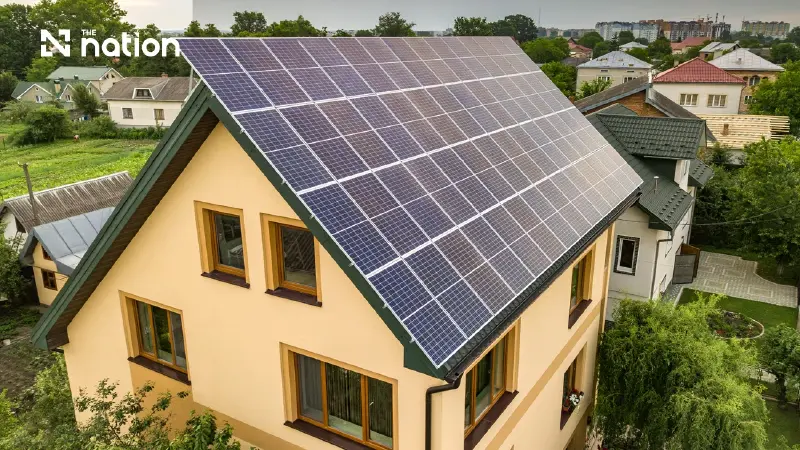


The Energy Ministry plans to lift household rooftop solar purchases from 100MW to 500MW, speed up approvals and extend buyback contracts.
Thailand’s Energy Ministry plans to increase the quota for electricity purchased from household rooftop solar systems fivefold, from 100 megawatts to 500MW, as part of efforts to encourage more people to generate and sell clean power.
Energy Minister Akanat Promphan said the government aimed to transform households from ordinary consumers into electricity producers and consumers, commonly known as “prosumers”.
Speaking at the “New Horizon Chapter 2: Smart Grid” forum organised by Krungthep Turakij, Akanat said the government would revise the way clean-energy quotas were allocated.
Rather than reserving most capacity for large private-sector projects, the ministry plans to distribute part of the quota among households, allowing each home to install up to five kilowatts of solar capacity for its own use and to sell surplus electricity to the grid.

One-stop service to shorten approval process
The government also plans to simplify application procedures, which previously could take more than a year, by introducing a one-stop service available online and through branches of the electricity distribution authorities.
Under the proposed time limits, applications for rooftop solar systems intended solely for household consumption, without selling power to the grid, would have to be approved within seven days.
Households seeking to sell surplus electricity would have the entire application process completed within 30 days.
Buyback contracts set to be extended
The ministry also plans to extend household solar power purchase agreements beyond their current 10-year term to make investment more attractive and commercially viable.
Akanat compared the current household contracts with those offered to solar farms, which can run for 25 years.
Revenue from electricity sales would be credited through household electricity bills.
Based on a purchase rate of 2.20 baht per kilowatt-hour, the ministry estimates that a five-kilowatt rooftop system could generate average income of about 1,400 to 1,500 baht a month.
The system could allow households to recoup installation costs within seven years, after which the rooftop panels could continue generating income while reducing living expenses, Akanat said.
