
Siam-ultaneously creative: how Bangkok is turning old concrete into new cultural capital
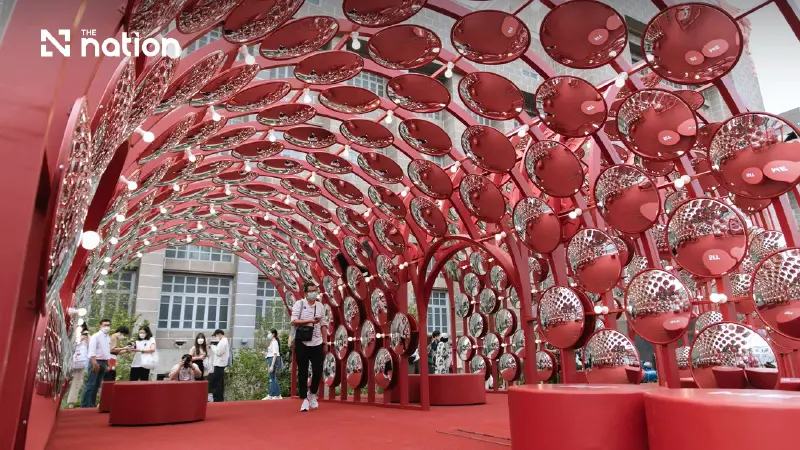


Bangkok’s creative economy is thriving through adaptive reuse, design festivals, street culture and intellectual property, positioning Thailand as a regional hub for Asia’s next cultural wave.
Bangkok’s next megaproject may not be a tower. It may be a converted warehouse, a riverside shophouse, a design studio hidden above a noodle shop, or a once-forgotten alley suddenly alive with exhibitions, music and ideas.
This is the quiet genius of Thailand’s creative economy in 2026: it does not simply build new. It reinterprets what already exists.
In Charoen Krung, Bangkok’s old commercial artery, the past has become premium creative infrastructure. The Tourism Authority of Thailand describes the district as a place where arts and culture coexist with property preservation and development, a transformation accelerated after the Thailand Creative & Design Center moved into the historic Grand Postal Building.

That move helped define a new Bangkok model: not demolition, but creative retrofitting. Old concrete becomes gallery space. Heritage becomes commercial oxygen. Street culture becomes strategy.
The Creative Economy Agency’s 2026 thinking gives this movement a name: “City as a Stage”. Its concept positions urban space as a platform where people, cultural assets and creative businesses can generate new value, while festivals become tools for city development rather than decoration.

Bangkok Design Week is the clearest proof. The 2026 edition runs from January 29 to February 8 across Charoen Krung–Talat Noi, Phra Nakhon, Pak Khlong Talat, Bang Lamphu–Khao San and more than 140 venues citywide, with hundreds of programmes connecting design to everyday life, business and communities.
This is not soft power as slogan. It is soft power as urban operating system.
Thailand’s creative industries now generate 1.44 trillion baht, or 8.01% of national GDP, according to CEA Forum 2026. That figure gives weight to what Bangkok’s artists, designers, chefs, filmmakers, musicians and digital founders already know: creativity is not a side act. It is a growth engine.

The city’s advantage is its rare balance. True Digital Park, described as Southeast Asia’s largest tech and startup hub, gives founders a 230,000-square-metre innovation ecosystem in South Sukhumvit. Meanwhile, Bangkok’s UNESCO City of Design status recognises its use of design as a tool for urban development.
For global entrepreneurs, this combination is powerful: digital infrastructure with cultural texture; modern platforms with street-level imagination.
Bangkok is no longer only a production base for other people’s ideas. It is becoming a place where ownable Thai intellectual property can be born, tested, localised and exported.
In the new creative Asia, Thailand’s edge is not polished sameness. It is its ability to preserve subcultures, upgrade old spaces and let the city itself perform.
