
Scientific Names: The Highest Standard of Truth in the Blackchin Tilapia Debate
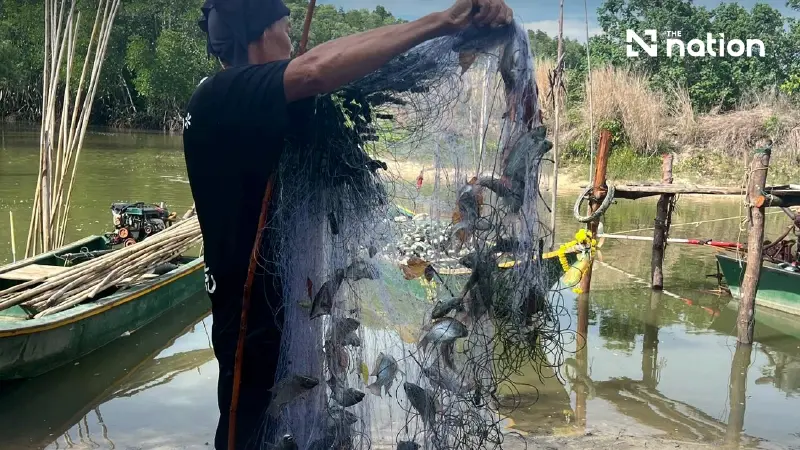


If a fish has been renamed four times, how can we be certain it is still the same species?
The question goes far beyond Thailand’s ongoing debate over Blackchin tilapia. It touches on a fundamental principle of fisheries science, international trade, and regulatory oversight worldwide: how do we verify the true identity of a species?
Every living organism has both a common name and a scientific name. The difference is critical.
Common names are created for everyday communication. They vary across languages, countries, cultures, and periods of time. A single species may have several common names, while the same common name may sometimes refer to different species in different regions.
Scientific names serve a different purpose. They are the internationally recognized identifiers of biological species. In practical terms, a scientific name functions like a passport or national identity card, allowing scientists, regulators, customs authorities, and seafood buyers around the world to know they are referring to exactly the same organism.
This is why international fisheries management and seafood trade rely primarily on scientific names rather than common names.

Accurate species identification is not a trivial matter. It affects trade compliance, aquatic animal health controls, environmental risk assessments, traceability systems, and consumer confidence. For that reason, the strongest evidence of species identity is the scientific name recorded in official documents, including import permits, export declarations, health certificates, and customs records.
Morphological examination such as body shape, fin structure, coloration, and scale patterns—provides additional verification. When uncertainty remains, DNA analysis serves as the final confirmation tool.
The case of Blackchin Tilapia illustrates this principle clearly. Almost the past two decades, the common name used for this fish in Thailand has reportedly changed at least four times. Yet throughout those changes, the scientific name most commonly associated with the species remained Sarotherodon melanotheron.

That distinction matters, names used for public communication may change. Scientific identification is expected to remain anchored to internationally recognized taxonomic standards. This is precisely why scientists place greater weight on scientific names than on common names when determining species identity.
However, important questions remain unanswered. Particularly significant are reports that export documentation associated with 11 companies contained the scientific name Sarotherodon melanotheron. At the same time, explanations have been offered suggesting that these entries resulted from documentation errors.
If that is the case, a legitimate question arises: why would the same scientific name reportedly appear repeatedly across documentation associated with all 11 companies.
The issue extends beyond a single species or a single country. It raises broader questions relevant to fisheries governance worldwide: How are species verified during import and export procedures?
What documentary evidence is used to confirm species identity before permits are issued?
How are discrepancies between common names and scientific names investigated? And under what circumstances can identical species descriptions appear repeatedly across multiple companies' records?
Equally important is the lack of publicly available shipment-level information. To date, comprehensive disclosure has not been made regarding which scientific names were recorded on individual shipments, which Harmonized System (HS) Codes were used, how species were described on commercial invoices, or what names appeared on accompanying health certificates.
Transparency is essential for confidence in regulatory systems. If the objective is to establish clarity and credibility, these records should be made available for independent review. Only then can stakeholders determine whether all documentation is internally consistent and whether it accurately corresponds to the species being traded.
Ultimately, the debate over Blackchin tilapia should not focus solely on common names, which may change over time. It should return to the internationally accepted standards used throughout global fisheries management and seafood trade: scientific nomenclature, trade documentation, morphological verification, and genetic evidence.
Because in international commerce, scientific names are more than labels. They are the foundation of species identity, traceability, regulatory compliance, and scientific truth.
