
Connecting Southeast Asia and the Gulf: The Emerging Hubs Reshaping Global Finance
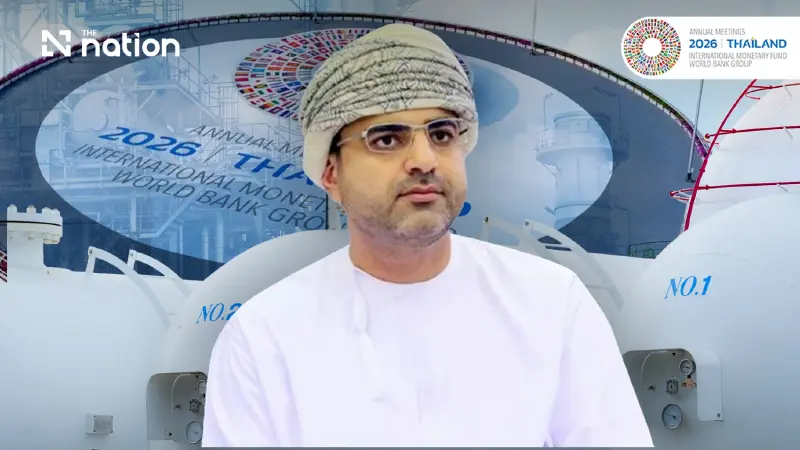


Having participated in the IMF Autumn Meetings and the Institute of International Finance Summit in Thailand, I was reminded that these gatherings are ultimately about people as much as policy.
- Emerging financial centers, particularly Bangkok in Southeast Asia and Muscat (via the new IFC Oman) in the Gulf, are being developed to connect the two regions.
- These hubs aim to build on the strong, growing economic relationship between ASEAN and the GCC, which is already founded on significant bilateral trade in energy, manufacturing, and other goods.
- Initiatives like Thailand's Financial Hub legislation and the establishment of IFC Oman are creating the financial architecture and regulatory frameworks needed to facilitate cross-border investment.
- The goal of these new centers is to deepen financial integration, support mutual economic growth, and help both regions diversify their economies and sources of investment.
Having participated in the IMF Autumn Meetings and the Institute of International Finance Summit in Thailand, I was reminded that these gatherings are ultimately about people as much as policy. Conversations with peers, business leaders and investors often continue long after a panel has ended, creating opportunities to exchange different perspectives and build new partnerships.
The choice of Bangkok as host felt particularly appropriate. Travelling through the city between meetings, it was difficult to ignore the sense of optimism and energy in the air. In some ways, the city’s impressive transformation reflects the broader economic development of the region, where an attractive business environment, a skilled workforce and closely connected manufacturing networks have established Southeast Asia as a major centre of global industry.
Much of this year’s discussion focused on financial stability and the mobilisation of private capital. Priorities that are particularly important for Southeast Asia as its economies integrate and businesses expand across borders. And while Singapore remains Southeast Asia’s leading financial centre and the source of around three-quarters of intraregional investment flows, other cities across the region, including Bangkok, are seeking to develop their own financial-services capabilities.

Thailand has strengthened its position through a series of targeted policy reforms. Its proposed Financial Hub legislation seeks to create a more comprehensive framework for international financial companies, including a new authority, licensing arrangements and internationally aligned regulation. My discussions in Bangkok gave me a clearer sense of the city’s ambition to emerge as a financial centre, strengthening connections between businesses, investors and markets beyond its immediate borders. As its financial services sector grows, the city can strengthen existing ties within Southeast Asia while developing areas of expertise that reflect the needs of its domestic market.
Across the Indian Ocean, Oman is pursuing a similar ambition: advancing reforms that can establish it as a bridge between Asia and the Gulf and give it a distinctive role in the changing financial landscape.
Central to this effort is IFC Oman, a new independent financial centre based in Muscat. As Chairman of the IFC Oman Authority Board, I have been discussing our proposition with attendees in Bangkok ahead of IFC Oman’s launch in 2027, including the role it can play in facilitating investment into and out of Oman and across the Gulf.
Oman and Thailand already have a strong and growing economic relationship, with bilateral trade spanning energy, metals, fertilisers, vehicles and industrial products. According to the Observatory of Economic Complexity, Oman exported approximately US$1 billion in goods to Thailand in 2024, while Thai exports to Oman totalled approximately US$420 million. Long-term supply arrangements between Oman LNG and Thailand’s PTT, alongside the Oman-Thailand Energy Dialogue, provide a foundation for cooperation in investment, technology, skills and future joint projects.

The Association of Southeast Asian Nations (ASEAN) report that merchandise trade between the bloc and the GCC reached US$137.75 billion in 2025. Energy remained a major contributor, alongside growing activity in financial services and transport. ASEAN and the GCC have identified digital transformation, renewable energy, food security, manufacturing and infrastructure as priority areas for greater collaboration.
Oman is advancing work across these sectors through major investments in ports, logistics and industrial centres. At the Special Economic Zone at Duqm, ten agreements worth approximately US$7.5 billion were signed this year spanning green hydrogen, battery materials and solar and wind power manufacturing, strengthening the zone’s role as a platform for industrial investment and the energy transition. These projects have attracted investors from Southeast Asia, including the Philippines, as well as from across the wider Asia-Pacific region, notably China, South Korea and India.

In this context, IFC Oman can support the country’s diversification beyond oil and gas by providing the financial architecture needed to turn growing trade ties with Thailand and Southeast Asia into new projects. Through links with institutions in Bangkok, Singapore and across the region, it can mobilise investment through funds, bonds, sukuk and other forms of private capital, supported by the professional services needed for efficient cross-border transactions.
IFC Oman is well placed to develop a distinctive role as a well-regulated financial platform, combining an internationally aligned legal framework with Oman’s strategic location, stability and established commercial relationships. The Centre can offer a new home for global capital keen to harness the opportunities in Oman.
The discussions in Bangkok highlighted the practical role that emerging financial centres can play in strengthening economic ties between Southeast Asia and the Gulf. By developing complementary expertise and stronger institutional links, IFC Oman and its counterparts can deepen financial integration, support mutually beneficial growth and help both regions diversify their economies and sources of investment.

