
Proof that buses can use ethanol
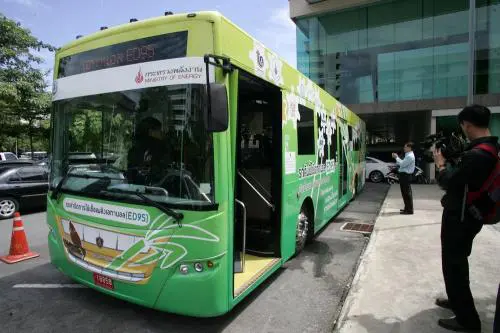


A project that set out to demonstrate the feasibility of using ethanol as a fuel to replace diesel in buses has been declared a success.
The project, involving King Mongkut's University of Technology Thonburi, the Industry Ministry’s Department of Industrial Promotion and 10 other public- and private-sector agencies, was sponsored by the Energy Conservation Promotion Fund.
The aim is to reduce diesel usage by large transport buses and promote the use of ED95 ethanol produced from domestic raw materials such as sugar cane and cassava.
Thailand's transport sector is now responsible for one third of the country’s total energy consumption. Sixty per cent of transport trucks use diesel, which boosts national diesel consumption to more than 50 million litres a day. The country’s capacity to produce abundant supplies of ethanol, at nine million litres per day, makes it possible to reduce its dependence on diesel.
Assist Professor Surachai Bovornsetthanan said the project studied the use of ED95 ethanol, an alternative fuel for compression-ignition engines, the possibility of developing additives for ED95 in Thailand, and the engineering and economic aspects of ethanol usage in large transport buses.
The three-month trial showed that ED95-fuelled buses functioned normally and air pollution would be reduced as a consequence.
Surachai said information gleaned from the project would be submitted to the government for consideration when formulating policy on the use of ethanol in the transport sector, which presently uses mainly diesel and natural gas.
He said ethanol would create better economic and social results than either natural gas or diesel. If all buses switched to ED95 fuel, it would generate returns of Bt100 billion within 20 years to all parties, including farmers.
