
Auto-makers want urgent action on parts imports
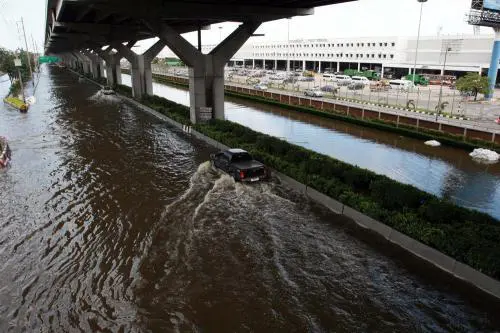


Auto-makers have urged the government to set up without delay a working committee to facilitate imports of parts and machinery so as to get manufacturing back on track after a hiatus of about a month due to the flooding.
Manufacturers in Thailand have not benefited from a recent lowering of tariffs on auto parts to zero due to a lag in the enforcement of customs procedures, said Suparat Sirisuwannangura, president of the Federation of Thai Industries’ Automobile Industry Club.
The Cabinet approved zero tariff for imported auto parts on October 25, but importers have yet to see any benefit.
Suparat said many auto-makers are eager to import parts and machinery as it would take at least a month to restore their production facilities.
Auto-parts makers will not find it easy to resume operations in the short term, and manufacturers want to import machinery to replace damaged items and get their operations up and running at the earliest, Suparat said.
Parts are mainly imported from Asean, India, China, Japan and the United States, while machinery primarily comes from China, Taiwan and Japan. Of the 891 plants at seven industrial estates to be hit by severe flooding, about 25-30 per cent belong to auto-makers and their suppliers.
Automobile production is expected to drop sharply in the final quarter of this year due the halt in operations. Monthly output is likely to drop below 150,000 units from a normal level of 160,000-170,000 vehicles per month, Suparat said. As a result, the industry will miss its output target this year of 1.8 million units, producing a projected 1.6 million units.
The industry posted total auto output of 1.285 million units from January to September.
Auto production next year will also be lower than initially estimated due to the flooding, Suparat said, adding some plants could take six months to a year to reach pre-flood output levels.
Other support measures that auto-makers would like to see from the government include soft loans, social fund payment delays and waivers or reductions of some utilities costs.
