
UPS says technology key to growth
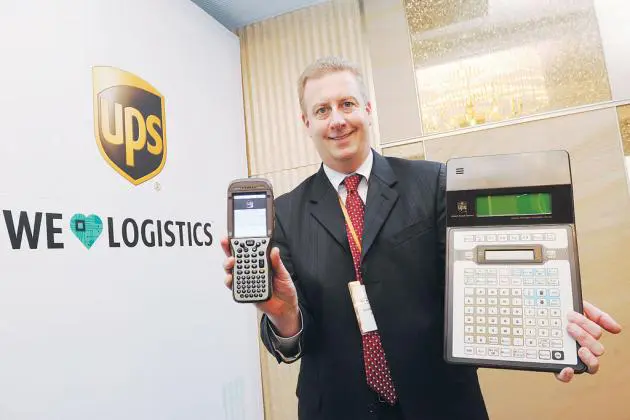


Package-delivery firm UPS will continue to spend US$1 billion (Bt30 billion) annually on technology to support its growing presence in Asia, the fastest-growing economic arena.
"What powers all of this around-the-clock movement is technology … In our trucks and planes, UPS moves 2 per cent of global GDP," said Dave Barnes, senior vice president and chief information officer of UPS, at the 2012 UPS Asia Technology Summit held in Hong Kong last month.
He said technology is the engine that makes modern logistics smarter, faster and better by supplying companies with the connectivity, mobility and visibility they need in a competitive marketplace.
Currently, UPS has 398,300 employees servicing 8.8 million customers daily in more than 220 countries and territories with an increasing focus on Asia, Barnes said.
"We are in growth mode in Asia, and to support this UPS has built its intra-Asian air hub in Shenzhen and is continuing to invest in China’s logistics infrastructure," he said.
According to UPS’ plan, Bangkok is also a major destination of UPS air connectivity for its Europe-Asia network. With the Boeing 474-400, which UPS has employed most recently to save energy and reduce emissions, it can make shipments in a circle from Cologne to Shenzhen, Bangkok, Bombay and back to Cologne.
Barnes said UPS has witnessed an increase in outbound Chinese shipments in terms of both volume and value. "We’re seeing a shift from bulk freight to more express packages containing high-value goods."
As part of its huge investment in technology, UPS has launched its "logistics cloud" technology, which provides customers with a way to tap into shipment information from suppliers, transportation providers and end users faster and more easily.
Barnes said UPS mobile solutions provide immediate insight into the status of a shipment, making operations run faster and smoother. As the technology that powers logistics is mobile, UPS also announced it has begun to supply the latest version of its high-tech handheld Delivery Information Acquisition Device (DIAD V) to drivers in Asia and around the world.
The DIAD V mobile hand-held device is smaller and lighter than previous models, making life easier for UPS drivers and accelerating the delivery of package information to the UPS network and customers, Barnes said.
He added that the new fifth-generation device is the first in the industry to leverage what is known as Gobi radio technology to allow instant switching of cellular carriers if one carrier’s signal is lost, thus ensuring the device stays connected to the UPS network.
"Approved for operation in more than 100 markets, UPS will deploy the device in Japan, Taiwan, Singapore, Thailand, Australia and Vietnam throughout 2012 and in Hong Kong, Korea and China in 2013," said Barnes, adding that when worldwide deployment is complete in 2013, about 100,000 units would be in use.
He said it is possible for customers to track more than 15 million deliveries a day worldwide. With this one device, the company can eliminate 89 million sheets of paper a year.
"In today’s economy, global markets are more important than ever. The power of new logistics is helping to reach new customers – anywhere in the world…it makes cross-border shipments faster," he said.
Derek Woodward, president of UPS Asia Pacific, said the UPS solutions have transformed lengthy customs documents into electronic data, reducing the likelihood of delays by 41 per cent. Moreover, logistics technologies simplify and streamline international trade, he said.
Supply chains today require a new level of visibility that lets companies react, predict and manage, rather than just determine when a product has been delivered to the end customer. "Investments in visibility technologies will pay off in many areas now and in the future," Woodward said.
