
HSBC staying in Kingdom
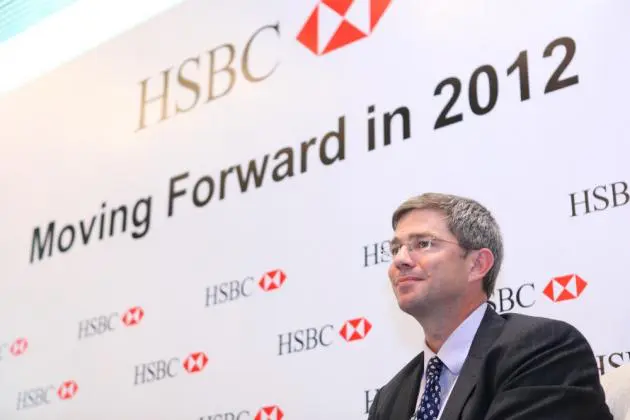


HSBC Thailand insists that it will not pull out of Thailand after selling its retail banking business to Bank of Ayudhya.
“We will continue to invest in Thailand, focusing in commercial and corporate customers,” said Matthew Lobner, chief executive officer of HSBC Thailand.
Selling the retail business was part of the HSBC Group’s strategy to concentrate on corporate portfolios and invest in wholesale capability, positioning itself as a leading international bank and cashing in on the emerging-market trend, he said.
HSBC Thailand’s previous retail and wealth-management portfolio, which was sold to Bank of Ayudhya, included about half a million credit-card holders and some retail customers.
Having no plan to invest in local banks, Lobner said HSBC Thailand’s first step is to continue to grow with its capability in wholesale banking in the country, which is expected to expand further after last year’s floods.
With its know-how and its connectivity in 85 economies including Asean countries, HSBC Thailand will help Thai companies go abroad and others to invest in this country, Lobner said.
Thailand’s gross domestic product is expected to grow by 56 per cent annually in the next five years, driven by growth in Asean trade and companies’ likely integration of their supply chains into Asia, he noted. HSBC projects the Thai economy to expand 5.5 per cent this year.
The largest concern is the global economic uncertainty with the European sovereign debt crisis, Lobner said. Another concern is for the country to have measures to prevent a recurrence of the floods.
With rising crude-oil prices, the Bank of Thailand has a very strong mechanism to balance the country’s economic growth and inflation risks.
“Inflation is not seen as a big risk. It’s challenging to balance both sides of equation. Inflation needs to be balanced with what is needed for growth,” Lobner said.
HSBC Group’s revenue rose 12 per cent in Asia, Latin America, and the Middle East and North Africa, accounting for 49 per cent of the group’s revenue. The bank, as a group, reported US$21.9 billion (Bt674 billion) in profit before tax in 2011, up 15 per cent from a year before.
