
Fired THAI boss fears achievements will be undone


Play
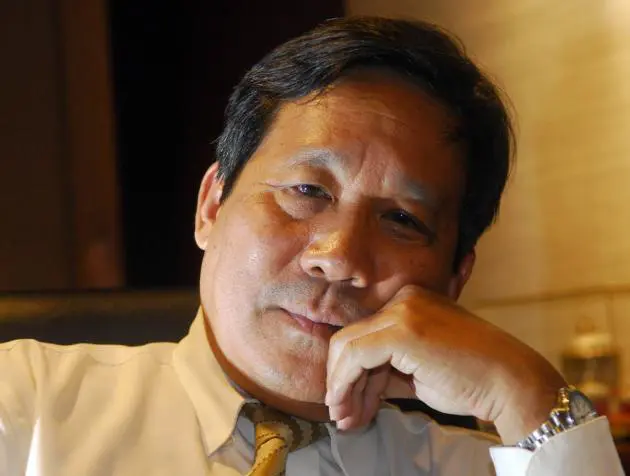
Thai Airways International's outgoing president Piyasvasti Amranand is pleased with changes he introduced in the past 31 months to the national carrier.
Yet he is bitter that all that achievement could be erased after the termination of his employment contract, which guarantees return of the board of directors’ control.
He believes the reason for his dismissal was ambiguous and could not be explained when several strategies had been implemented successfully in the past two years and seven months, which led to drastic changes in the company’s financial position and marketing.
“If it’s politics, they should have said that,” he said in an interview. “Without a change [in the system], intervention is [always] imminent, and state enterprises, except those with monopolistic power like those in the energy sector, cannot prosper. It would be difficult for them to compete in highly competitive industries. I’m sad for THAI and Thailand.”
Piyasvasti is the 15th president of THAI, the second as an outsider, following Kanok Abhiradee.
After the surprise termination, Piyasvasti has to sort out what to do with his commitment to appear at some international programmes. Aside from a Star Alliance CEO meeting, he promised to be a panellist at the World Economic Forum on East Asia in Bangkok and for the International Air Transport Association (IATA) in Beijing.
Piyasvasti said he was briefly warned of the board of directors’ upcoming decision. Hours later, the board agreed to terminate his job before the contract ends in 2013, with chairman Ampon Kittiampon citing lack of unity in communications as the reason. Not implicated in any fraud or inefficiency, Piyasvasti will receive a six-month compensation, or Bt5.94 million.
The decision surprised all, given Piyasvasti’s performance score of 86 per cent, supported by the company’s strong business recovery. While passenger numbers in April rose 14 per cent year on year, the revenue passenger per kilometre (RPK) rate increased by 8 per cent.
The May figures are also heading up. Through this year, the earnings target of Bt6 billion is maintained, mainly through hedging contracts that produced a Bt990-million gain in the first quarter and Bt430 million in April. Half of the net profit will come from the hedging gain.
To Piyasvasti, several reasons could be behind the board’s decision: the large number of insiders and outsiders reaching out for the presidency, fraud cases involving insiders, and a number of disciplined employees.
Among issues under investigation now is a missing jet engine, under the maintenance department’s care. This followed the earlier disappearance of an engine of a police aircraft sent in for maintenance. No culprit has been named.
“THAI has about 25,000 employees, a mixture of good and bad people. There is no discipline. The wrongdoers can stay for a long time, unpunished, and that poses a problem,” he said. “The punished are seeking support from the chairman, directors, the Office of the Auditor-General and so on. This complicates the management, particularly with external interference, like that from the board.
“During my term, there was a wall between the board and the management. The board is now fishing for that power, and the vicious cycle will return. [While awaiting the board’s orders], THAI people will stop to think,” he said.
Piyasvasti attributed the historic loss of Bt22 billion in 2008 to the board’s intervention. With an order to hedge all jet fuel in the year when oil prices swung violently, hedging losses reached US$149 million (Bt4.67 billion).
Under Piyasvasti, the board was asked to approve the appointments of executive vice presidents and higher. From May 21, the board resolved that it would have a say in the appointment of directors and other executives.
Taking office in October 2009, Piyasvasti introduced cost-cutting programmes. He was pleased with the fleet modernisation and financial strengthening, which would be “im-possible without employees’ consent”.
He considered that during his term, for the first time, THAI was at peace, without protests. After its borrowing of money from the employees’ cooperative, THAI can now seek new loans for aircraft acquisition and working capital, on satisfactory terms.
Piyasvasti completed the acquisition plan for 37 aircraft to be delivered until 2017 and retrofits of 20 planes, which will guarantee better products and services, he said. Meanwhile, Thai Smile, the budget airline set up to snatch back business from low-cost airlines, will commence operations on July 7. There are concerns of political interference in the acquisition of 38 more aircraft, planned for 2018-2022.
Through time, THAI employees have learned that without the board of directors, operations can progress smoothly and quickly, he said.
“The lesson I learned is that at a big organisation like THAI, connections matter during high internal rifts,” he said, adding that state enterprises that need to compete with global players would be stymied.
With persisting political interference, all state enterprises, except PTT – which carries exclusive status – could not prosper, he said.
