
Succession planning vital in family-owned businesses


Play
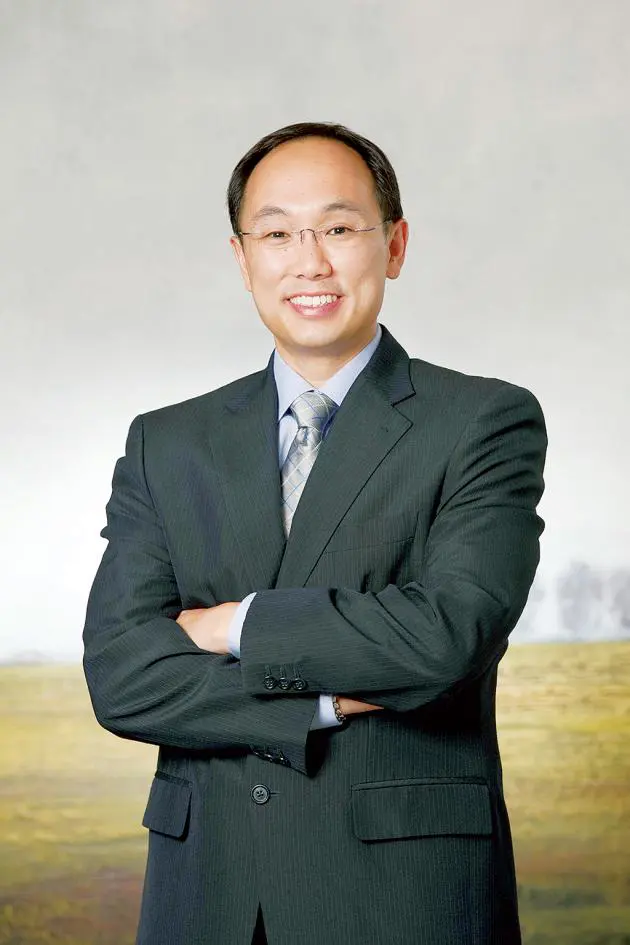
In an exclusive interview with The Nation, Kevin Tay, managing director, senior adviser and head of wealth and tax planning, Asia, at Julius Baer, a global private banking institution, explains that family-owned businesses in Asia have started to recognis
Those who do not produce a wealth and business succession plan before they die are risking family disputes among later generations and losing business to outsiders, said the wealth and tax planning expert.
“If you leave your entire asset succession plan open and nobody knows what is going to happen, potentially you are leaving a problem for the future,” he said.
Some people may think that the patriarch of a family should share assets equally among his children, based on the fair-share principle, but such an approach may not be practical when a business is involved, he said. For instance, if the head of the family has five sons, each would get 20 per cent under the equal-share approach. In this scenario, control of the business would be given to the eldest son, and the other four would await their dividends from the company.
Two things are possible in such a situation. Either all the brothers trust one another to do the right thing for the family business, or the brother in control of the business wonders why he is working so hard yet only has a 20-per-cent stake in the operation.
He could be sorely tempted to set up a new company of his own, to which he would move business and reap 100 per cent of the benefits instead of just 20 per cent. Conversely, the other four brothers with their combined 80 per cent of the business might think much the same thing and create their own company, said Tay.
He said that from his experience in advising clients, disputes most often result from structural issues after the father gives control to someone who does not get a substantial stake in the business. He therefore tells clients that while equal distribution seems to be the right way, it may not actually make sense for the business.
He explains to them that there is a difference between control and ownership, and that the best solution is for the structure to separate the two. There are two options: forming either a trust or a limited partnership, dependent on each client’s needs.
It is not necessary for one family member to get the largest stake in the business. They can still have equal shares but not have control over selling the shares, which would be under the trust’s control. For example, trustees would be appointed to manage the underlying business, he said, adding, “What you have is an independent party overseeing the assets, which is likely to prevent disputes among the family members.”
Help can be given by professionals at banks or other institutions that can provide the necessary tools to families with succession issues. The advice given is dependent on the family circumstances, that is, how the family and its businesses are structured. Tay said Julius Baer deals with each instance on a case-by-case basis.
Formation of a trust is more common among Europeans, where the concept is widely used, but it is now also spreading fast in Asia as more people, through their banks, appreciate the need for business succession planning, he said.
Use of trusts growing
“This concept has grown in the last 10 to 15 years. Ten years ago in China, nobody had heard about trusts, but now our clients have some idea that they are available and at least there is a need for succession planning,” said Tay. Sometimes, it is the children that tell their father about the trust concept, he added.
Tay sees this type of consultancy work growing as the number of wealthy people increases in Asia along with sustained economic growth. On a wider scale, Julius Baer has many international clients, he said. According to the “Julius Baer Wealth Report 2012”, the number of high net worth individuals (HNWIs) in Asia could reach 2.67 million by 2015, representing a compound annual growth rate of more than 30 per cent from 2010.
The upside-scenario forecast is for almost 3 million HNWIs within a wealth stock of US$16.7 trillion (Bt513 trillion).
The three countries with the highest number of HNWIs will be China, India and South Korea, while in Thailand, the number is projected to be 128 persons in 2015, up from 47 in 2010.
HNWIs are defined as those with investable assets of $1 million or more, excluding their primary residence. They are among Tay’s main target clients.
